
Water-Damage Hardwood Floor Repair in Sioux Falls, SD: Metered, Dried, Then Repaired | Sioux Falls Hardwood Flooring
Sioux Falls Hardwood Flooring, a wood flooring contractor, does water damage hardwood floor repair after burst supply lines, overnight dishwasher leaks and slow leaks that have run beneath the boards for months. We start by measuring moisture in the hardwood and the subfloor beneath it, then dry what is salvageable, replace what is beyond repair and refinish the areas we have opened up. We are insured and bonded, and estimates are free. Our drying work covers the floor assembly and the layer beneath it, not the entire building. Whole-building drying, contaminated water cleanup and structural restoration belong to a restoration contractor, and we will tell you when your home needs that work instead.
When water gets into hardwood, the boards change shape, and that distortion reflects the damage already done rather than how much moisture remains in the floor today. That is why we never start by sanding. We first measure the moisture in the floor before lifting any boards, then follow NWFA guidelines to determine when the wood is ready to be put back.
Across Sioux Falls, South Dakota, we repair water damage to both solid hardwood and engineered hardwood floors. Part of that work is telling a leak apart from the way a floor moves with the season. You get a floor assessed with instruments, dried to a documented number, and refinished only where the work required it. Call (605) 799-9142 and we will come and read the floor before anything is decided.
Get A Free Estimate
What to Do When Water Gets on Your Hardwood Floor
The first hour after water reaches a hardwood floor is about safety and documenting the damage, not repairing the boards. Shut off the water supply, stay clear of electrical hazards and photograph the affected room before any flooring work begins. Our water damage hardwood floor repair starts with removing moisture from the boards and the layer directly beneath them, drying those parts of the house, then repairing or refinishing the damaged flooring. Whole-building drying and contaminated water cleanup are outside the scope of our work.
-
1.
Turn off the water at the shut-off valve if you can reach it safely.
-
2.
Stay away from standing water near electrical outlets, cords and equipment.
-
3.
Take photographs of the damage for your insurer before moving anything.
-
4.
Remove any standing water you can safely reach.
-
5.
Contact a qualified restoration company first if the damage involves flooding, sewage or suspected contamination. Whole-building water mitigation, contaminated-water cleanup and structural repairs are their responsibility, not ours.
-
6.
Schedule your flooring assessment once the water source has been addressed and the area is safe.
The EPA recommends drying wet buildings and materials as quickly as possible, ideally within 24 to 48 hours, to limit mold growth. That guidance addresses how soon drying should begin, not how long it takes a hardwood floor to become dry enough for repair. Water damaged hardwood floors take longer because wood absorbs moisture deep into its thickness and releases it gradually. Moisture readings across the room continue to change for days after the surface looks dry. Even after the water source is fixed and the room is safe, the hardwood still needs time to dry before repairs begin.
Water-Damage Hardwood Floor Repair: Where the Water Came From
Water damage hardwood floor repair begins with identifying where the water came from, not with repairing the boards. Three sources account for most water damaged hardwood floors in Sioux Falls, and each provides important information that inspecting the floor alone cannot reveal. The first is how long the wood remained wet, since an hour of exposure to clean water causes different damage than three months of slow seepage. The second is what lies beneath the hardwood, whether a plywood subfloor supported by joists or a concrete slab subfloor. That is why we have organized the sections below by water source.
A Supply Line, a Dishwasher or an Ice Maker
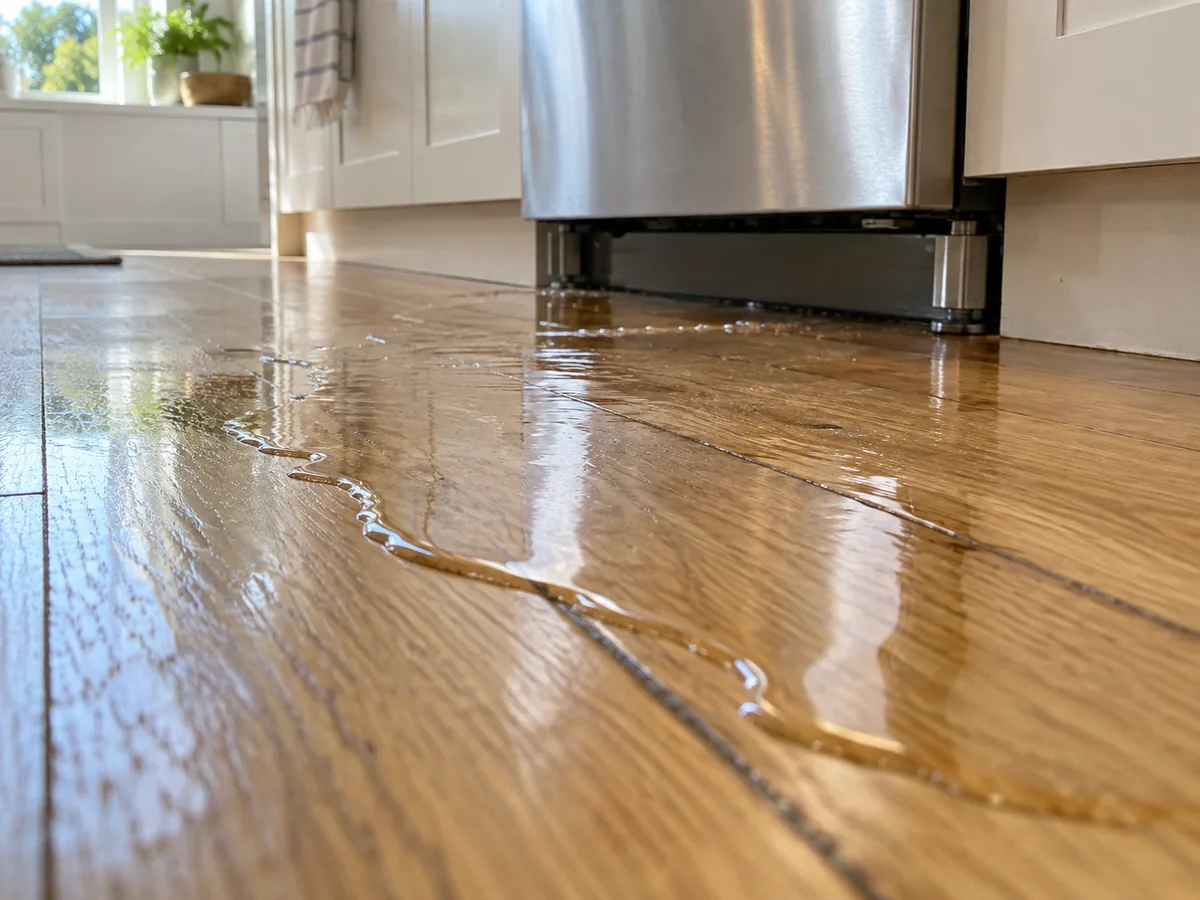
Water sometimes enters a hardwood floor all at once through a plumbing failure. A braided supply line, dishwasher hose or refrigerator ice maker line releases a large volume of clean water, and the leak is usually discovered the same day. Hardwood boards fit together with a tongue along one edge and a matching groove along the other, allowing water to travel sideways beneath the surface well beyond the visible stain. The affected area extends feet beyond the swollen wood floor you feel underfoot, so we take moisture readings outward from the source until they return to normal. Installing a drain pan beneath the appliance and keeping the shut-off valve accessible helps limit damage from the next leak.
Water at the Lower Level, Over Concrete
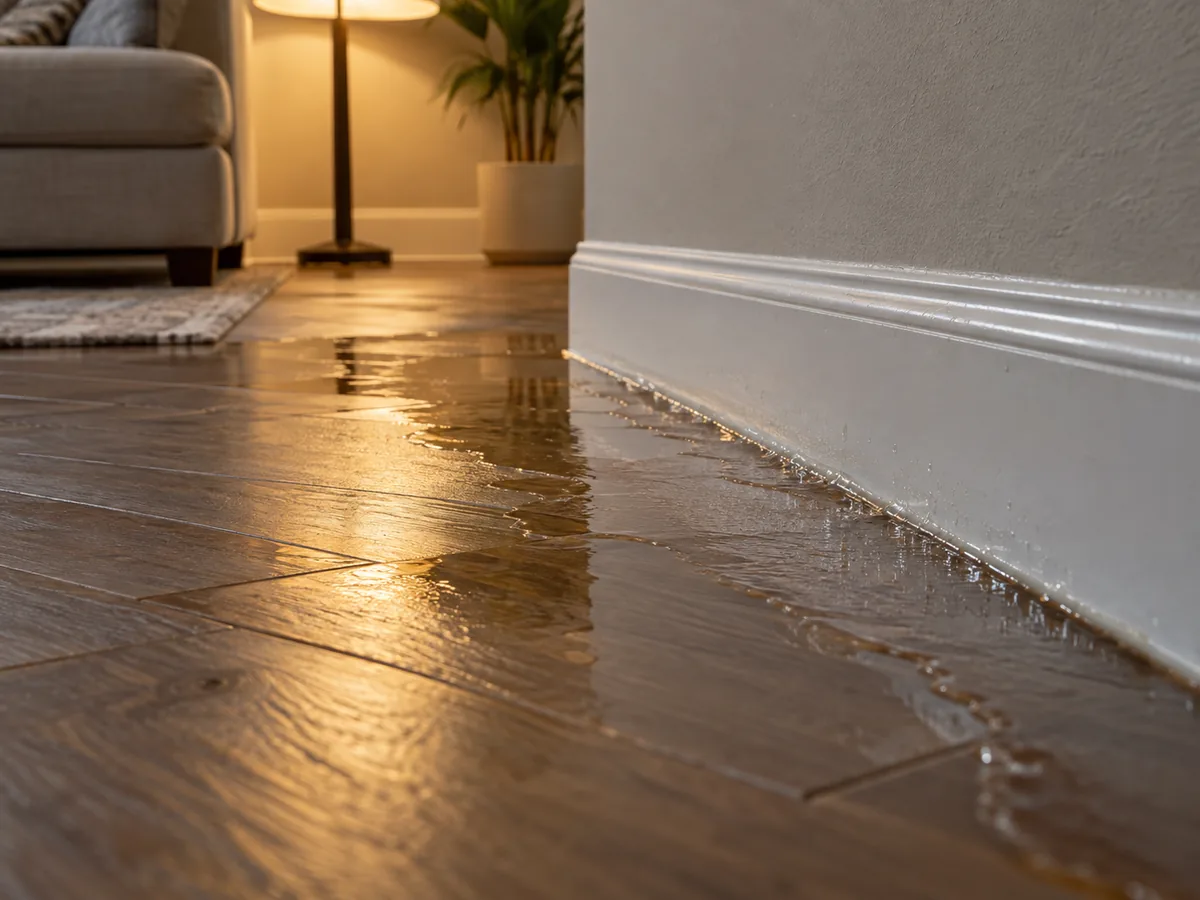
Water also enters hardwood floors from below or outside the house, and in Sioux Falls, that usually happens in finished lower levels. Common causes include failed sump pumps, seepage through foundation walls and snowmelt at grade. Those problems are outside our scope, and the responsible contractor must correct them before we reinstall your flooring. In lower levels, hardwood typically sits on or near a concrete slab subfloor, either glued down or floating rather than nailed in place, which affects how much moisture the drying process can reach. Concrete also holds moisture even without a leak, so we measure moisture in both the slab and the hardwood. Choosing the right flooring product for below-grade installation is covered on a separate page.
The Slow Leak That Showed Up as a Stain
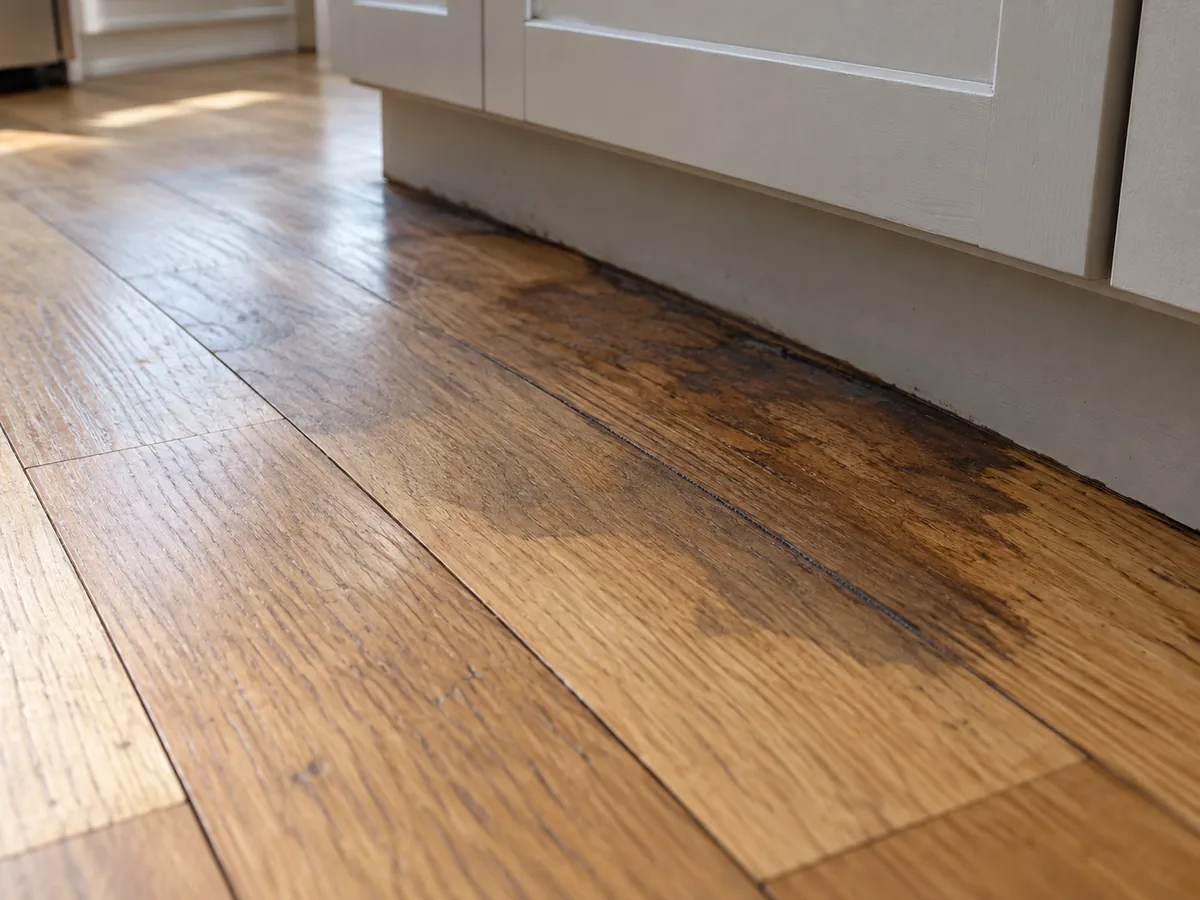
A slow leak first shows up as a dark edge along a hardwood board or a soft spot beneath a cabinet, with no burst pipe or spill to date it. By then, water has been keeping the wood at an elevated moisture content for weeks or months, causing damage deeper than a single day's soaking. Determining how to fix water damaged wood floor boards starts with tracing the stain back to its source, such as a leaking toilet supply line or dishwasher gasket. We measure moisture downward through the flooring rather than across its surface. Of the three water sources, a slow leak is the most likely to have reached the plywood or OSB subfloor beneath your boards.
How We Assess Water-Damaged Hardwood Floors
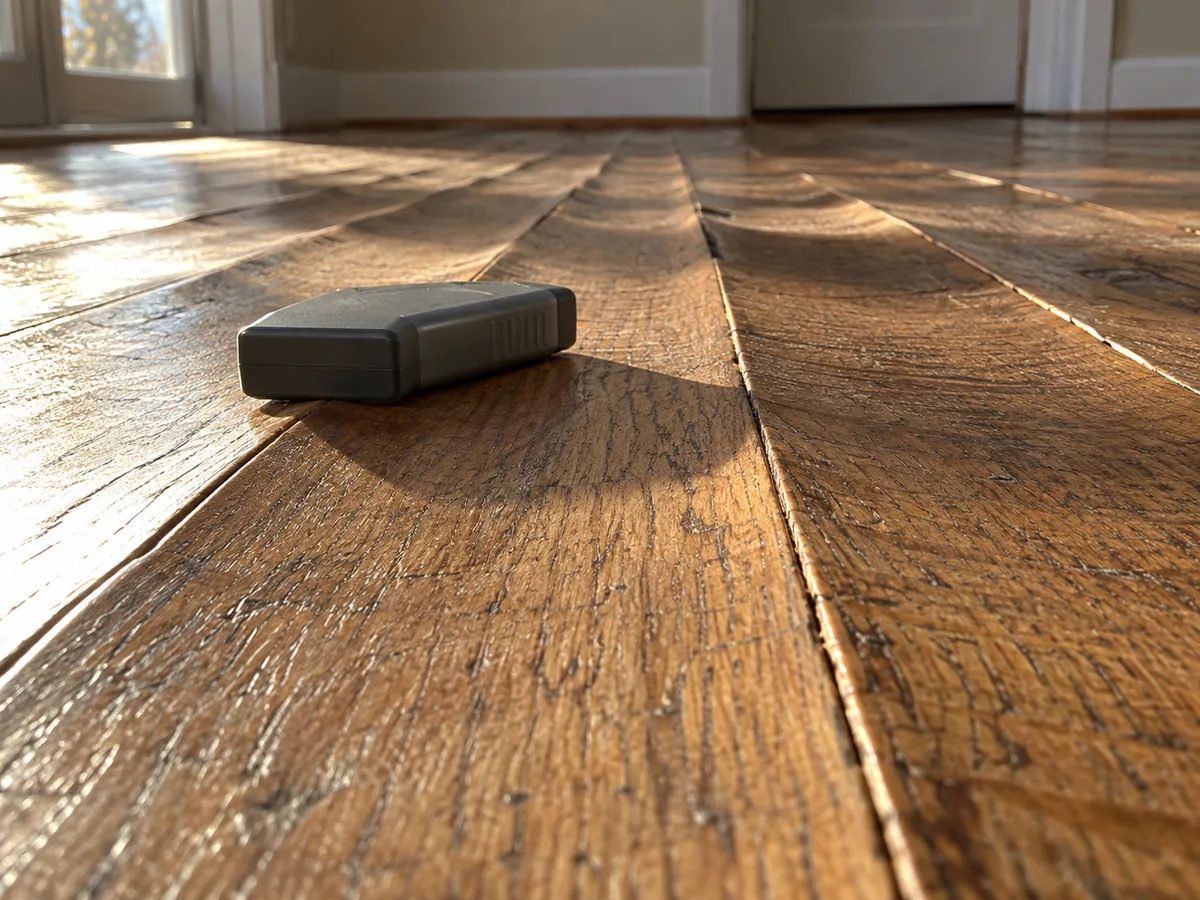
We determine which parts of your floor can be saved and which need replacing based on moisture readings, not how the boards look when we arrive. This assessment is the deciding stage of water damage hardwood floor repair. We start by measuring moisture throughout the affected area, and until we have those readings, both drying the existing floor and replacing damaged sections remain possible.
Cupped Boards and Crowned Boards Are Not the Same Problem
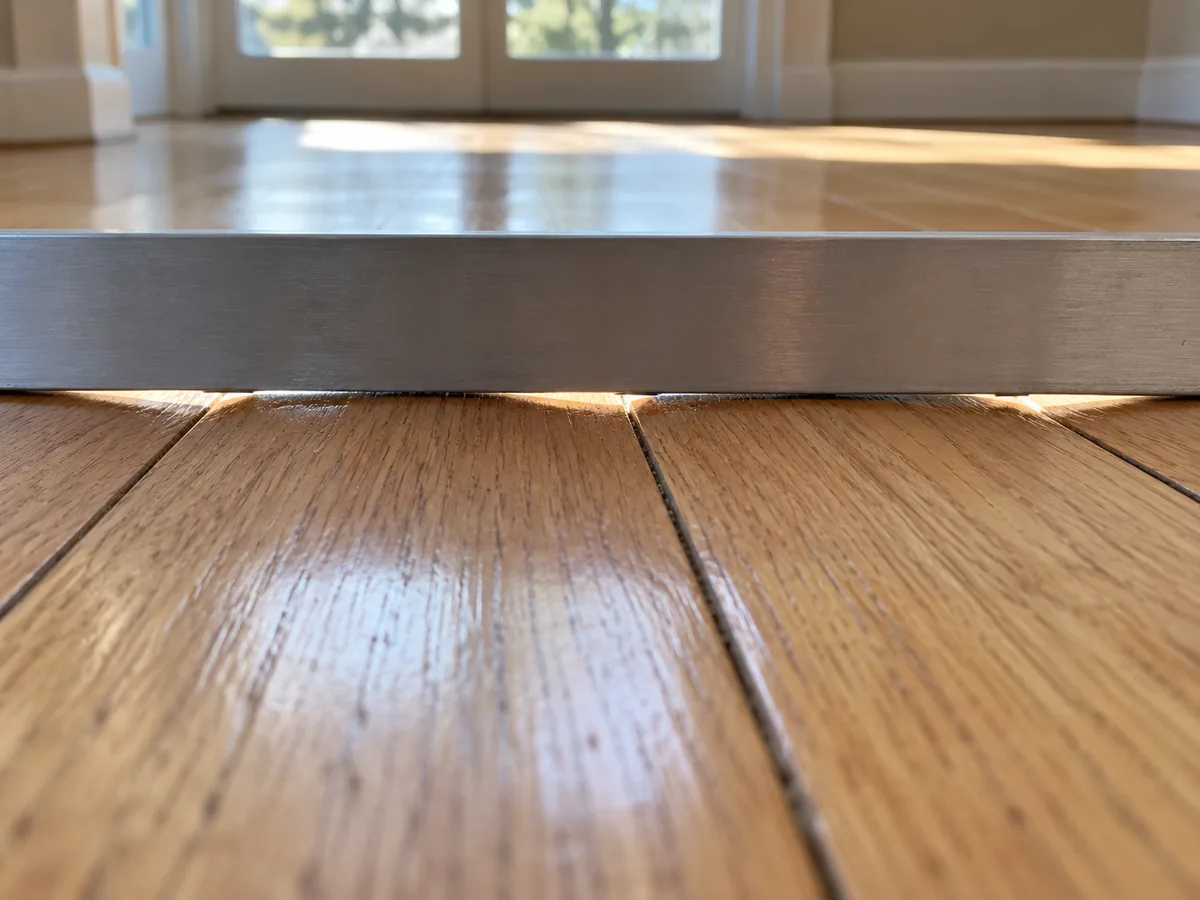
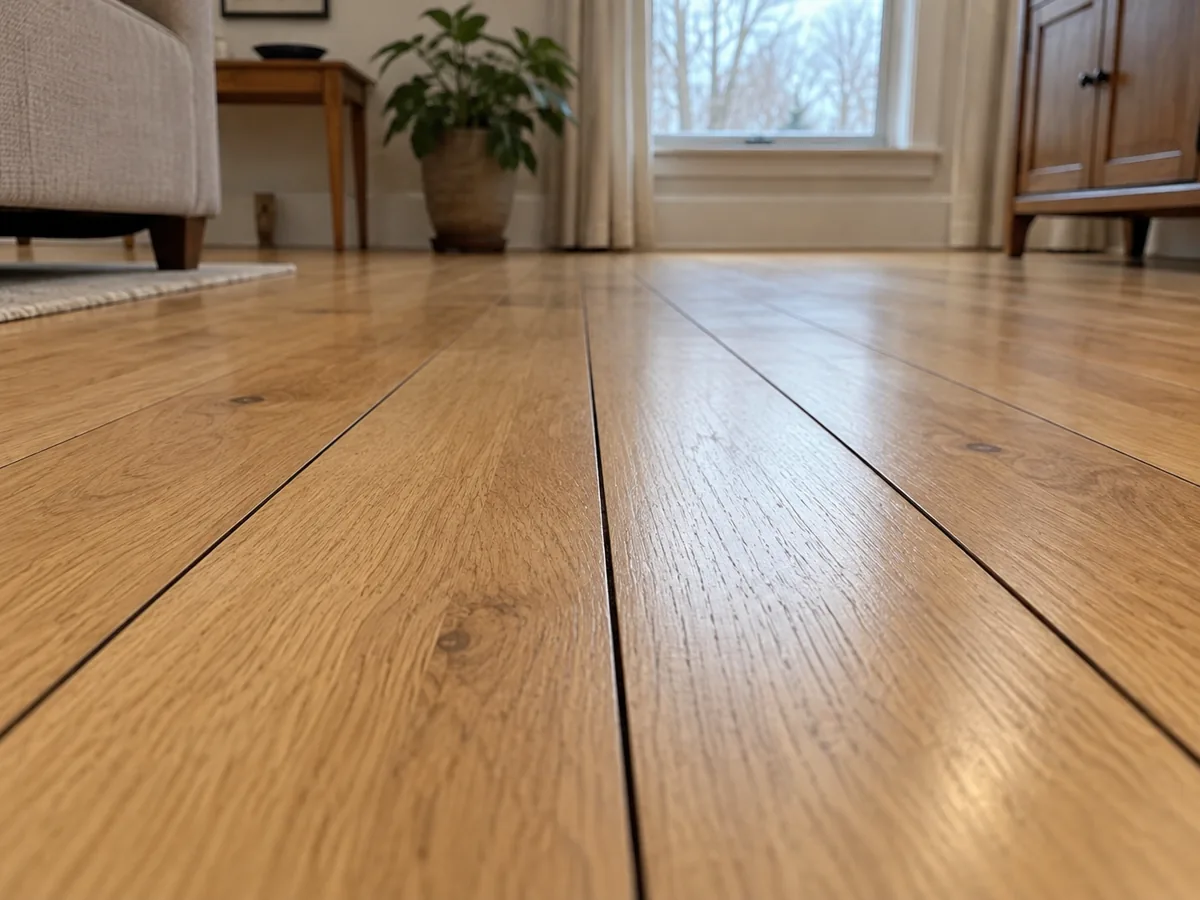
The distortion in water damaged hardwood floors determines how long we wait before repairs. Cupping leaves the edges of a board raised and the center lower because the underside holds more moisture than the top. Crowning is the opposite, with the center raised above the edges. Buckling is more severe, with boards lifting away from the subfloor entirely. Cupping develops first and commonly improves as the wood dries, though how far depends on the floor. If you are working out how to fix a water damaged, swollen wood floor, the sequence is dry, re-meter, then decide. Sanding before the wood has dried is one cause of crowning, and that thickness does not come back.
Metering to Decide What Survives, Not to Specify a Floor
A moisture meter serves two different purposes. Before a new floor goes down it tells an installer what a room will hold. After a leak, it helps identify which boards are worth saving, based on readings collected over several days rather than a single visit. A pinless moisture meter checks a broad area without leaving marks on your finish, while a pin moisture meter uses two small holes to measure moisture at a selected depth. For hardwood water damage repair, we mark each testing location, measure the same spots on every visit and compare the results with an unaffected reference area. One reading is a number; a series is an answer, and you get the readings themselves.
Reading the Subfloor Before Anything Goes Back Down
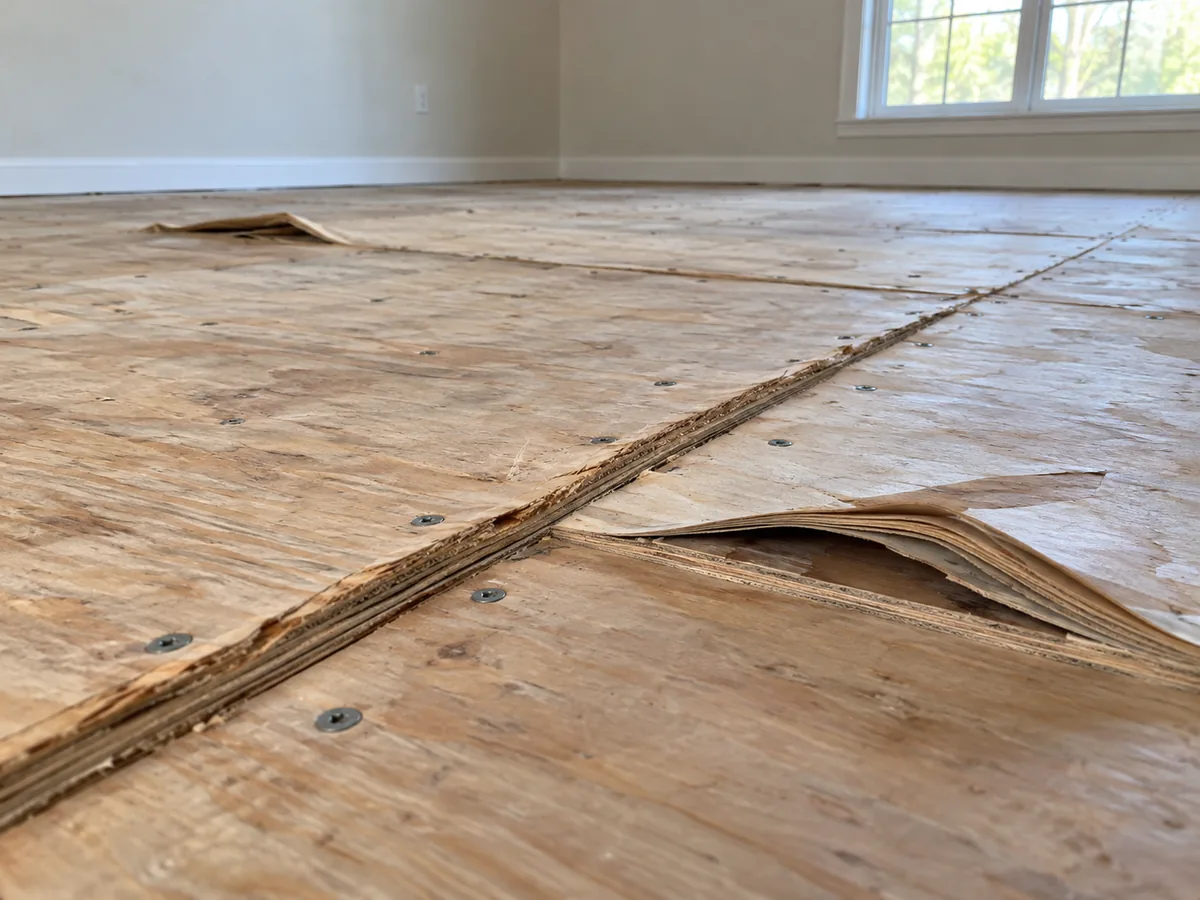
Beneath your hardwood boards is a deck of subfloor panels, and this step establishes whether it is still one. Moisture readings decide where we lift a board, rather than the worst-looking patch, and then we meter the panel itself rather than its surface. Plywood is thin layers of wood glued together, and water can pull them apart; that failure is delamination. OSB is compressed wood strands, whose edges swell and whose inner bond breaks. Neither reverses as the panel dries, and the unevenness transfers through to your new floor. Structural repairs beneath the panels, joist work included, belong to a restoration contractor. Our work is cutting back to panel that still reads dry and holds a nail.
Salvage or Replace: What the Readings Decide
We do not begin repairs until moisture readings in the affected area return to the level of the surrounding floor. If repaired boards are wetter or drier than the hardwood around them, they continue to move differently after the work is finished, leaving gaps or raised edges that appear months later. Boards that return to the proper moisture level stay in place, while those that remain too wet are removed. We assess the subfloor panels separately, using their own moisture readings rather than judging them by the condition of the boards above. That is why hardwood water damage repair follows the moisture readings, not a fixed completion date.
Why Homeowners Call Sioux Falls Hardwood Flooring After a Leak
We take moisture readings before pricing the work, and if your floor is beyond repair, we tell you rather than recommend a repair that will not last. Sioux Falls Hardwood Flooring is a local company with 15 years in business. That is firsthand experience with Sioux Falls basements, concrete slabs and the hardwood floors installed over them. We follow NWFA (National Wood Flooring Association) guidelines throughout our work.
Several factors affect hardwood water damage repair beyond the initial diagnosis:
- The metering and the drying are done by the people doing the repair, not handed to a second company.
- We carry the insurance and bonding applicable to our work and can provide documentation on request.
- Flooring and finish materials carry their manufacturer's warranty.
- The plumbing or drainage repair that stops the water goes to the trade that owns it; we handle the floor.
Call (605) 799-9142 or use the quote form to schedule an assessment. We will provide the moisture readings and a clear, straightforward answer about whether your floor is worth repairing.
Pricing
What Water-Damage Hardwood Floor Repair Costs in Sioux Falls
This page carries no price for water damage hardwood floor repair, because the size of the job follows how far the water traveled, not a flat rate. The assessment visit for hardwood water damage repair still gives you numbers. We can price the extraction and drying from the first visit, because that work runs on the wet area and the equipment set up in it. What waits is the count of boards and subfloor panels that come out, and we tell you which parts of your written scope are firm and which move with the readings. Replacement is priced per board and refinishing per square foot. We provide free estimates and offer financing for larger projects.
How Each Part of the Job Is Estimated
We price each part of the job based on what we measure in your home rather than using a flat rate. The breakdown below follows the order of the work and explains how each item is priced without listing a fixed price. Two details need to be confirmed in your written scope: whether drying equipment and follow-up moisture monitoring visits are billed separately, and whether those return visits are included in your free assessment. We spell out both before work begins, so you know exactly what is covered and what you will pay.
- The moisture assessment is included in your free on-site estimate.
- Extraction and drying are estimated from the wet area, the equipment in the room, and how long it runs.
- Board replacement is estimated from the material and the labor those boards require.
- Subfloor replacement is estimated from the wet area and the condition of the structure under it.
- Sanding and refinishing are estimated from square footage and the finish you choose.
- Color and sheen blending is estimated from the repair area against the floor beside it.
What Moves the Number
The one decision you make is whether refinishing stops at the damaged room or extends into the adjoining floor to blend the finish. Everything else depends on what we measure in your home. We record the square footage affected by moisture, which extends beyond the visible staining because water travels along the boards and collects beneath them. Those measurements help determine how many boards need replacing and whether any subfloor panels must come out as well. Drying takes additional days, and the final replacement count is established once the moisture readings show what can be saved. How far the water has spread is the factor homeowners underestimate most.
Our Repair Process, From the First Reading to the Final Coat
Once the assessment is complete, we prepare a written scope of work and carry out the repair in three stages that must happen in order. First, we remove the water from the floor, then allow the wood to dry, and only after the moisture readings confirm it is ready do we cut boards or begin refinishing. Each stage depends on the readings collected during the previous one, so water damage hardwood floor repair involves several visits throughout the drying process rather than a single appointment. Sioux Falls Hardwood Flooring handles all three stages with our own crew, and the same person who assesses your floor at the start checks the final readings and signs off on the completed work.
-
1.
Standing Water Comes Out First
We remove standing water and whatever is trapped beneath the boards.
We remove water from the top down, starting with extraction equipment that pulls standing water off the hardwood surface, then removing water that has seeped between the boards and collected underneath. If the shoe molding or base trim is wet, we remove it to open a path for airflow along the edges of the room. Before we arrive, we will explain what needs to be cleared, including furniture, rugs and anything stored on the floor, so we have access to the affected wood. Once the standing water is removed, we set up the drying equipment.
-
2.
We Set the Drying Equipment, Then Come Back and Read It
We set drying equipment and read it on return visits.
We use three types of drying equipment, each with a specific purpose. Air movers are high-output fans that direct airflow across the hardwood boards, carrying away moisture as it rises to the surface. Dehumidifiers remove that moisture from the room air so the wood continues to dry. Where water has penetrated deep into the flooring, we seal drying mats against the surface and apply a slight vacuum to draw moisture upward through the boards rather than letting it move farther into the subfloor. The equipment runs continuously and is noisy, although most households remain in their homes during drying. We return to take new moisture readings at the same marked locations and track the floor's progress.
-
3.
Then We Repair, and Refinish What We Opened
We replace damaged boards and panels, then sand and coat what we opened.
Replacement comes last. Boards go back in matched by species, thickness and grade, along with any subfloor panels we took out, and we sand and coat the area we opened so it meets the floor around it. Dust containment runs on every sander we use, on every job. Lifting a board sometimes uncovers damage nobody could see from above, and we photograph it, show it to you and get your approval in writing first, so the written scope is updated rather than quietly exceeded. Shoe molding and trim go back on last, and we walk the floor with you.
When a Water-Damaged Floor Cannot Be Saved
Many water-damaged hardwood floors can be dried and repaired, but each is judged on its own condition, and three things end a repair. The first is crowning, when boards dry with raised centers and too little thickness is left to sand. The second is reach: replacing a panel or two beneath the wet area is ordinary water damage hardwood floor repair, while a whole room of ruined decking is a rebuild and damage down in the joists is restoration work rather than flooring work. The third is contamination, because water from a sewer backup or river flooding never comes back out clean, so that floor goes to a restoration contractor before we discuss flooring.
We also will not put a floor back over a leak nobody has repaired, because the same failure returns. Whether a sound floor is better repaired or replaced is a separate question we answer elsewhere.
Boards That Dried Crowned, and the Sanding That Would Cost
What settles a crowned hardwood floor is how much wood remains above the tongue, the interlocking edge that connects one board to the next. Sanding a crowned floor flat means removing wood until the entire surface is level with its lowest point, and that lost thickness cannot be restored. A floor that has already been sanded three or four times has little wood left to spare. We measure the remaining thickness and explain your options at the estimate, before any sanding begins. If the original flooring is already too thin, the work becomes a restoration project instead. The number of light recoats a floor can receive before it needs sanding again is a separate subject we cover elsewhere.
What Water Does to Solid and Engineered Wood Floors
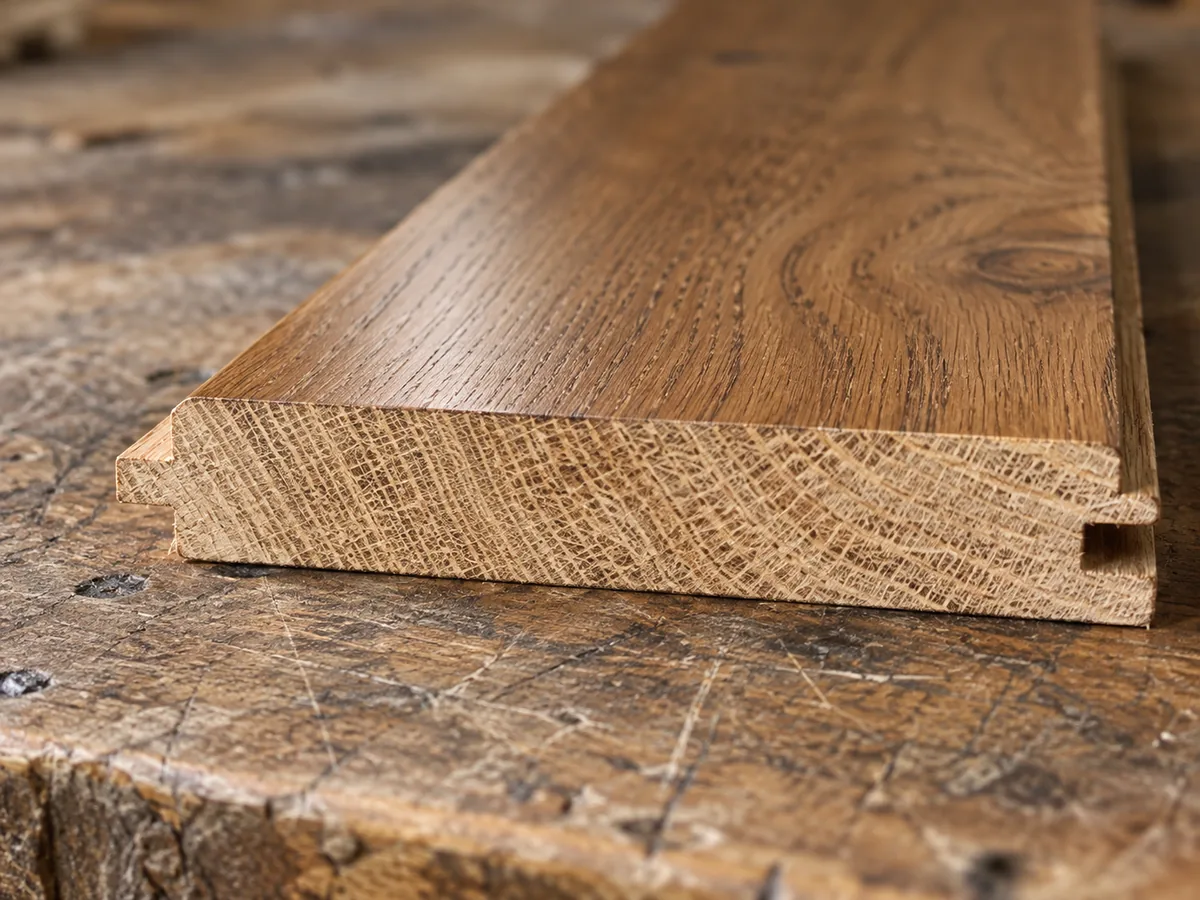
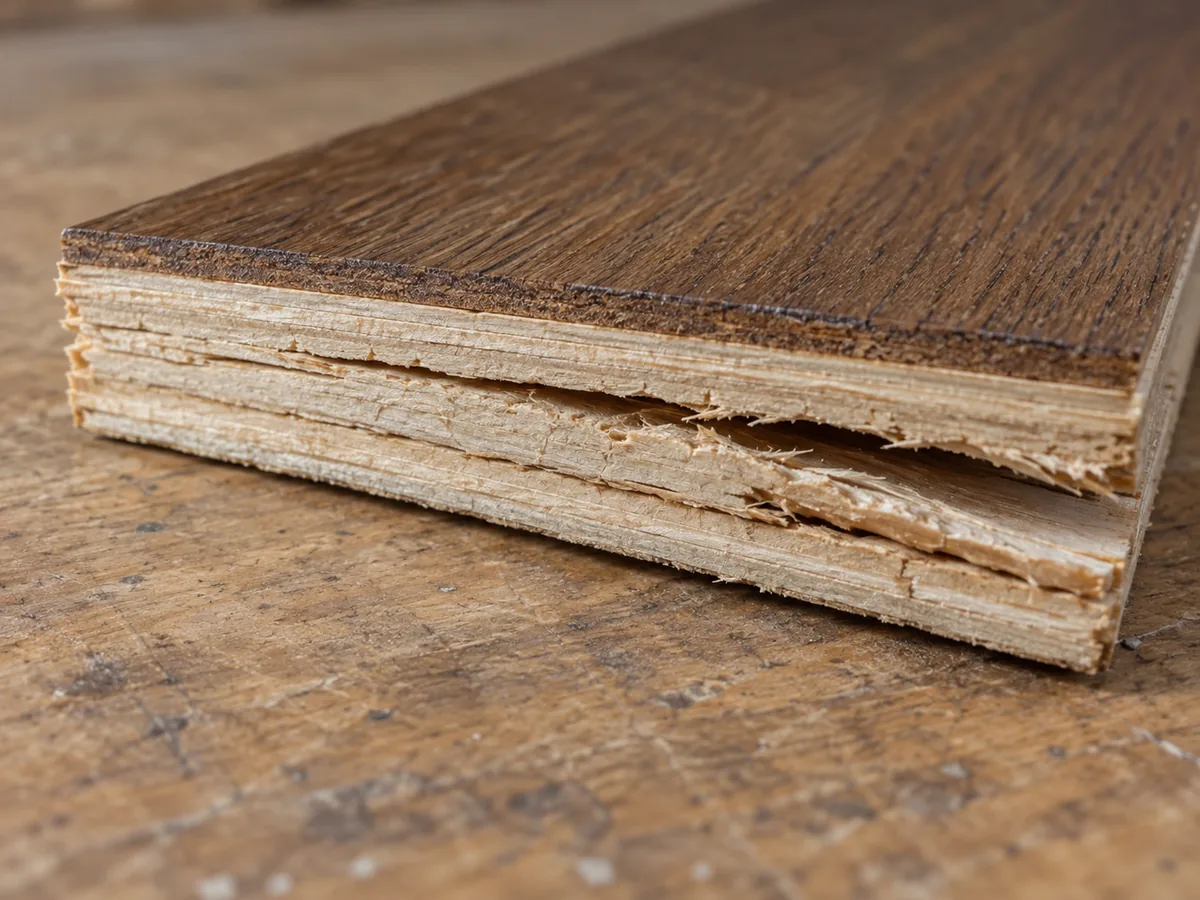
Hardwood floors are built in two different ways, and that construction affects how we repair them after a leak. Solid hardwood is made from a single piece of wood throughout, while engineered hardwood has a thin layer of real wood bonded to a layered core. Water damaged hardwood floors made from solid wood can often be dried and sanded flat again. Engineered hardwood more frequently requires removing and replacing the affected planks because its top wear layer has limited thickness. We identify which type of flooring you have before preparing your repair estimate. If you are deciding which type to buy for a new floor, we cover that choice on our installation pages.
Solid Boards Move, and Mostly Come Back
Solid hardwood is one piece of wood through its whole thickness, so it absorbs moisture all the way down and swells accordingly. A swollen wood floor in solid red oak or white oak lifts at the board edges a long way, but much of the distortion reverses once the water is removed and the room returns to normal humidity. That recovery makes the usual route possible: we dry the floor, wait, take fresh readings, then sand and refinish. Solid stock carries sanding thickness that engineered construction does not. Wide boards swell more than narrow strips when exposed to the same amount of water, and we replace individual boards where prolonged moisture exposure has caused permanent damage.
Engineered Plank and a Wet Wear Layer
For engineered hardwood, the first question is whether enough wood remains in the top layer to allow sanding. This wear layer is a thin sheet of real wood bonded to a plywood-style core made from layers of glued wood. Those layers can swell and separate while the surface still looks sound, so you cannot judge the floor by its finish. A wear layer measured in fractions of an inch may have no sanding left, which is why we measure it before quoting a refinish. Replacing planks is the common answer, though whether a floor can be saved turns on the state of the core, the veneer thickness and how far the damage went.
Water Damage vs. Seasonal Hardwood Floor Movement
Hardwood floors expand and contract as indoor humidity changes, and those changes are especially pronounced in Sioux Falls, South Dakota. A seven-month heating season, running roughly October through April, lowers indoor moisture for much of the year. With roughly 25 days at or below zero Fahrenheit and humid summers either side, hardwood boards shrink during the colder months and swell again as humidity rises. These swings in indoor humidity cause floor movement that homeowners mistake for water damage, and seasonal movement is the more common reason for these calls. Before treating your floor as one of the water damaged hardwood floors we repair, we determine whether the cause is a leak or normal seasonal movement.
Winter Gapping Is Not a Leak
Seasonal gapping appears as thin, fairly even spaces between boards throughout a room, while the boards themselves remain flat. Water damage looks different. It stays concentrated near the source, creates uneven gaps and leaves a swollen wood floor with raised or cupped boards where moisture has been absorbed. Flat boards with consistent gaps point to seasonal movement, while distorted boards point to water damage. The main factor is indoor relative humidity, which drops well below 30 percent during harsh Sioux Falls winters, against the 30 to 50 percent indoor range where a wood floor sits comfortably. A whole-house humidifier helps reduce seasonal gaps during winter, but it does nothing to repair swelling caused by water damage.
Why We Would Rather Meter in February Than Guess in July
Timing affects how well a finished repair blends with the surrounding floor as the seasons change. A hardwood floor measured in January has different board widths than the same floor in July. Replacement boards fitted too tightly during a dry winter can press against neighboring boards by August, while boards installed during a humid summer can develop gaps once the heating season begins. We account for seasonal conditions, explain how your floor will move as humidity changes and tell you what to expect from the repaired area six months later, not just on the day we finish. That six-month outlook is part of our repair process. Acclimating new hardwood before a full installation is a separate subject covered elsewhere.

Service Area
Water-Damage Hardwood Floor Repair Across Sioux Falls and the Surrounding Communities
Snowmelt sets much of the schedule for this work in Sioux Falls. The area receives about 45 inches of snow in an average year, and snow piled against foundations melts in spring, sending water downhill toward finished lower levels. Once that water gets inside, it collects on the floor and soaks into the wood. Spring snowmelt brings us into these rooms more frequently than plumbing failures, and finished lower levels account for most of the water damage repair work we see.
Where Sioux Falls Hardwood Flooring Takes Water-Damage Work
Sioux Falls Hardwood Flooring takes water-damage work across sixteen communities in Minnehaha, Lincoln and Turner Counties, and the drive is the same whether you are in town or twenty minutes out. We serve Brandon, Harrisburg, Tea, and other communities across Minnehaha and Lincoln Counties.
Communities We Serve
- Brandon
- Harrisburg
- Tea
- Hartford
- Dell Rapids
- Lennox
- Canton
- Crooks
- Baltic
- Worthing
- Valley Springs
- Garretson
- Humboldt
- Colton
- Renner
- Chancellor
FAQ
Water-Damage Hardwood Floor Repair Questions We Get
How much does it cost to repair a water-damaged hardwood floor?
We do not publish a fixed price because the cost depends on the size of the area with elevated moisture readings, the number of boards needing replacement and whether the subfloor requires work. During the assessment, we price the drying and provide a written estimate explaining which parts of your floor we expect to save. The final replacement count is confirmed after drying. We price replacement by the individual board and refinishing by square footage.
Can hardwood floors be repaired after water damage?
Most of them can. Solid hardwood boards recover more than many homeowners expect as they dry, while engineered hardwood depends on how much wear layer remains available for sanding. The condition of the subfloor beneath the boards is usually what determines whether a repair is still practical. Water out of a sewer backup or a river flood is a restoration contractor's job, not ours.
How long does it take hardwood floors to dry out after water damage?
Several days to several weeks. A floor soaked in one day dries faster than one under a leak that ran for months, because prolonged exposure works water deeper into the wood. Thick solid boards and floors laid over a slab both give moisture up more slowly than thin strip over a crawl space. We take readings during the assessment before estimating how long yours will take.
What do water damaged hardwood floors look like?
Signs of water damage include board edges raised above their centers, board centers raised above their edges, boards lifted clear of the subfloor altogether, dark stains along the joints, loose boards, hollow sounds and soft spots that give underfoot. The pattern helps distinguish water damage from seasonal movement. Localized, uneven distortion points to moisture from a leak, while thin, consistent gaps between flat boards throughout a room point to normal winter shrinkage.
Can a swollen wood floor flatten out on its own?
Often a long way, once moisture spreads evenly through the thickness of each board. How far any one floor comes back is something we read rather than something we promise.
Will my hardwood floor cup again after it is repaired?
Once the leak is fixed and the wood has dried, that same leak should not cause the boards to cup again, although no hardwood floor can be promised against future movement. The repaired area remains part of a floor that expands and contracts with the seasons, so some movement is normal and does not mean water damage has returned. Keeping indoor humidity closer to 30 to 50 percent helps limit that movement, which typically requires a humidifier during South Dakota winters.
If your floor shows any of these signs, call us at (605) 799-9142 or use the quote form.
Get a Water-Damaged Floor Assessed
Sioux Falls Hardwood Flooring will come and read your floor, then tell you plainly whether the boards are worth saving or have gone too far. You get the numbers behind that answer, and a written scope once the floor is dry enough to price. Call (605) 799-9142 for a free on-site estimate, or use the quote form to request a proposal.