
Carpet-to-Hardwood Conversion in Sioux Falls, SD | Sioux Falls Hardwood Flooring
Sioux Falls Hardwood Flooring has spent 15 years on carpet to hardwood conversion for homeowners in Sioux Falls, South Dakota. When you replace carpet with hardwood, pulling the carpet up is the cheap and informative part, and what it uncovers decides what the rest of the job costs you. Carpet removal and haul-away runs $1 to $2 per square foot. Which hardwood goes down afterward is a separate subject; our work here is getting the old floor out and the base under it ready.
The pad, the staples and the tack strip come out with the carpet. Glued-down flooring takes longer to remove than loose carpet. Once the floor is cleared, we inspect the subfloor panels, refasten them based on their condition and the joist spacing, and bring the surface within NWFA flatness tolerance so the subfloor preparation is complete before the hardwood boards go down. We also fit transition strips and thresholds wherever the new floor height meets adjoining rooms. We move and cover your furniture, then sweep and vacuum the room when the work is finished.
We work across Brandon, Harrisburg and Tea, and through Minnehaha and Lincoln Counties. The measure comes before any commitment, so you see the number first. Call (605) 799-9142 for a free on-site estimate, or use the quote form to request a proposal.
Get A Free Estimate
Replacing Carpet With Hardwood
A carpet to hardwood conversion involves three stages: removing the old carpet and everything holding it in place, preparing the subfloor for the new flooring, and installing the hardwood. The way your carpet is attached determines the removal price and affects the condition of the subfloor underneath. Stretched carpet held by tack strips costs $1 to $2 per square foot to remove, while carpet secured with construction adhesive costs $1.50 to $4 per square foot. The total project price also depends on how many rooms you are converting and how the new floor height meets each doorway.
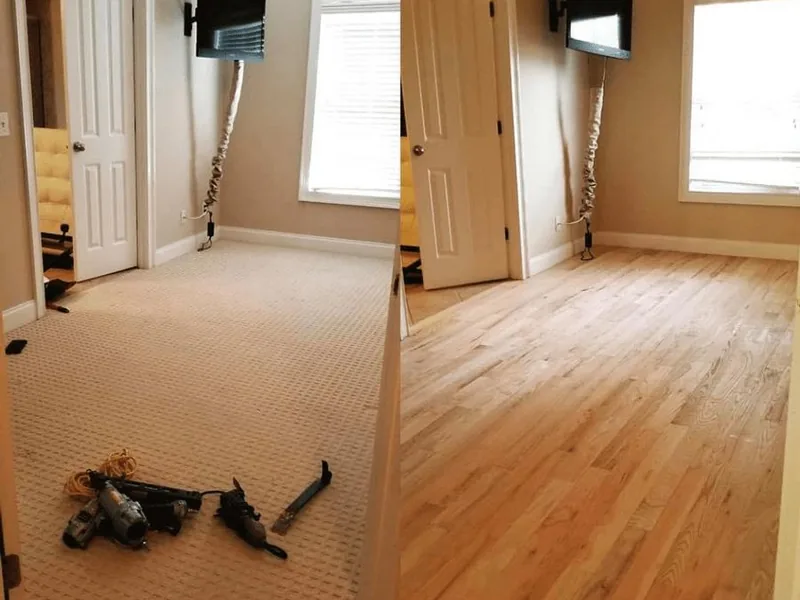
Removing Carpet, Padding, Tack Strips and Staples
Carpet removal on a stretched floor means taking out four separate materials. First, we cut the carpet free, roll it up and remove the padding underneath. Next, a pry bar lifts the tack strips, which are thin wooden battens nailed around the edges of the room with small spikes that hold the carpet tightly in place. Finally, we remove the staples used to fasten the padding to the subfloor, typically several hundred in a single room.
Every staple must be removed before the new flooring goes down. Even one left protruding from the subfloor will keep a hardwood board from sitting flat or create a raised spot you can feel underfoot later. We remove the staples with a staple puller and use nippers to cut off any stubborn ones that will not come free.
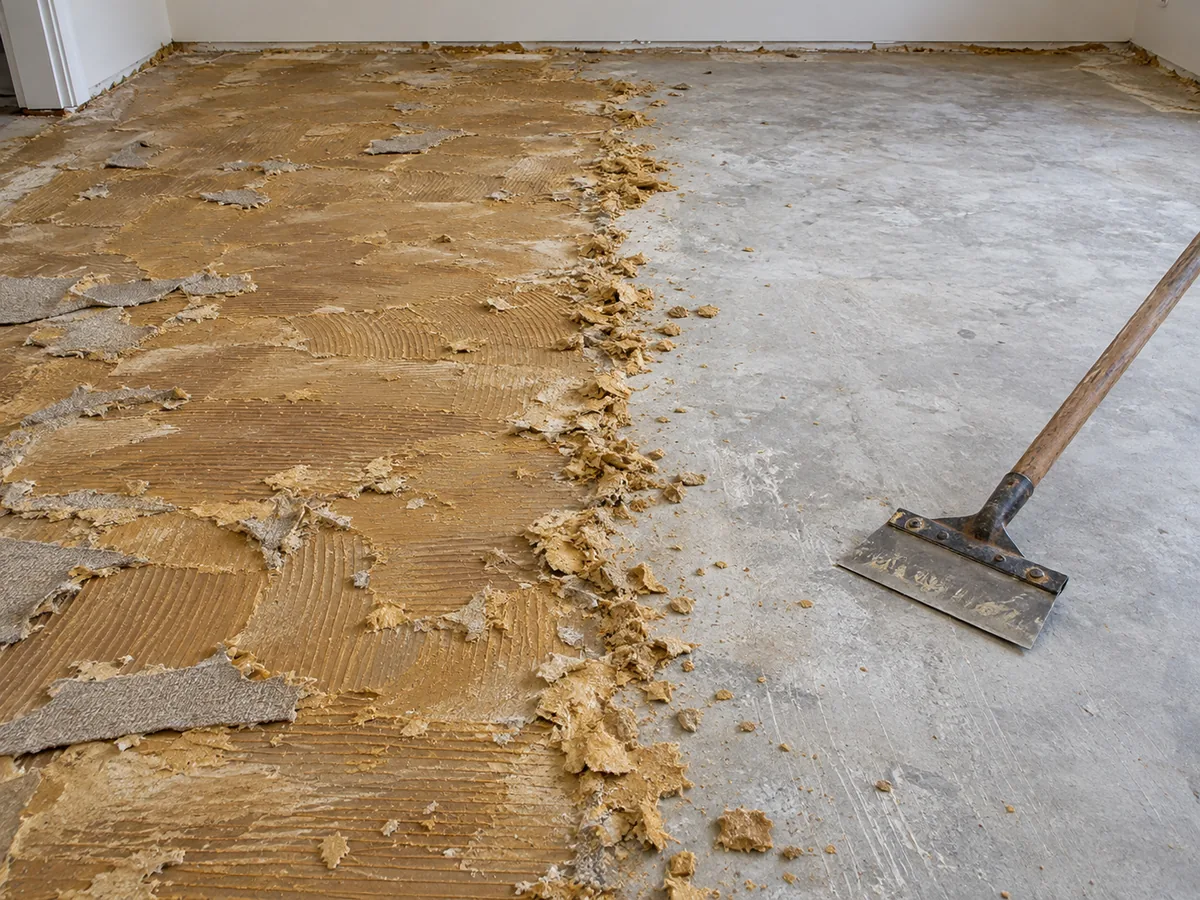
Removing Glued-Down Carpet and Adhesive
Carpet is sometimes glued directly to a concrete slab or panel subfloor with construction adhesive. Glued-down flooring removal costs more because the adhesive must come off along with the carpet. Older rubber or jute padding also breaks down over time and bonds to the panels underneath, turning carpet that was originally stretched into a glue removal job. We use a long-handled floor scraper to remove most of the bonded material and a ride-on scraper for large glued areas. On concrete slabs, we grind down or skim over the remaining adhesive ridges to leave a flat surface for the new flooring.
There is one situation where we stop work beneath an older glued floor. Older resilient tile, sheet flooring and the black mastic underneath are treated as suspect materials. We leave them undisturbed and arrange for evaluation or testing by an appropriately qualified provider. If abatement is required, that provider handles it separately before we resume work. We never assume a material is safe based on its appearance.
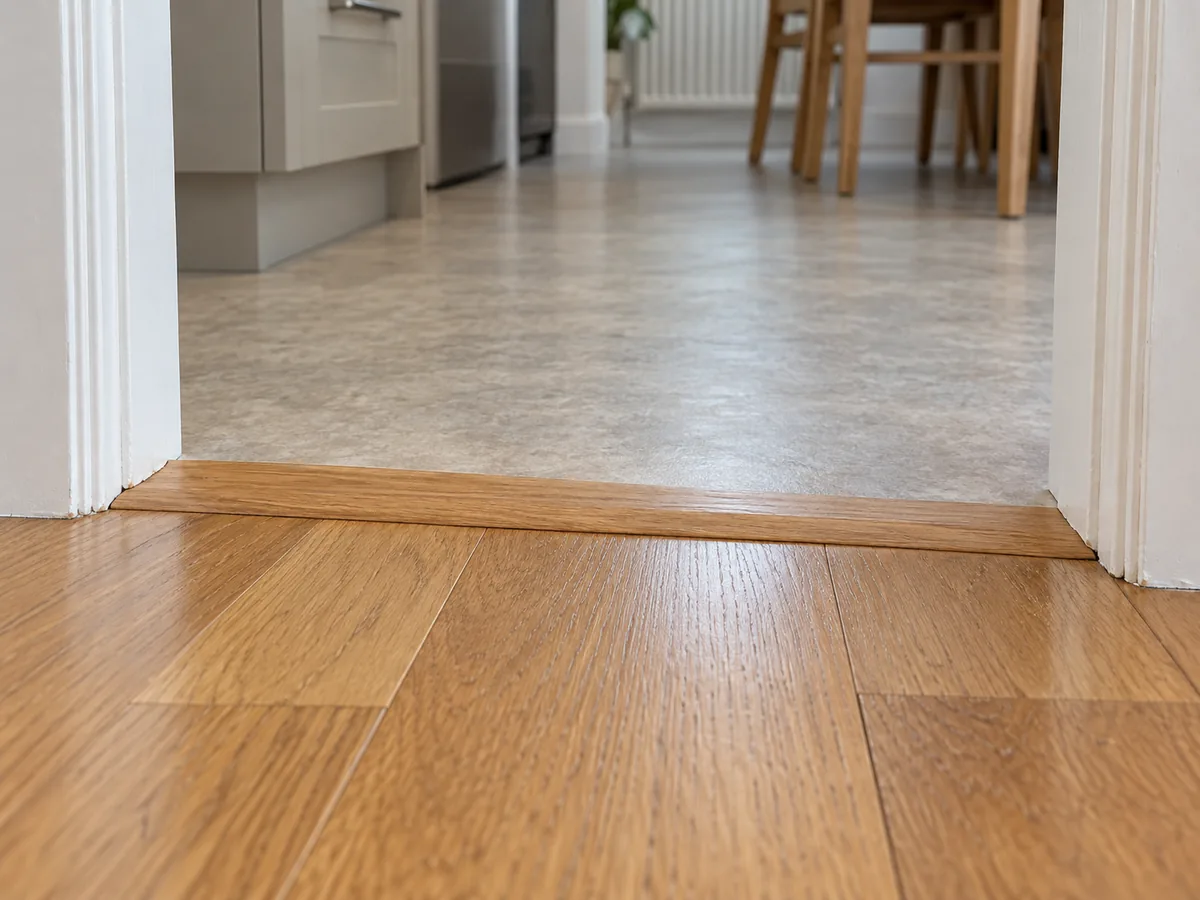
Doorway Transitions and Floor Height Changes
Your new hardwood floor will rarely be the same height as the flooring it meets at a doorway, so we measure the finished floor heights at every opening. Where hardwood continues from one room into the next, we install it without a transition strip. Where the flooring type changes or the heights differ, we fit transition strips to suit. A reducer strip has a tapered edge that provides a gradual change from a higher floor to a lower one. T-molding joins two floors of equal height with a flat, capped strip, while a threshold closes the gap where the flooring meets an exterior door.
The new floor height also affects door jambs, doors, floor registers and baseboards. We undercut the door jambs so the hardwood fits beneath them, and trim the bottom of any door that needs additional clearance. Floor registers are adjusted to sit flush with the new boards. If the existing baseboards were installed high to accommodate carpet, we cover the exposed gap with shoe molding.
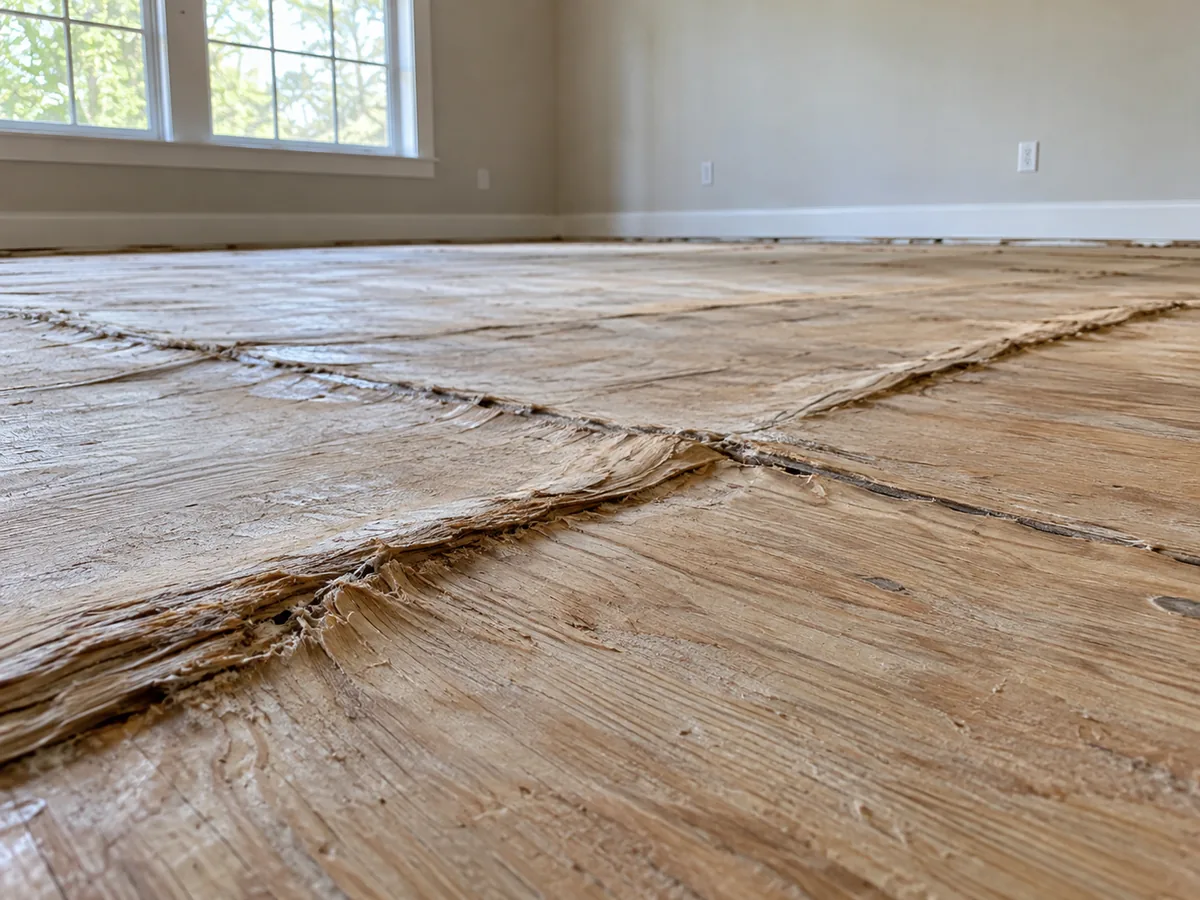
Preparing the Subfloor for Hardwood
Subfloor preparation is the first step in a carpet to hardwood conversion. The wood deck beneath your carpet must be flat enough to support the new flooring, but its condition cannot be fully assessed until the carpet and carpet pad are removed. Once we expose the subfloor, we inspect it and determine what preparation is needed. Your estimate includes carpet removal, doorway transitions and any subfloor work visible during the initial measurement. If we uncover problems hidden by the carpet, we document them, provide a written price and get your approval before starting any additional work.
What We Check After Carpet Removal
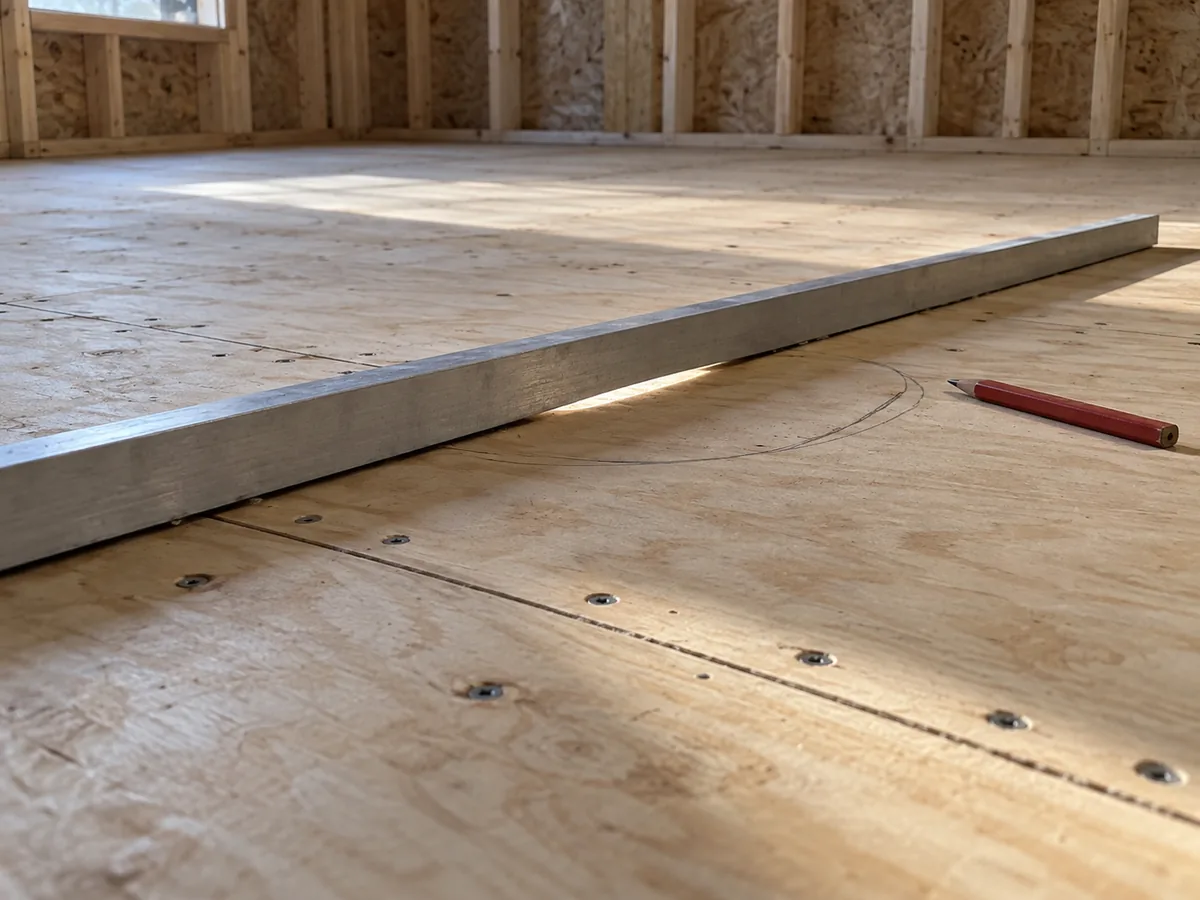
Once the carpet is removed and the subfloor is exposed, subfloor preparation after carpet removal begins with a bare-base walkover. We check for boards that move underfoot and use a straightedge to identify high and low spots previously hidden by the carpet padding. Squeaking underfoot indicates movement at the fasteners, between panel joints or in the framing below. We also document panels cut around old pipework and identify any that feel soft or spongy or show staining. Those damaged panels fall under our water damage repair service.
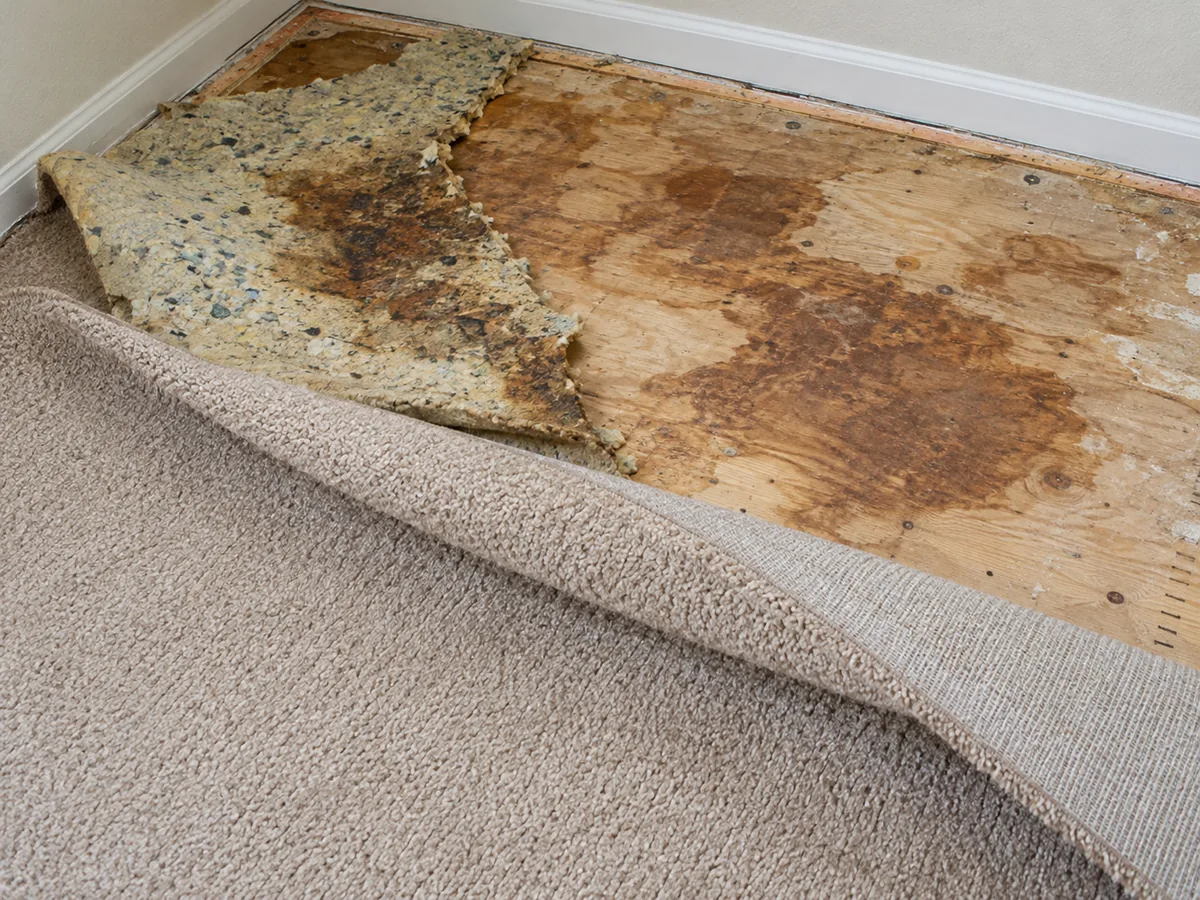
Pet urine is the most common problem we find beneath old carpet. The padding absorbs and holds the urine, allowing it to soak into the plywood subfloor underneath. A dark ring along a padding seam is a clear sign, although the odor is frequently noticeable before the stain. We either seal the affected area with a stain-blocking primer or cut out and replace the damaged section of subfloor panel.
Repairing and Flattening the Subfloor
Subfloor preparation after carpet removal includes refastening loose panels with threaded subfloor screws that pull them firmly against the floor joists. Unlike nails that work loose and allow squeaks to return, the screw threads hold the panels in place. We determine screw spacing based on the panel condition, joist spacing and type of flooring being installed. Before driving any screws, we check for radiant heat, hydronic tubing or electric heating mats beneath the panels. Refastening addresses movement at the subfloor, but it does not eliminate squeaks caused by movement in the joists that cannot be reached from above.
We sand down high spots with a belt sander or edger and fill low spots with a patching material suited to the subfloor and the hardwood being installed. We then recheck the surface to make sure it meets the flatness tolerance published by the National Wood Flooring Association (NWFA), the trade organization that sets hardwood flooring installation standards. A properly flattened subfloor supports each board evenly, without allowing it to bridge a hollow or rock on a raised area.
When Existing Hardwood Can Be Saved
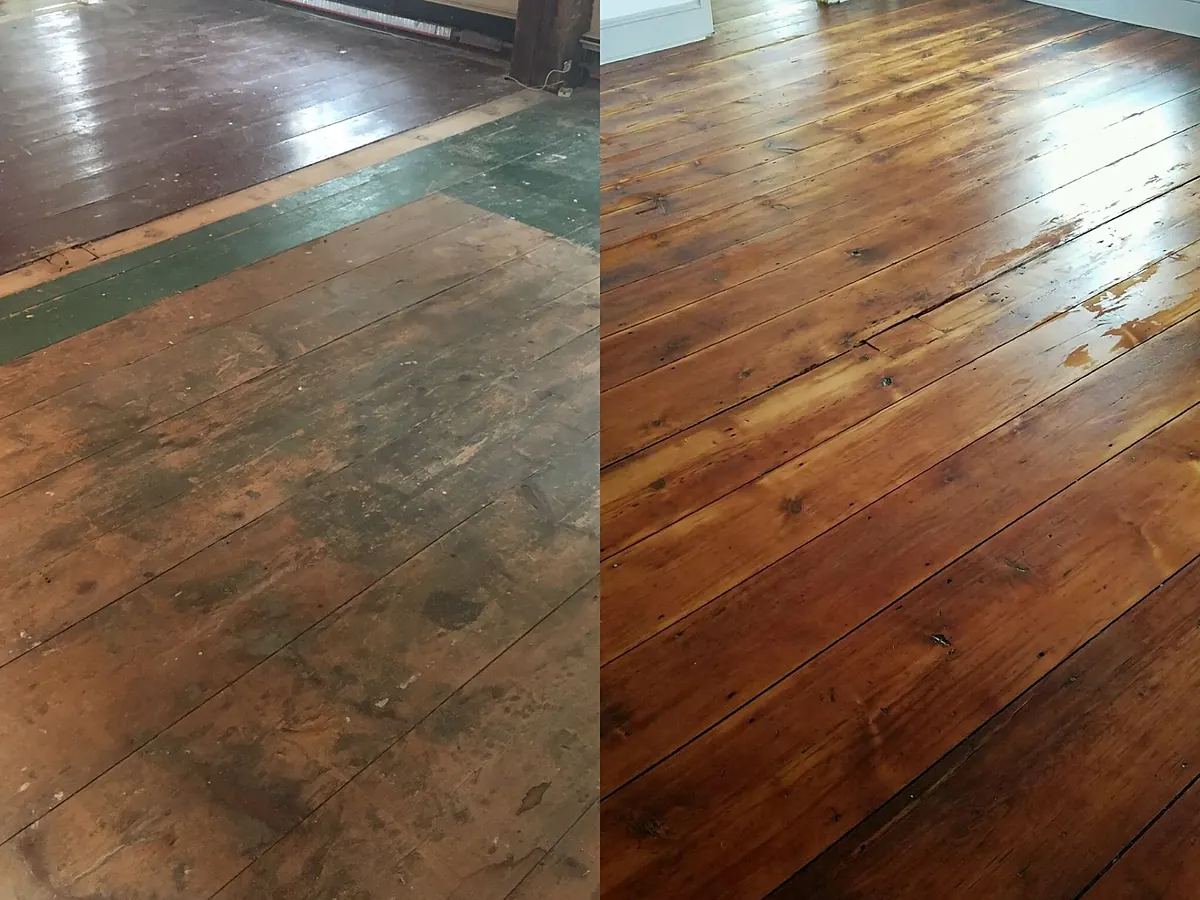
In older Sioux Falls homes, carpet was often installed directly over existing narrow strip flooring rather than replacing it. That means you might already have hardwood beneath your carpet. Whether it can be refinished instead of replaced depends on how much wood remains above the tongue, the machined lip along the edge of each board through which the flooring nails are driven.
Each sanding removes a small amount of wood, and once the remaining thickness is too close to the tongue, the boards cannot be refinished again. We check how much wood is left at a doorway edge or beneath a removable floor vent without damaging the flooring. If enough wood remains for refinishing, the work falls under our hardwood floor restoration service rather than a carpet to hardwood conversion.
Protecting Your Home During Conversion
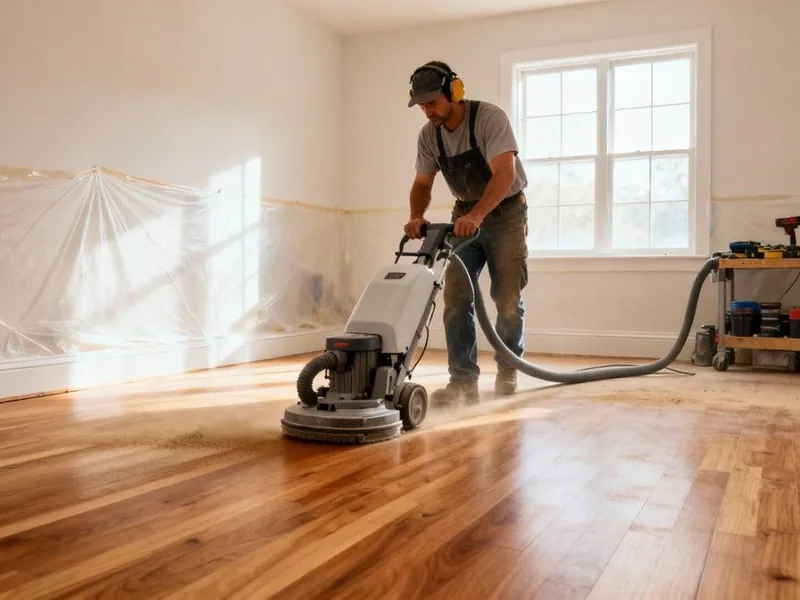
Removing carpet is demolition work inside a home you are still living in. As we pull up and roll out the carpet, loose fibers, dust and deteriorating padding break free, and the removal route passes through rooms outside the work area. To contain the dust, we hang a dust barrier of plastic sheeting across doorways and tape the edges to keep debris from spreading. We also shut off the furnace and air conditioning during removal so the blower does not draw loose fibers into the ductwork throughout your home. Our sanders have dust containment as standard, and we protect the floors along the removal route before moving any carpet.
Furniture Moving and Dust Control
You do not need to empty the room before we arrive. Furniture moving is included in the job, so our crew moves beds, dressers, sofas and tables into an adjoining room or to one side where we can work around them. We only ask that you remove smaller items beforehand, including electronics, lamps and anything fragile. Heavy or specialized items such as pianos, gun safes and aquariums require a specialist mover, so please let us know about them when you book.
If a piece of furniture will not fit through a doorway, we take the door off its hinges rather than force it through. We also lay floor runners and protective film along hallways, stairs and adjoining rooms to protect the surfaces along the route used to carry out the old carpet.
Haul-Away and Cleanup
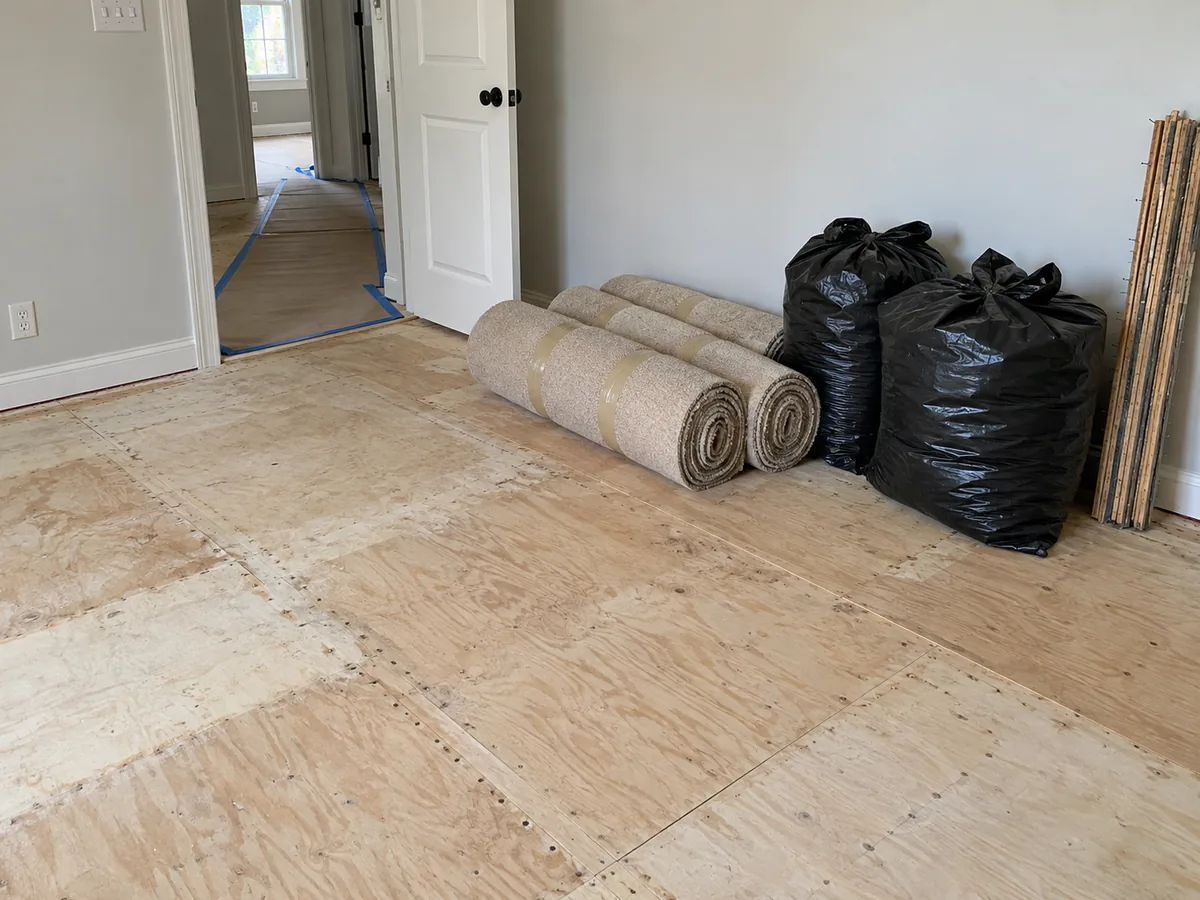
Removing carpet and padding leaves a bulky load of waste that needs to be hauled away. We cut both materials into manageable rolls and bag them inside the room before carrying them out. Haul-away is included in our $1 to $2 per square foot carpet removal rate, not charged as a separate item. If there is no dumpster on site, we take the waste with us the same day.
We pry up the wooden tack strips in sections and carry them out by hand. Next, we use a magnet sweep, a magnet mounted on a handle, to collect loose staples and nails before vacuuming the exposed subfloor. Job-site cleanup is complete when all carpet rolls, bags and debris have been removed and the subfloor is clean enough for us to spot anything the initial inspection missed.
Pricing
Carpet-to-Hardwood Conversion Cost
Your carpet to hardwood conversion cost starts with removing the existing flooring, priced by the square foot rather than by the room. Both removal rates include lifting the old flooring and hauling away the waste.
- $1 to $2 per square foot for carpet on tack strip, haul-away included
- $1.50 to $4 per square foot for glued-down flooring
Your total quoted price includes carpet removal, any approved subfloor preparation, hardwood materials, installation, finishing and the transitions needed between rooms. A 10 to 15 percent waste allowance covers ordering and cutting the new hardwood, but that allowance does not apply to carpet removal. You only pay to remove the actual square footage of carpet in your home. We measure your rooms on-site to determine the final price.
Removal and Disposal Pricing
Both removal rates include the labor to lift the old flooring and haul the waste off your property, with no separate disposal charge. The carpet removal cost for carpet stretched over tack strips is $1 to $2 per square foot, which is the rate that applies to most rooms in a home. Flooring secured with adhesive costs $1.50 to $4 per square foot because removing the bonded material requires additional work.
The difference between the two removal rates comes down to the adhesive left behind on the subfloor. Scraping away that glue takes more time than lifting stretched carpet from the same area. Any additional work needed to make the subfloor flat and solid is priced separately, since its full condition cannot be assessed until the carpet is removed.
What Affects the Total Project Cost
Five factors affect your carpet to hardwood conversion cost beyond the removal rate. The first is how the existing flooring is attached, since glued-down carpet costs more to remove than carpet stretched over tack strips. The second is the condition and flatness of the subfloor. The more uneven the surface, the more time and compatible patching or leveling material it takes to prepare it for hardwood installation.
Each doorway that requires a transition strip adds another piece to measure and fit, while converting several rooms in one visit spreads the setup time across more square footage. The amount of furniture also affects labor time, and items requiring a specialist mover are scheduled separately. Access matters as well, including stairs, tight turns on landings and long distances between the work area and the street. Estimates are free, and we offer financing on larger projects.
Our Carpet-to-Hardwood Conversion Process
Sioux Falls Hardwood Flooring handles your carpet to hardwood conversion in four stages. Most of what we need from you happens during the first two stages. After that, our crew takes care of the work in each room until the new hardwood floor is installed.
-
1.
Measure. We visit your home at no charge, inspect the rooms you want to convert, and leave you with a written room-by-room proposal that prices each space on its own.
-
2.
Move. Our crew moves the furniture and arranges each room so we can work, while you take care of removing fragile items.
-
3.
Remove. The carpet, the pad, the tack strip and the staples all come out of the room, and the waste leaves with us.
-
4.
Install. We prepare the subfloor, install transition strips wherever the new hardwood meets another flooring surface, and lay the hardwood boards.
Your proposal includes the work we can assess during the initial visit. If removing the carpet reveals any hidden subfloor problems, we document the additional work needed and provide a written price for your review. Nothing beyond the original proposal begins until you approve the additional work in writing.
Selecting and installing your new hardwood flooring is a separate service, with its own price apart from carpet removal.
Why Choose Sioux Falls Hardwood Flooring
The on-site measure that prices your carpet to hardwood conversion is a free estimate, and it ends in a written proposal rather than a number given over the phone. Sioux Falls Hardwood Flooring breaks down the estimate line by line, so you know exactly what work is included and what each part costs before making a commitment. You can also compare the written estimate directly with another company's proposal to see how their prices and services differ.
Everything else we bring to the job is backed by either a price you can verify or documentation you can request.
- Carpet removal and subfloor preparation are itemized separately, with waste disposal included in the removal rate.
- Our crew handles furniture moving and dust protection at no additional charge. We only ask you to remove small and fragile items beforehand.
- Before installing the hardwood boards, we prepare the subfloor to meet the published NWFA flatness tolerance.
- Sioux Falls Hardwood Flooring is a local company with 15 years in business.
- We carry the insurance and bonding applicable to our work and can provide documentation on request.
- Flooring and finish materials carry their manufacturer's warranty.
- We provide free estimates and offer financing for larger projects.
Call us at (605) 799-9142 to book the free on-site measure, or send your room sizes through the quote form.

Where Hardwood Conversion Makes Sense
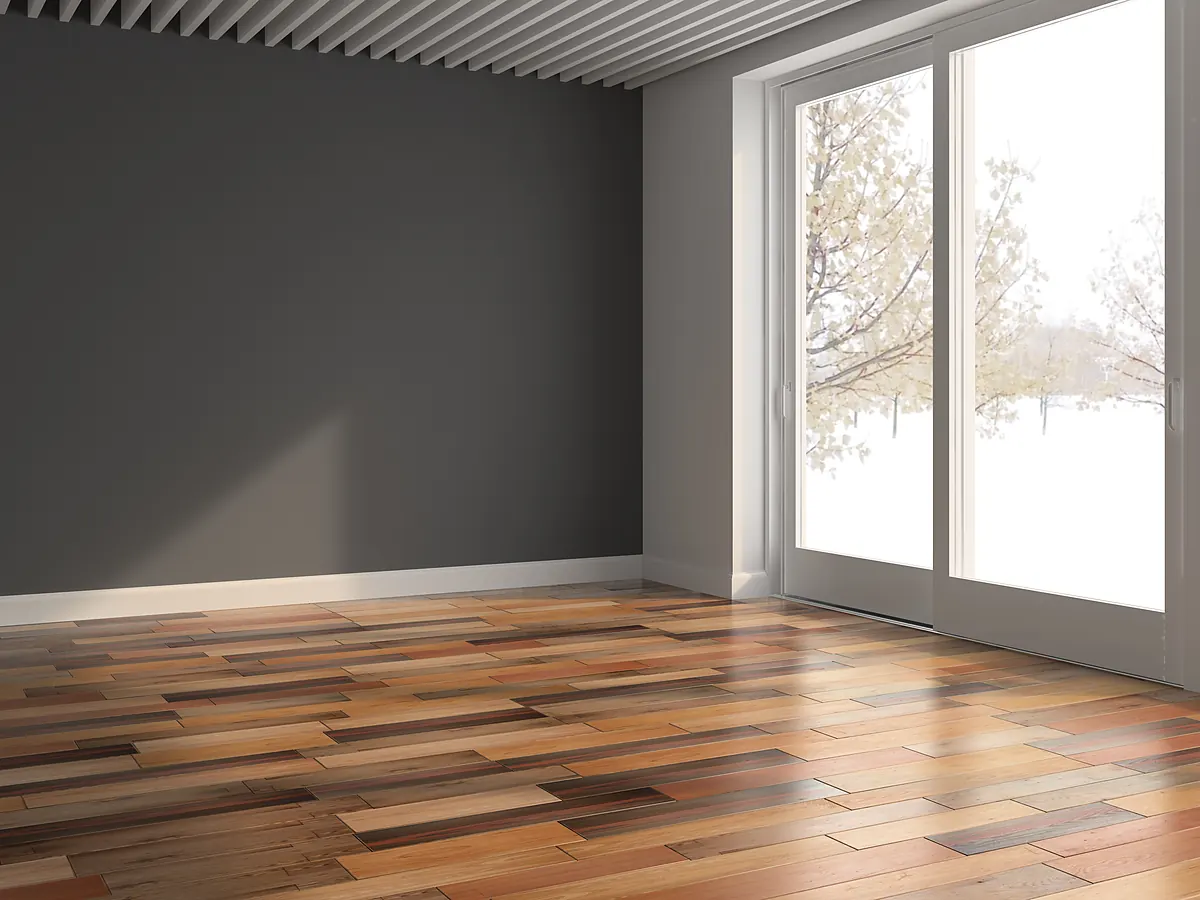
Homeowners choose to replace carpet with hardwood for three main reasons, and each affects which rooms they want to convert. In high-traffic areas, carpet wears out faster because of how the space is used. Some homeowners are preparing to sell, while others want flooring that does not trap as much dirt and is easier to clean. Worn carpet is usually what prompts the decision, but the reasons for replacing it differ from room to room.
Which Rooms Are Good Candidates for Hardwood
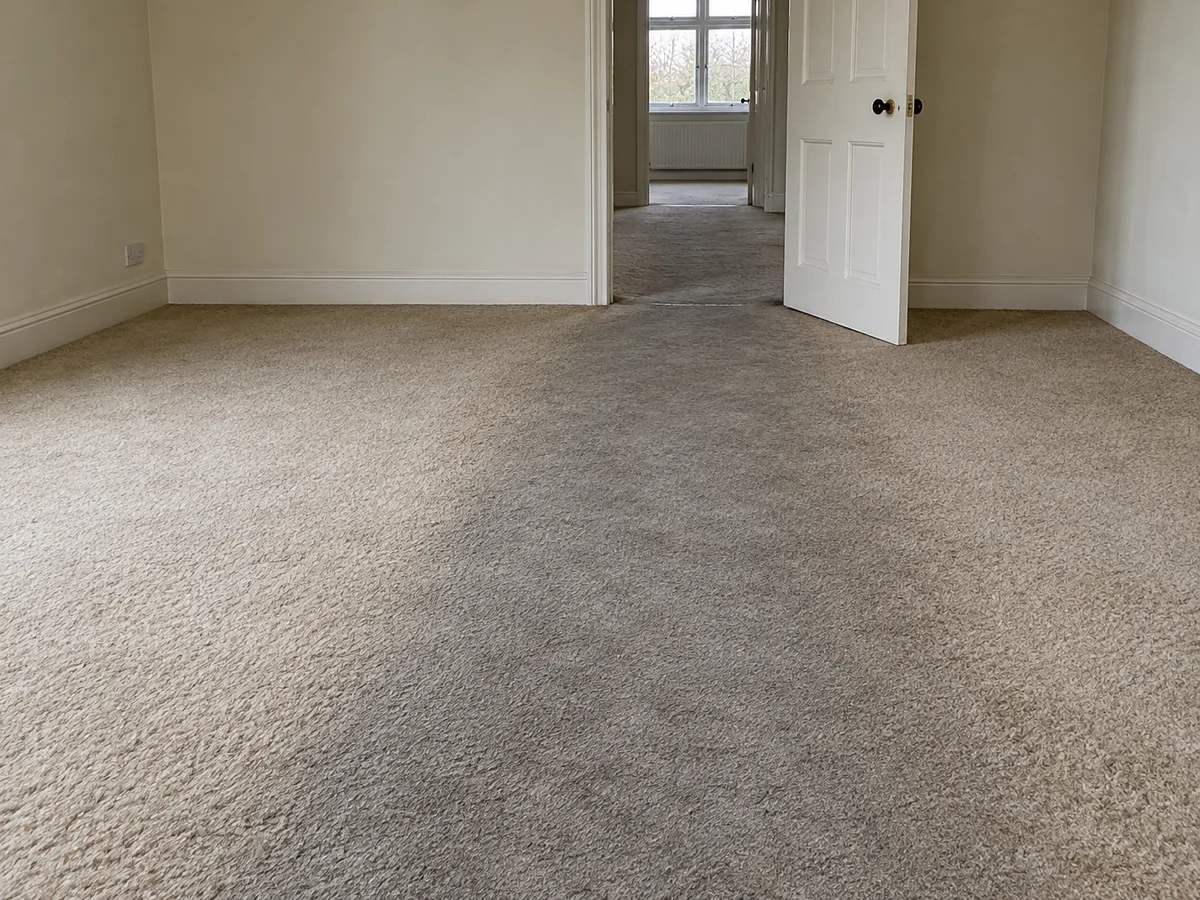
The rooms that benefit most from a carpet to hardwood conversion are those with the heaviest foot traffic, especially entryways, hallways and living rooms. Constant foot traffic leaves carpet flattened and gray along the paths people use every day. Carpet generally needs replacing every eight to ten years, so when yours is already worn through, it is a good time to install hardwood instead of starting another carpet replacement cycle.
Resale is another common reason homeowners replace carpet with hardwood. We do not promise a specific return on that investment because there is not local market data to support one. In general, buyers tend to expect hardwood in main living areas, and worn carpet suggests an expense they will have to cover after moving in. That is a broad housing market trend, though, not a measured finding about homebuyers in Sioux Falls.
Bedrooms are less clear-cut because flooring preferences differ. Many buyers still prefer the comfort of carpet underfoot, especially in rooms where they walk barefoot, and we will tell you when we think keeping the carpet is the better choice. Bathrooms and laundry rooms are not suitable for hardwood flooring. For basements and other below-grade rooms, we recommend waterproof flooring such as luxury vinyl plank instead. Staircase conversions are handled as a separate service.
Cleaning and Maintenance After Carpet Removal
Carpet has a deep, soft pile, and both the fibers and the padding underneath trap grit, dust and pet dander beyond the reach of a vacuum. The padding also absorbs spills that leave no visible damage on the carpet above, so the full extent of the staining only becomes clear during carpet removal. A sealed hardwood floor does not trap debris beneath the surface. Dirt stays on top, where you can remove it with a broom or damp mop. During Sioux Falls winters, boots track grit and road salt into the house, and on hardwood those materials remain visible until you sweep them away.
Replacing Carpet With Hardwood in Winter
You do not have to wait until spring for a carpet to hardwood conversion. Removing the old carpet and preparing the subfloor are indoor jobs that we handle in February just as we do in June. The main difference in winter is the indoor air. Sioux Falls has a heating season that lasts nearly seven months, and heated homes reach their driest indoor conditions during that period. Before installation, we bring the room to the temperature and humidity levels required for your chosen hardwood flooring.
We also schedule material delivery and storage around the weather so your hardwood boards are not left in a cold truck or unheated garage. Before installation, we allow the boards to acclimate to the room and verify that the temperature, humidity and flooring conditions meet the manufacturer's instructions.

Service Area
Carpet-to-Hardwood Conversion in Sioux Falls and Nearby Communities
Our crew serves Sioux Falls and the surrounding towns, scheduling carpet to hardwood conversion projects year-round, including winter, when temperatures reach zero or below on about 25 days each year. If you live outside the city, the same crew comes to your home and follows the same standards for subfloor preparation and new strip flooring installation. The only difference is the distance we travel to reach you.
Where Sioux Falls Hardwood Flooring Works
Sioux Falls Hardwood Flooring is based in Sioux Falls and provides carpet removal and hardwood installation throughout Minnehaha, Lincoln and neighboring counties. We serve Brandon, Harrisburg, Tea, and other communities across Minnehaha and Lincoln Counties. If your town is not listed, give us a call to confirm that your address is within our service area.
Communities We Serve
- Brandon
- Harrisburg
- Tea
- Hartford
- Dell Rapids
- Lennox
- Canton
- Crooks
- Baltic
- Worthing
- Valley Springs
- Garretson
- Humboldt
- Colton
- Renner
- Chancellor
FAQ
Frequently Asked Questions
Here are the questions homeowners ask most frequently before starting a carpet to hardwood conversion. We have kept the answers brief, with more detailed explanations in the sections covering each part of the project.
Is it cheaper to lay flooring or carpet?
Carpet costs less to purchase and install, so hardwood has a higher upfront price. The difference becomes clearer when you compare costs over the life of the floor. Carpet generally needs replacing every 8 to 10 years, while hardwood is refinished rather than removed and replaced.
Do home buyers prefer carpet in bedrooms?
Yes, some buyers still prefer carpet, especially in bedrooms where opinions are more divided. A buyer who wants hardwood throughout the main living areas might still prefer carpet underfoot in the bedrooms. In living rooms and other main living spaces, however, buyers generally favor hardwood over carpet.
What does it cost to have carpet removed and hauled away?
Carpet removal costs $1 to $2 per square foot, including labor and hauling the waste out of your home and off your property. If the existing flooring is glued down rather than stretched over tack strips, removal costs $1.50 to $4 per square foot.
Do I have to move the furniture myself?
No. Our crew handles moving the furniture out of the rooms we are working in. We only ask that you put smaller, fragile or personal items somewhere safe before we arrive, including lamps, electronics, picture frames and anything you would not want someone else handling.
Can the hardwood floor under my carpet be saved instead of replaced?
Sometimes. Once the carpet is removed, we measure the thickness still standing proud of the tongue joint. If there is enough sound wood left for sanding, we recommend our hardwood restoration service instead of tearing out the existing floor and hauling it away with the old carpet.
Is the subfloor under carpet ready for hardwood as it is?
Usually not without some preparation. Carpet and padding hide slight movement and uneven spots in the subfloor, but hardwood makes those problems noticeable underfoot. Before installing the new boards, we address the movement and flatten the subfloor to meet NWFA flatness tolerance.
Get a Free Carpet-to-Hardwood Conversion Estimate
We measure your rooms at no charge anywhere we work in Sioux Falls, recording each room and every transition strip that will need fitting. You get back a written quote broken out room by room, and the number in it covers the rooms you want converted rather than a square-foot average. Reach us at (605) 799-9142 when you are ready to schedule your carpet to hardwood conversion measure, or send your room details through the quote form.