
Hardwood Floor Screen and Recoat in Sioux Falls, SD: A New Coat Without Touching the Wood | Sioux Falls Hardwood Flooring
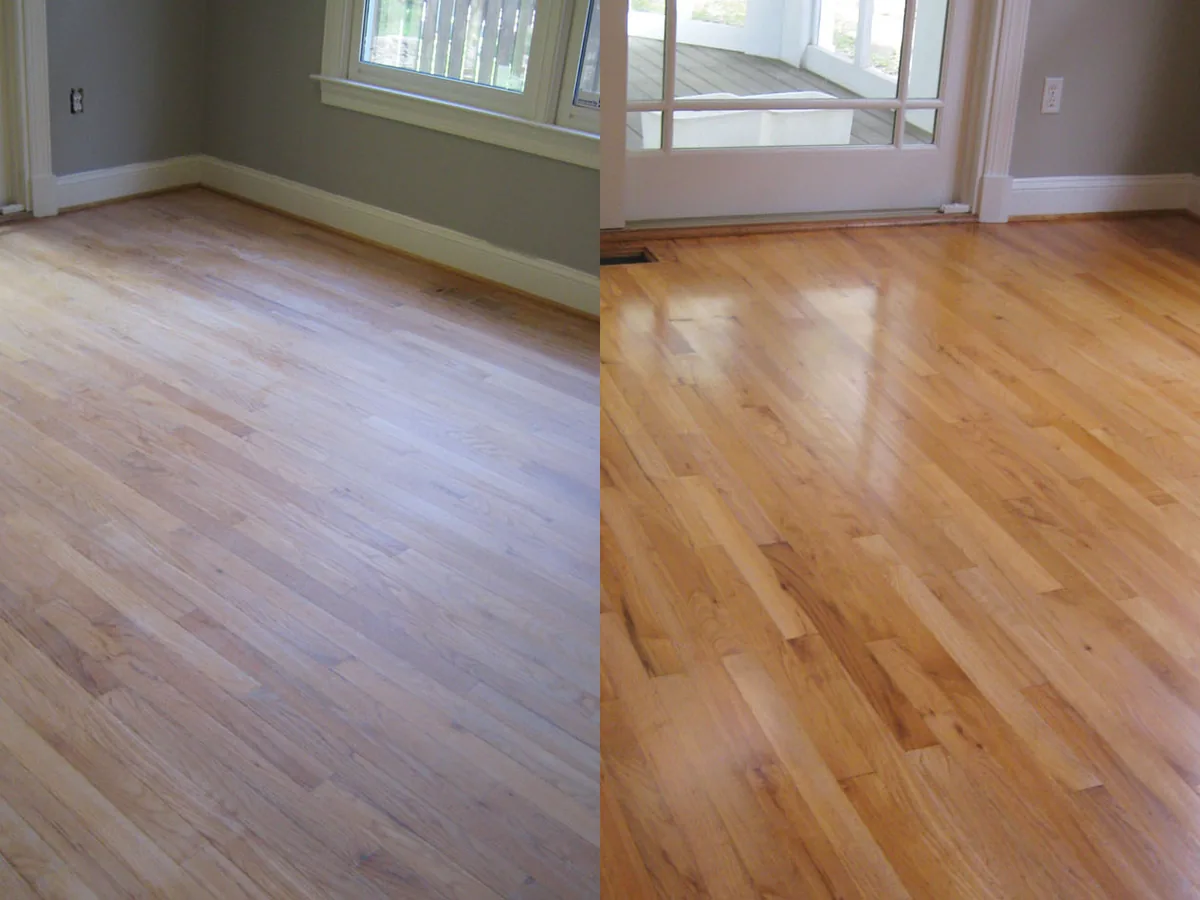
Sioux Falls Hardwood Flooring performs hardwood floor screen and recoat work on dull, scuffed floors across Sioux Falls, SD, and the first thing to settle is whether your floor is a candidate. We abrade the existing finish so a fresh coat bonds to it, and the wood underneath is never touched. Some contractors call it a buff and coat, the same job under another name. It brings a worn, scratched surface back to an even sheen. What it cannot do is reach below the coating or alter the color you already live with, and where bare wood shows, NWFA guidelines put the job in sanding territory.
We have recoated hardwood floors in this market for 15 years, and many finishes allow limited use the following day. Call us at (605) 799-9142 for a free on-site estimate, and you will learn whether your floor qualifies for a recoat along with a written scope before you commit.
Get A Free Estimate
What a Hardwood Floor Screen and Recoat Actually Does
Screen and Recoat vs. Buff and Coat vs. Refinishing
A hardwood floor screen and recoat and a buff and coat service are two names for the same job, used interchangeably in the trade. The screen is an abrasive disc that scuffs the existing finish, while the buffing machine drives that disc across the floor. Whichever term you hear in Sioux Falls, the process is the same: we abrade the finish already on your boards and apply one new topcoat over it.
The difference between a recoat and a full refinish is how deep the work goes. A full refinish removes the old finish and sands into the boards until bare wood is exposed, which is the work covered by our hardwood floor refinishing service. A hardwood floor recoat only abrades the existing finish without reaching the wood, leaving the existing stain exactly as it is.
- What the work involves: a recoat abrades the existing finish, while a refinish sands into the wood.
- Stain color: a recoat leaves the existing color unchanged, while a refinish allows you to choose a new stain color.
- Deep scratches: a recoat leaves them in place, while a refinish removes scratches depending on their depth.
- Wood thickness: a recoat removes no wood, while a refinish sands away a layer of the boards.
- Price: a recoat costs $1.50 to $3 per square foot, compared with $3 to $5 per square foot for a refinish.
- Disruption: a recoat takes less time, while a refinish requires you to stay off the floor longer.
Can Your Hardwood Floor Be Recoated?
Screen and recoat eligibility depends on how deep the wear goes. If the damage is limited to the clear coating on top of the boards, a screen and recoat restores the finish. If the wear has reached the wood underneath, the floor needs more than a fresh coat. We inspect your floor to determine which type of damage you have before providing a quote.
Floors That Qualify for a Recoat
A recoat candidate is a floor whose finish is worn but whose wood underneath is still sound. Scuffs, surface scratches, and the dull hardwood floor you see along everyday walking paths are all wear in the finish layer, which does not require sanding. You can check a scratch with your fingernail, but a nail that catches only means look closer, since a scratch can catch inside the coating without reaching the wood. Water spots are also suitable for recoating as long as the boards underneath have not darkened. The same condition test applies to solid and engineered hardwood floors, and factory-finished floors also qualify, though it is prepared by a different route, which the next section covers.
When Refinishing or Repair Is Needed Instead
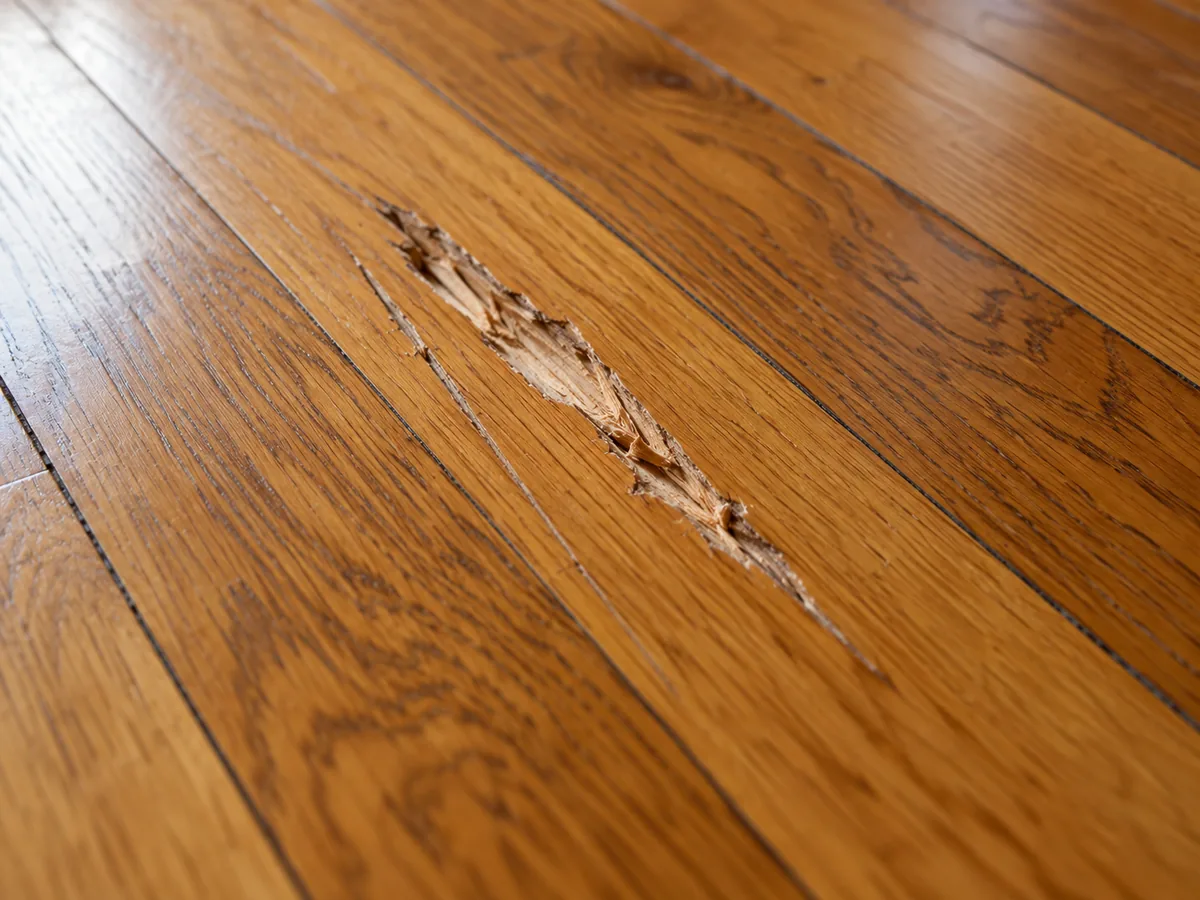
What disqualifies a floor from recoating is damage that has gone below the coating, where a new clear finish cannot reach it. Three conditions do that.
- A worn through finish, where the coating is gone and bare wood is exposed. We assess each bare area separately and determine on site what it means for recoating the rest of the room.
- Gouges and dents that extend deeper than the coating and remain visible after a new coat is applied.
- Stains that have penetrated the wood and require sanding to remove.
A recoat does not remove deep damage or change the stain color. Each of those three conditions requires different work. Floors with worn-through or faded finishes fall under our hardwood floor restoration service, while deep gouges and damaged boards are our hardwood floor repair service. Both start with sanding, as explained in the section above. If a recoat will not hold on your floor, we explain why before applying any new coating.
How We Prepare and Recoat Your Floor
Adhesion Testing and Wax Contamination
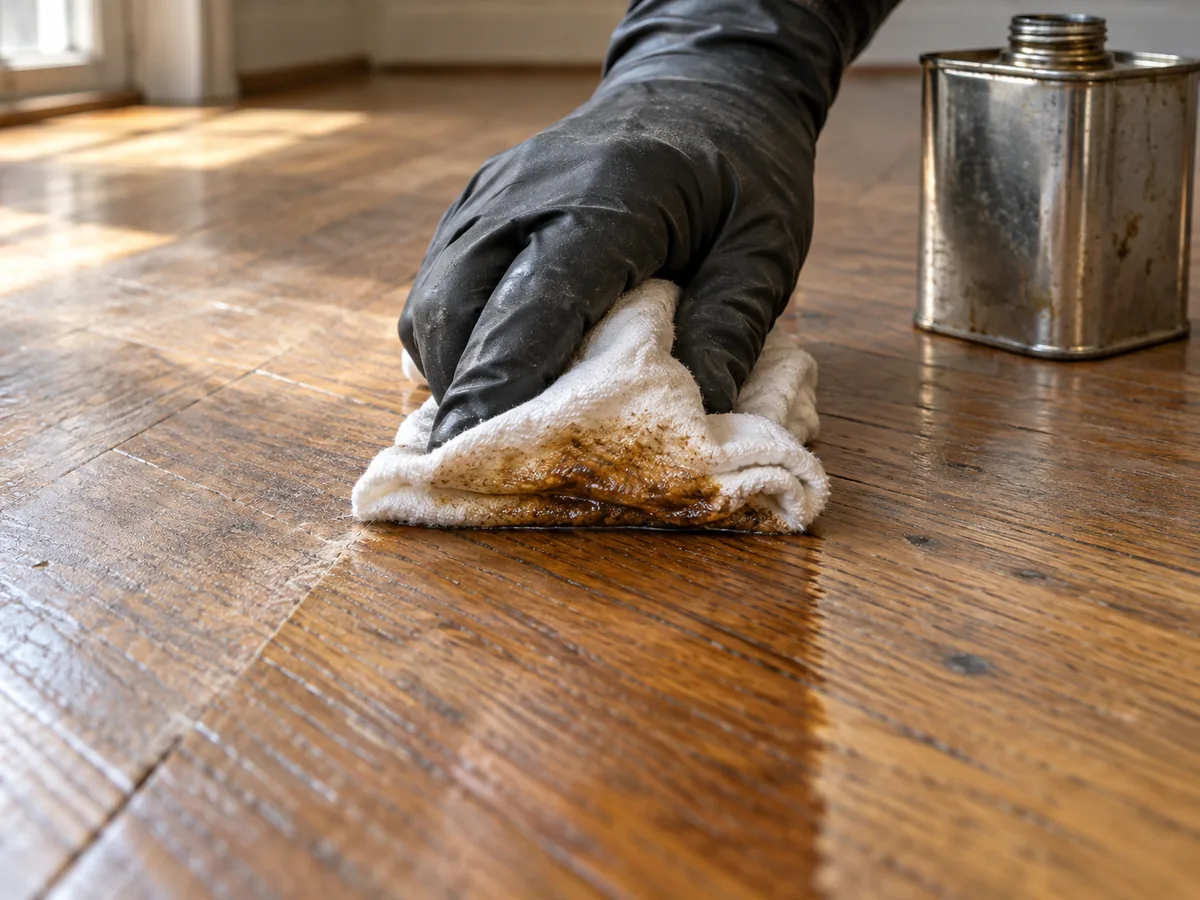
The cured finish already on your floor is a hardened coating that is too smooth for a new coat to grip properly. Abrading finish with a mesh abrasive creates the texture needed for the new coating to bond, a process known as intercoat adhesion. We perform an adhesion test on the hardwood floor before coating the entire room to check that the new finish will hold. Acrylic polish, paste wax, and silicone or oil polishes found in supermarket shine-restoring products leave a film on the surface, and a fresh coat will not bond over that residue.
Cleaning removes dirt and loose polish, but it does not reliably remove acrylic polish or paste wax. We screen and coat a small test patch in an out-of-the-way area, then check whether the new finish has bonded. Some contamination can be removed so the floor can be recoated, while other residue prevents a reliable bond. A topcoat applied over wax residue peels away in sheets rather than isolated spots. The test patch determines whether recoating will work, not the cleaning alone, so residue does not automatically rule out a recoat. A finish worn through to bare wood does.
Screening, Edges, and Prefinished Floors
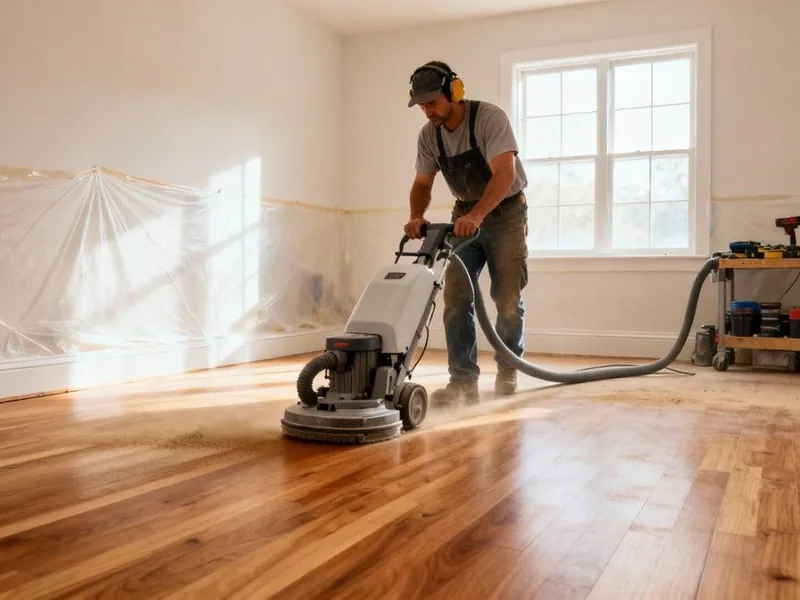
Screening hardwood floors involves running a mesh abrasive screen beneath a rotary buffer, a weighted machine that spins a pad flat against the boards to remove the gloss from the existing finish without cutting into the wood. The screen grit for a hardwood floor depends on the new coating being applied, not a standard grit used for every job. The coating manufacturer's instructions specify the correct abrasive, and Loba's instructions call for a 150-grit screen or a maroon pad. No single grit range works for every finish, and using an abrasive that cuts into the wood turns the work into a refinish.
The round buffer cannot reach along walls, beneath cabinet fronts, or into closet corners, so we abrade those areas by hand to prepare the entire floor evenly. Any strip left unabraded will show as a glossy band after the new coat is applied. Dust extraction runs throughout the buffing process.
Many factory-finished hardwood boards have an aluminum oxide coating that is harder than a finish cured on site, making it difficult to abrade with a standard screen. To recoat prefinished hardwood, we first confirm compatibility, then use a bonding product specified by the finish manufacturer. This adhesion promoter allows the new coat to bond chemically rather than relying on scratches in the existing finish. Factory-finished floors generally qualify for recoating, but they require a different preparation method. Each board also has a microbevel, a shallow groove along its edges, where the new finish settles and makes the seams look slightly softer. The result is a refreshed floor, not an invisible repair.
Choosing the Topcoat and the Sheen
The finish we apply depends on the coating already on your floor, not simply on preference. We use two waterborne recoat finishes, Bona Traffic HD and Loba 2K Invisible, both of which have low odor and cause very little yellowing. They are not interchangeable, so we identify the existing coating and follow the manufacturer's approved system to determine which product to use and how to prepare the floor. For UV-cured factory finishes containing aluminum oxide, Loba's instructions require its own bonding product before the new finish is applied.
Your sheen options also depend on the finish selected, since each product is available only in certain sheens. Loba 2K Invisible has an ultra-matte finish designed to keep the floor looking close to untreated wood, so it is not suitable if you want a glossier appearance. Where the coating offers several sheen options, lower sheens hide fine scratches better, while higher sheens make them more noticeable. Flooring and finish materials carry their manufacturer's warranty.
Pricing
Screen and Recoat Cost in Sioux Falls
In Sioux Falls, recoat work is priced by the square foot, and the screen and recoat cost here is $1.50 to $3 per square foot. That price includes cleaning the floor, abrading the existing finish, preparing the edges by hand, and applying one new topcoat. By comparison, sanding a floor back to bare wood and refinishing it costs $3 to $5 per square foot, making the recoat vs refinish cost difference close to half. Your final price within that range depends on the room layout, furniture that needs to be moved, and the coat count.
What's Included and What Affects the Price
Four features of the job set the recoat cost factors on a quote.
- The number of rooms being coated and whether they connect. A buffer works fastest on long, straight runs, while smaller, separate rooms require more passes and additional time.
- How much of the floor requires hand preparation. Edges, closet interiors, and narrow strips beneath cabinet toe kicks are beyond the buffer's reach, and the amount of hand labor varies from house to house.
- Whether we need to move furniture out of the rooms and return it after the work is complete.
- Whether you choose one coat or two. Applying a second coat requires another visit, which is priced separately.
Carry that range across a 400-square-foot area and the price comes to roughly $600 to $1,200. That gives you a general idea of the cost, but your actual price is determined by the written estimate. We also confirm whether a small-job minimum applies before you commit to the work. If we uncover a problem beneath the old finish after work begins, we document it and get your approval before proceeding.
Our Hardwood Floor Screen and Recoat Process, Step by Step
At Sioux Falls Hardwood Flooring, the screen and recoat process runs in five steps.
-
1.
A free on-site estimate sets the written scope and price. During the visit, we check how much finish remains, whether any bare wood is exposed, whether the existing coating will accept a new coat, and what products have been used on the floor. We also inspect for moisture damage and loose boards, then determine which rooms to work on and in what order.
-
2.
We walk through the rooms with you and choose the sheen by comparing samples against the existing finish on your boards.
-
3.
We clean the floor, then screen and coat an adhesion test patch. If the new finish does not bond properly, we explain why a recoat is unsuitable before proceeding with any further work.
-
4.
We use a rotary buffer to screen the open floor, then abrade the edges, perimeter, and closets by hand. Dust extraction runs throughout the process.
-
5.
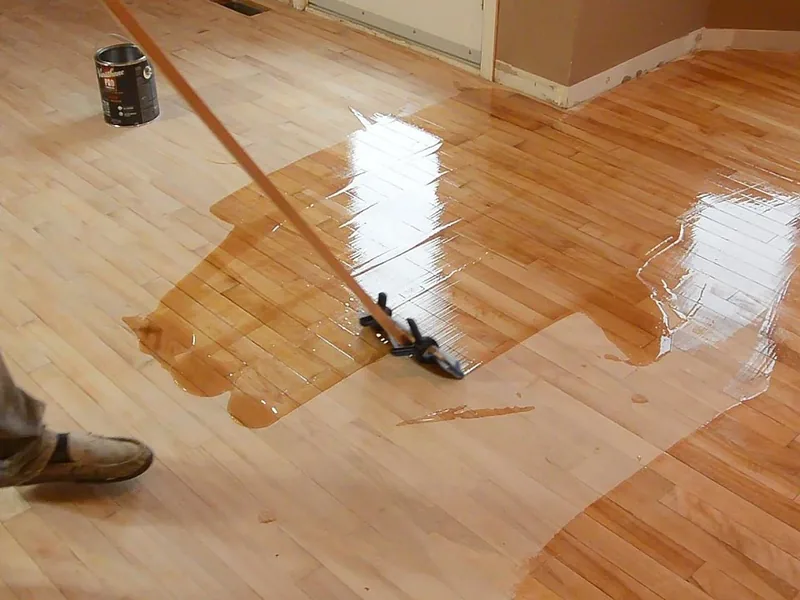
We apply one new topcoat across the entire floor without changing its existing color. In a typical room, the work takes one day. We show you the finished floor from the doorway without having you walk on the fresh coating, then provide a written cure schedule. Light use comes back the next day on the finish manufacturer's own timetable.
When Can You Use the Floor Again?
Recoat cure time has three stages, each affecting when you can use the room. First, the finish becomes dry to the touch, meaning the surface no longer feels wet. Next, it becomes walkable, once the coating has set enough for foot traffic without leaving marks. Finally, the finish reaches full cure, when it has hardened throughout and is ready for weight, grit, and cleaning. The finish manufacturer determines the timing for each stage, so when you can walk on a recoated floor depends on the specific product and its published cure schedule.
Walking, Furniture, and Rugs
Many waterborne finishes permit limited use the following day, but that means walking in stocking feet rather than shoes, without dragging anything across the boards or placing items on the floor. Although the coating has hardened enough for careful foot traffic in socks, it is still soft enough for shoe soles to leave shiny marks or for grit to become embedded in the finish.
Waterborne cure is product-specific, and the two finishes we use publish different schedules. Loba 2K Invisible allows light use after about one day and reaches full hardness after five days. Its instructions also specify that rugs must stay off the floor until the finish has fully cured. Once we select the finish for your floor, we provide its exact care and cure instructions in writing. Keep those instructions for reference, because the flooring and finish materials carry their manufacturer's warranty.
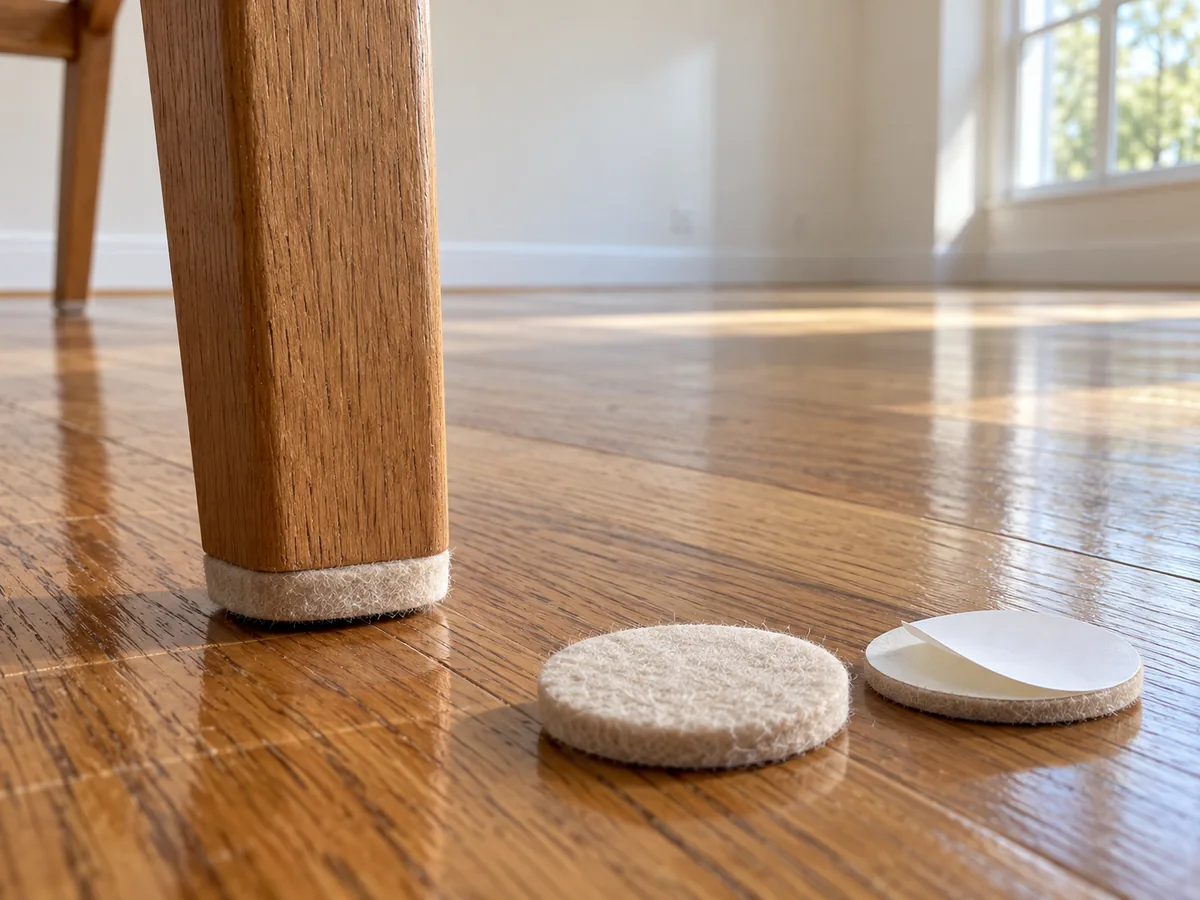
When you can walk on recoated floors and when you can return furniture are two different things, because foot traffic, furniture, and rugs put different demands on the new finish. Walking spreads your weight across your feet, while chair legs concentrate that weight on small areas and rugs trap the finish beneath them. Put felt pads under every furniture leg and lift furniture into place instead of dragging it. Rugs with rubber or latex backing need to stay off the floor the longest, because solvents still being released from the curing finish can become trapped beneath the backing and cause marks or discoloration.
Recoating During a Sioux Falls Winter
A new coat of waterborne finish levels and dries best in a moderately warm room with moderate humidity and proper air exchange. Each manufacturer specifies the conditions required for its product to cure correctly. Recoating floors in winter makes those conditions harder to maintain. In January, a tightly sealed house with forced-air heating has dry indoor air and little fresh air exchange, causing the coating to dry on the surface before it has fully leveled. This leaves visible lap marks where a drying section meets a freshly coated one.
We bring the house to the proper temperature before applying any finish, maintain controlled airflow as it dries, and keep a wet edge during application to prevent lap marks. We follow the temperature and humidity range specified by the finish manufacturer. Waterborne finish must not freeze, so we never leave it in a cold van or on an unheated porch. Any material that has frozen is discarded.
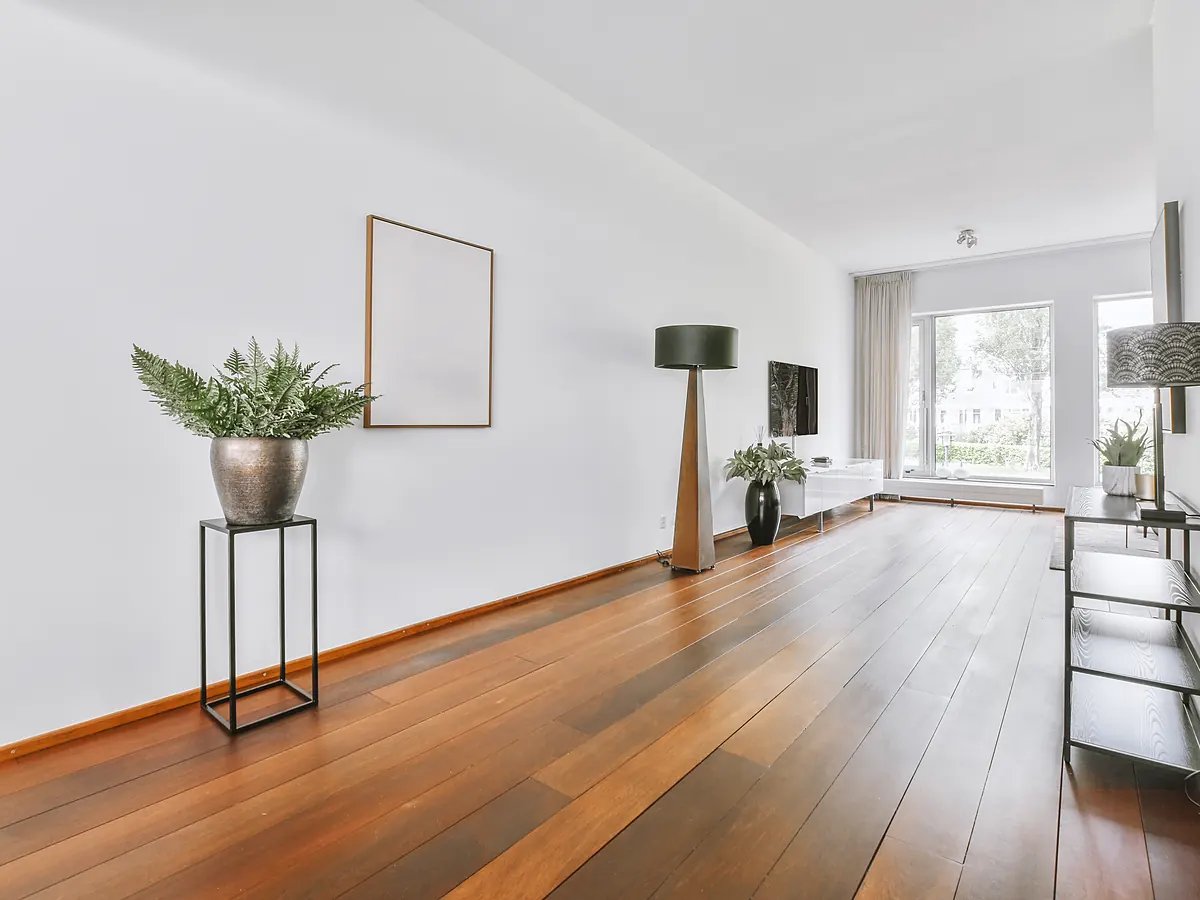
How Recoating Extends Your Floor's Life
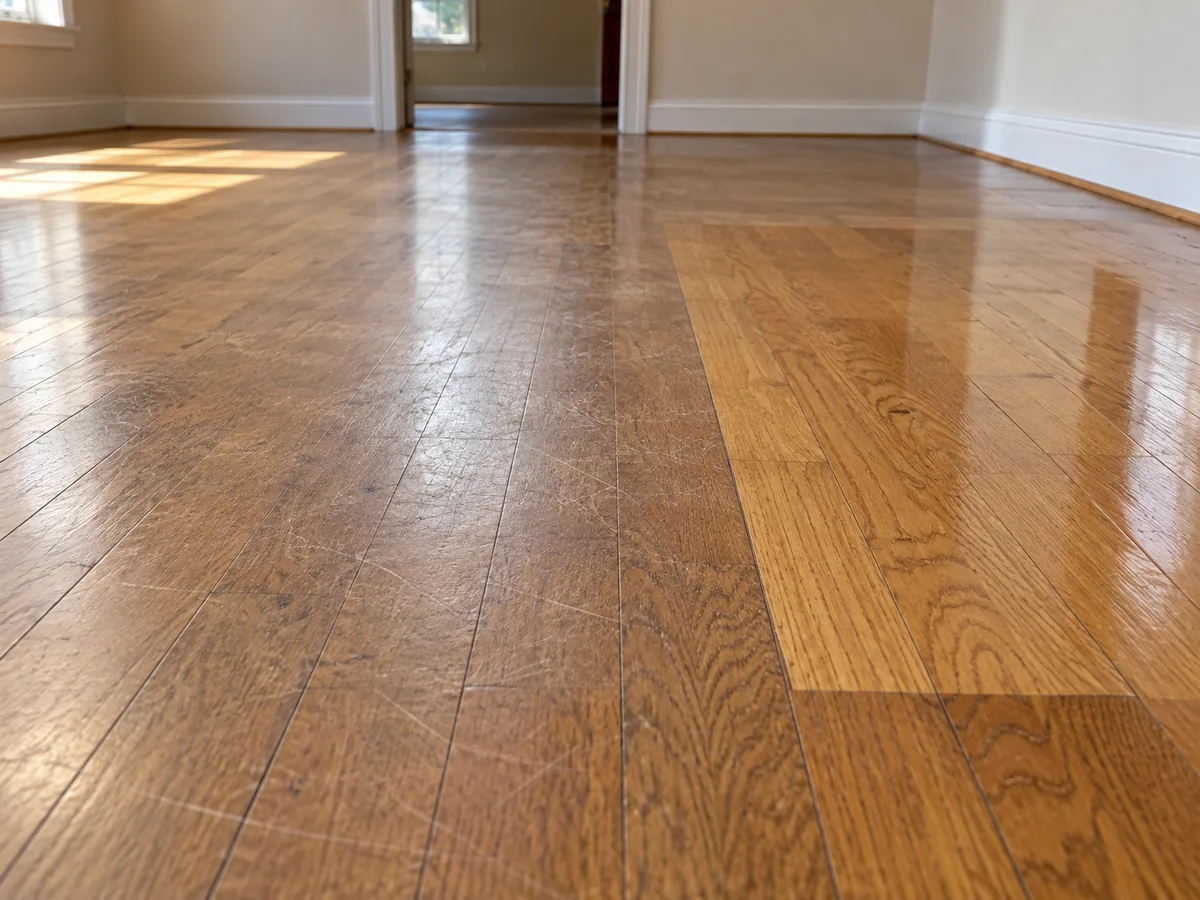
Recognizing Wear Before It Reaches Wood
Knowing when to recoat hardwood floors starts with checking the condition of the clear protective finish. Areas with regular foot traffic lose their shine first, while the edges of the room stay closer to their original appearance. Compare a busy walking path with the floor beneath a bookcase, and the difference becomes clear. Dull traffic lanes are the first sign, followed by fine scratches that collect dirt and eventually gray or lightened patches where the protective coating is nearly worn away. Once the wood turns gray, it is too late for a recoat.
Recoat frequency depends on how much traffic a floor receives, and Sioux Falls winters put extra wear on the finish. Boots track sand and road grit indoors throughout the heating season, where foot traffic grinds that material into the coating near entry doors and along hallways. NOAA's 1991 to 2020 climate normals put Sioux Falls at nearly 45 inches of snow per year, bringing months of tracked-in grit. As a result, entryways and hallways need recoating years before less-used rooms such as bedrooms. One room might need a recoat while the finish in another remains in good condition.
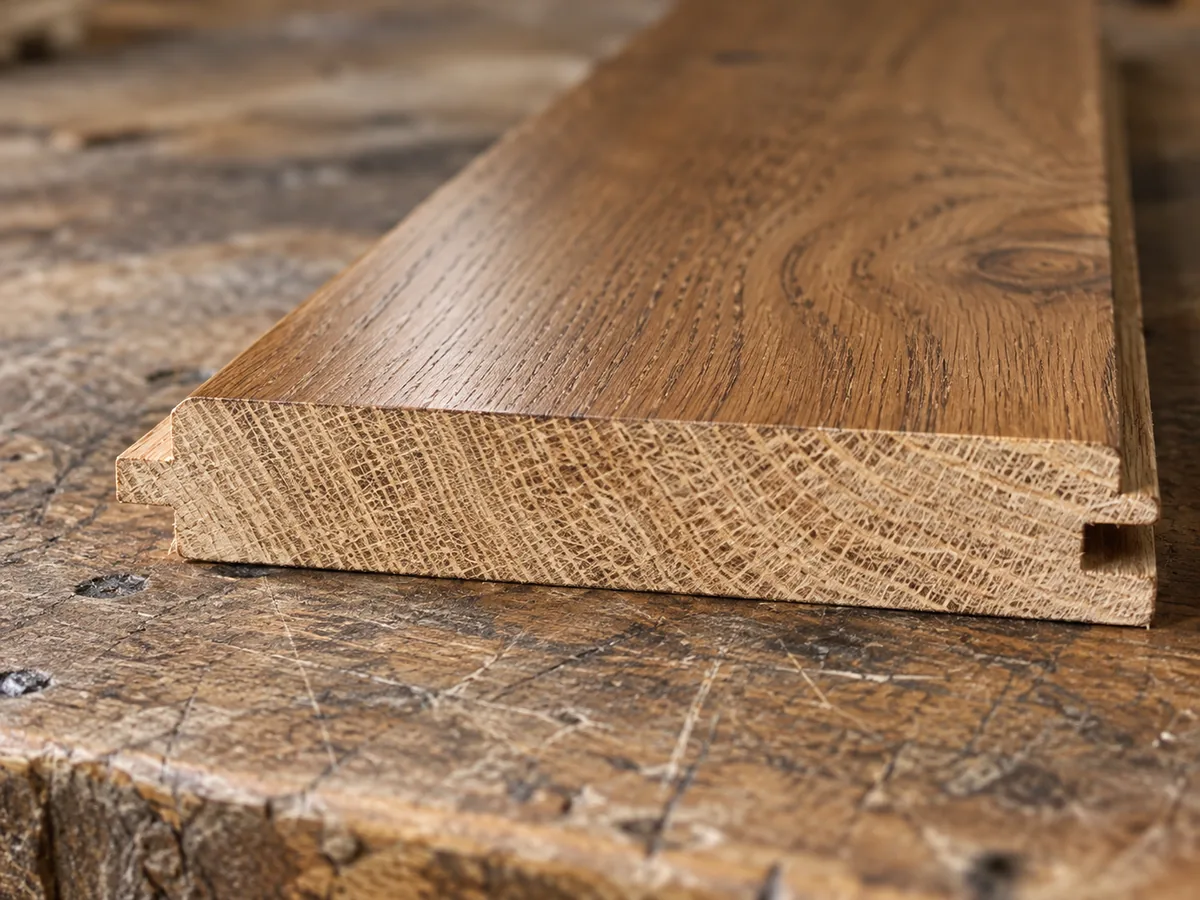
Solid vs. Engineered Hardwood
How many times a hardwood floor can be sanded depends on the type and thickness of the boards. Solid hardwood is made from one piece of wood, but only the thickness above the tongue-and-groove joint is available for sanding, and each refinish permanently removes some of that wood. A solid hardwood floor typically allows 4 to 6 sandings over its lifetime, although the actual number depends on the original board thickness, how much wood was removed during previous refinishing, and the floor's current condition. With refinishing cycles roughly 7 to 10 years apart, that provides about 40 to 70 years of service when the original finish is included.
Engineered hardwood has a different construction, with a thin layer of real wood over a core of glued layers. That top is the engineered hardwood wear layer, and it is the only part a sanding machine can ever cut. The NWFA Sand and Finish Guidelines caution against sanding a wear layer under 2.5 mm, or 3/32 of an inch. Whether an engineered floor can be refinished depends on how much wear layer remains, the condition of the boards, and the manufacturer's instructions for that product.
Hardwood boards that can no longer be safely sanded can remain in service through recoating, since a new coat adds protection without removing any wood. This extends a floor lifespan past its last sanding. Recoating is not unlimited, though. Before each recoat, we check whether the new finish is compatible with the existing coating and how much finish has already built up on the floor.
Why Choose Sioux Falls Hardwood Flooring?
A recoat only works if the new finish grips what is already on the boards. We check compatibility before providing a quote and tell you clearly if recoating is not suitable. Proper adhesion is what separates a finish that lasts from one that starts peeling within a month.
Five commitments come with every job:
- Sioux Falls Hardwood Flooring is a local company with 15 years in business.
- We run an adhesion test before proceeding with a new coat on your floor.
- The scope of the work and the price, given to you in writing.
- We use dust extraction on every job, collecting dust at the tool instead of letting it settle on your furniture.
- We carry the insurance and bonding applicable to our work and can provide documentation on request.
Call us at (605) 799-9142 and we will come out and look at your floor at no charge.
Service Area
Screen and Recoat Service Areas
We work on hardwood floors in homes throughout the Sioux Falls metro area and surrounding towns. If your town is listed below, it is within our service area.
Where Sioux Falls Hardwood Flooring Takes Recoat Work
Sioux Falls Hardwood Flooring covers the whole metro and the farm towns around it, so our service areas reach well past the city limits. We serve Brandon, Harrisburg, Tea, and other communities across Minnehaha and Lincoln Counties. Sixteen towns sit inside the range we drive:
Communities We Serve
- Brandon
- Harrisburg
- Tea
- Hartford
- Dell Rapids
- Lennox
- Canton
- Crooks
- Baltic
- Worthing
- Valley Springs
- Garretson
- Humboldt
- Colton
- Renner
- Chancellor
FAQ
Frequently Asked Questions
How often should hardwood floors be resurfaced?
A busy household typically needs a screen and recoat every 3 to 5 years, although the condition of the finish is a better guide than a fixed schedule. Full sanding is needed less frequently because a solid hardwood floor only allows 4 to 6 sandings over its lifetime. Keeping to the recoat interval is what holds that count down.
How can I make my old hardwood floors look better without refinishing?
A screen and recoat restores a worn hardwood floor for $1.50 to $3 per square foot, provided the scuffs and dullness are limited to the existing finish and have not reached the wood. You can also choose a different sheen, including changing from gloss down to a matte topcoat, as long as the new coating is compatible. Changing the stain color, however, requires sanding the floor back to bare wood.
How do I know if my hardwood floors need refinishing?
Dull walking paths are good candidates for a screen and recoat as long as the protective coating is still intact. Gray or bare patches indicate that the finish has worn through, while discoloration that has penetrated the boards requires sanding to remove. A gouge you can feel with a fingertip is board damage, and that goes to our hardwood floor repair service. To see what your floor's original sheen looked like, compare it with an area beneath a cabinet that has never been moved.
How many coats to refinish hardwood floors?
A screen and recoat includes one new topcoat, with the option to return later and apply a second. A full refinish involves a different process, starting with a sealer applied to bare wood, followed by topcoats. Whether your floor needs a second coat depends on the manufacturer's coating system and how much use the floor receives, rather than a general rule about the value of an extra coat.
Can a waxed floor be screened and recoated?
Sometimes. Waxes and polishes are the most common reasons a floor does not qualify for a screen and recoat, so we clean the surface and perform an adhesion test before providing a quote. The test determines whether the new finish will bond, regardless of how thoroughly the floor has been cleaned. If the test patch fails, the floor needs refinishing instead. We check this before setting the price so you know what work your floor requires.
Does a screen and recoat remove scratches?
Scratches limited to the existing coating largely disappear beneath a new topcoat, but scratches that reach the wood remain visible. Choosing a lower sheen makes those deeper marks less noticeable by scattering light, although it does not remove them. You can check a scratch by running your fingernail across it. If your nail catches in the groove, the scratch needs closer inspection to determine whether it has reached the wood.
Get a Free On-Site Recoat Estimate
Whether a floor will hold another coat is something we determine by looking at it, and knowing the answer before any work is scheduled saves you the cost of finding out the hard way. We check the finish, test how well a new coat will stick, and tell you plainly whether a screen and recoat will work or whether the floor needs sanding instead. That answer costs you nothing. Call (605) 799-9142 for a free on-site estimate, or use the quote form to request a proposal.