
Hardwood Floor Staining in Sioux Falls, SD | Sioux Falls Hardwood Flooring
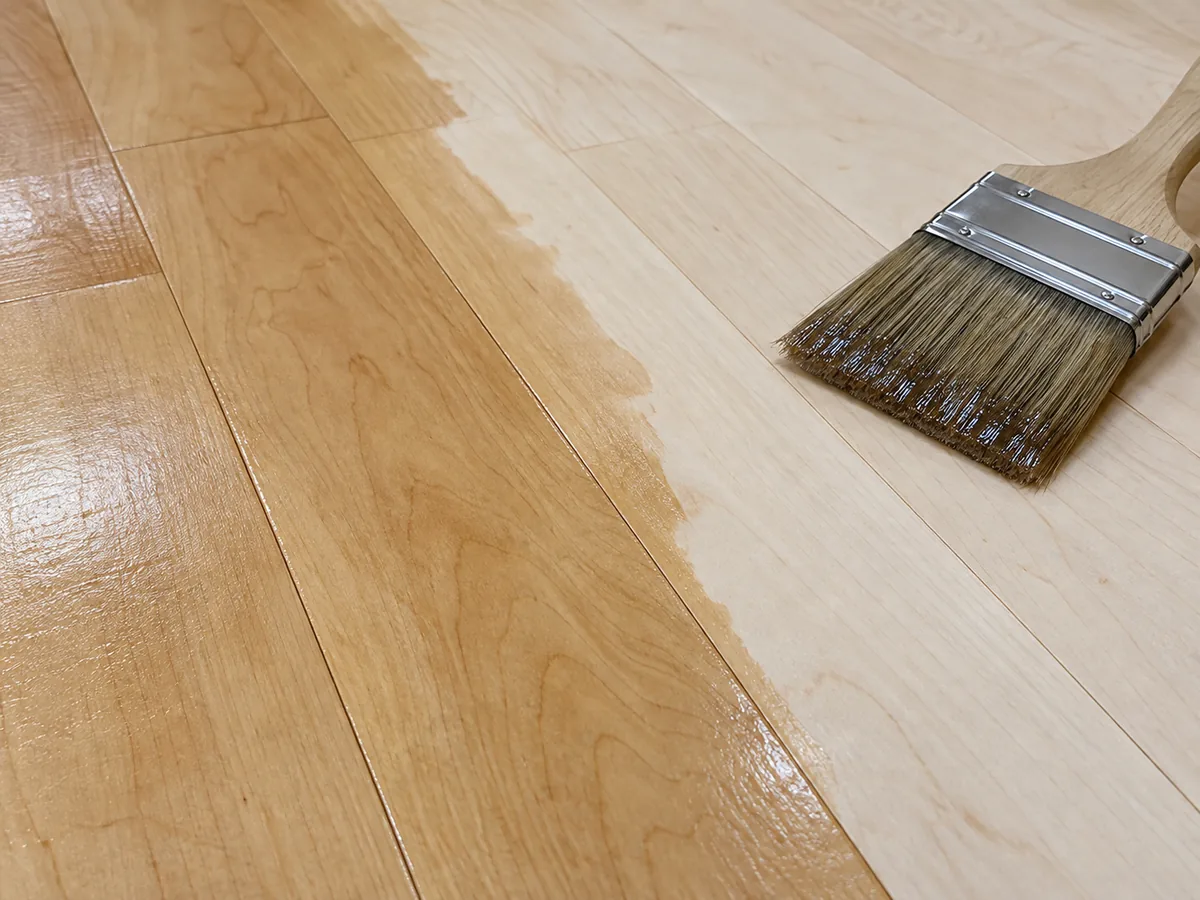
Sioux Falls Hardwood Flooring has stained hardwood floors for Sioux Falls, South Dakota homeowners for 15 years, and hardwood floor staining is the step that gives a floor its color once the old finish has been sanded off. Stain penetrates the bare wood instead of sitting on its surface. During a refinish, we change the floor's color, match a new floor or repaired area to existing flooring, or, when sanding is not an option, add color with tinted urethane or hardwax oil.
The wood species determines how we apply the color. Oak absorbs stain evenly across each board, while maple and birch absorb it unevenly and usually need a conditioner first. We follow NWFA guidance and choose an oil-based penetrating stain, water-based stain, or gel based on the wood in front of us. Before we apply the stain, you approve the color on a sample board placed against your own floor.
We stain floors throughout the Sioux Falls area, including Brandon, Harrisburg, and Tea. The two published rates cover different types of work, and the details below explain which one applies to your project. Call (605) 799-9142 to ask for a stain sample, or send the quote form when you're ready.
Get A Free Estimate
Hardwood Floor Staining Services
Hardwood floor staining adds color to your floor, and the three options below differ in how that color is applied. The wood determines which option suits your floor, not the shade you have in mind. Penetrating stain requires bare wood, so that route starts with sanding, which is part of our refinishing work. A tinted coating system follows a different preparation process. On a sound existing finish, that can mean abrading and recoating instead of sanding back to bare wood.
Changing Hardwood Floor Color
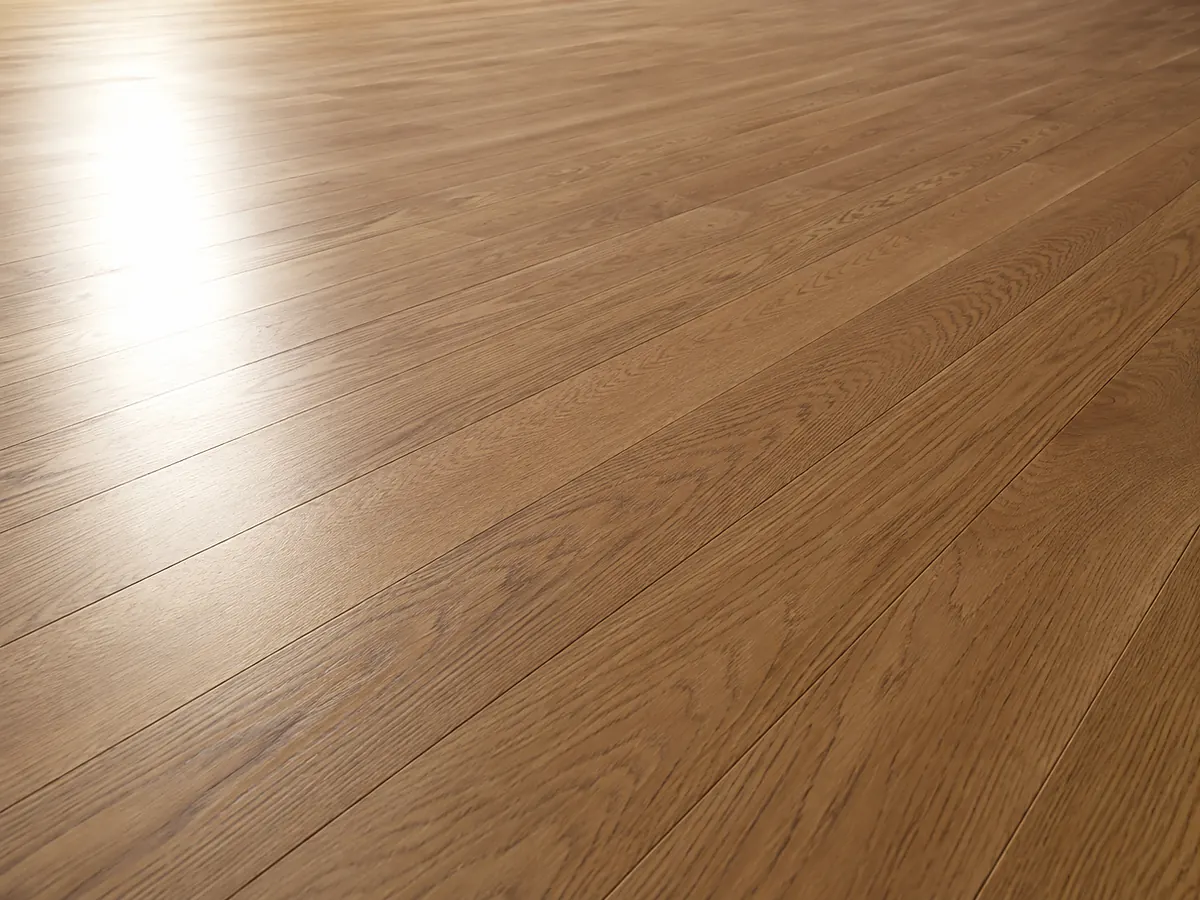
Changing the floor's color requires sanding it back to bare wood before applying new stain. Stain penetrates the wood, but the old finish film over the boards is a sealed layer it cannot soak through. Because only bare, sanded wood accepts a new color, we complete the color change and sanding in the same visit rather than as separate jobs.
If you want to keep your floor's current color and renew only its surface, a screen and recoat is the separate service for that work, with no staining step.
Matching Existing Hardwood Floors
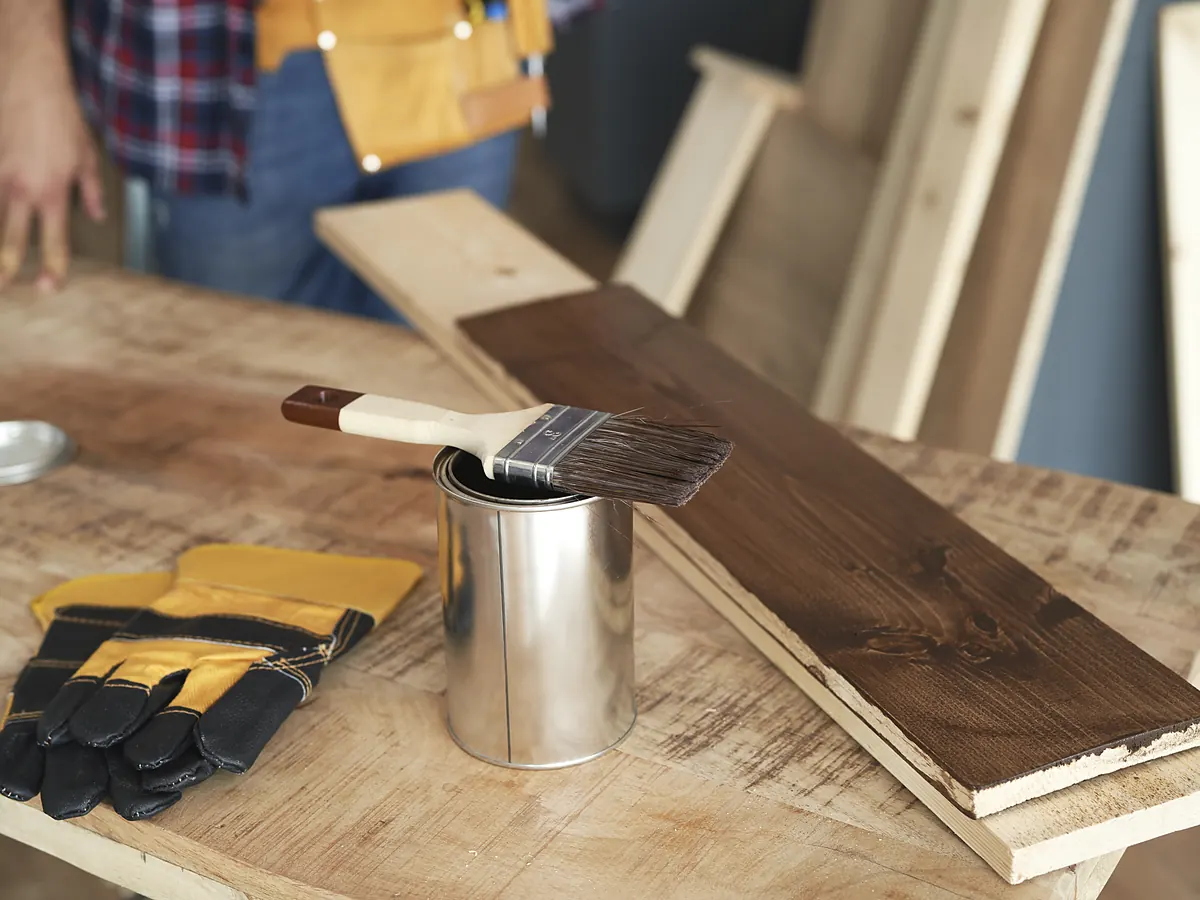
Stain matching brings new or freshly sanded boards closer in color to an existing floor you're keeping. We match against the wood itself, considering its species, how the boards were cut, and how long they've been in place. Red oak, white oak, and maple each bring out a different undertone from the same stain, and years of daylight darken existing boards, so fresh stock with the same stain looks lighter beside them.
We judge a stain match in the room where it will stay and against the floor it will meet. The same two boards can look matched in one room and mismatched in another. Our repair service handles matching a single replacement board, while our stair service handles matching stair treads to a floor.
Tinted Urethane and Alternative Color Systems
Tinted urethane puts color in the finish coat instead of the wood. We mix pigment into the clear protective layer applied over your boards, leaving the wood beneath its natural shade while the color stays in the film. On species that do not absorb stain evenly, a tinted film provides uniform color that penetrating stain cannot. Tinted shellac provides the same result in a faster-drying carrier.
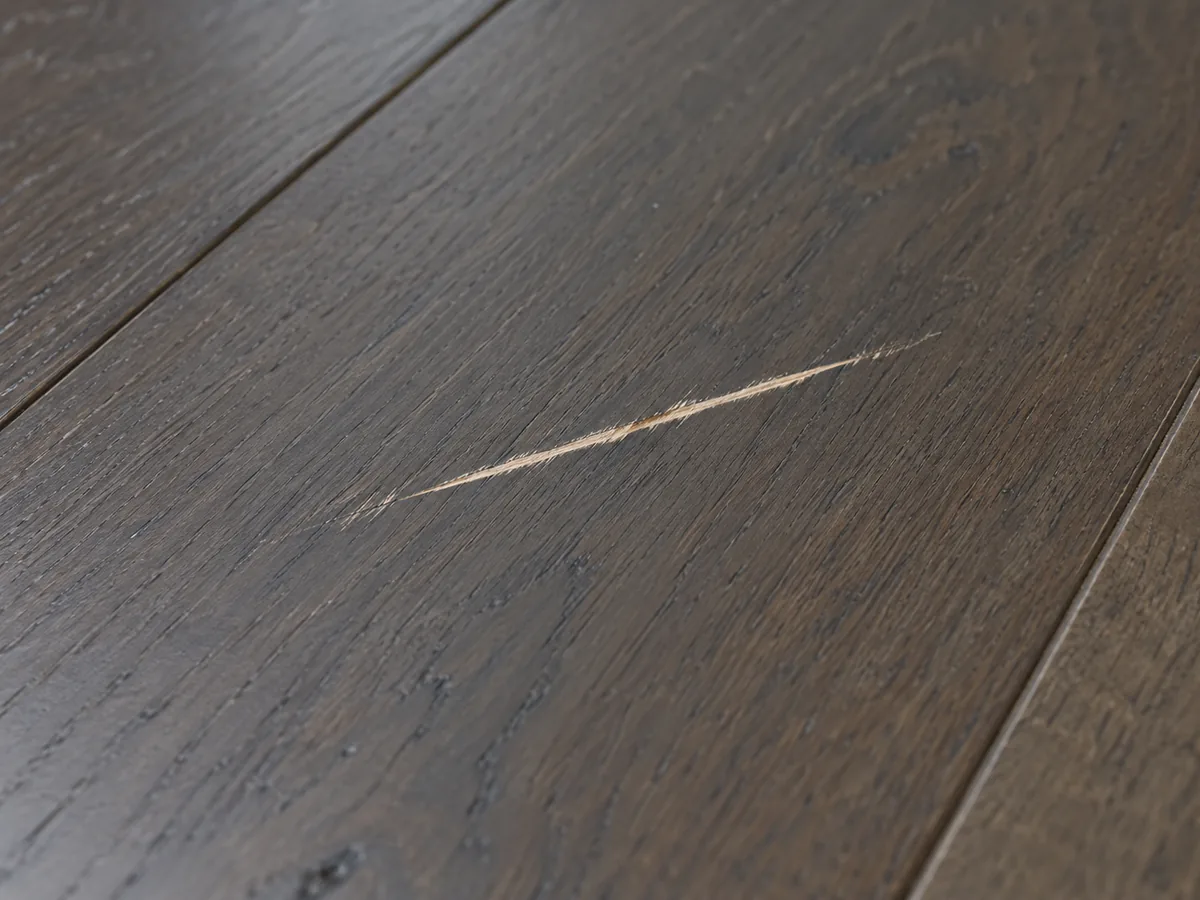
The trade-off shows up during repairs. Since the color sits in the finish film, a scratch that cuts through it exposes uncolored wood, and a patch cannot blend invisibly with the surrounding finish. We recommend a tinted film when an even color across the entire floor matters more to you than easy spot repairs.
How We Prepare and Stain Your Floor
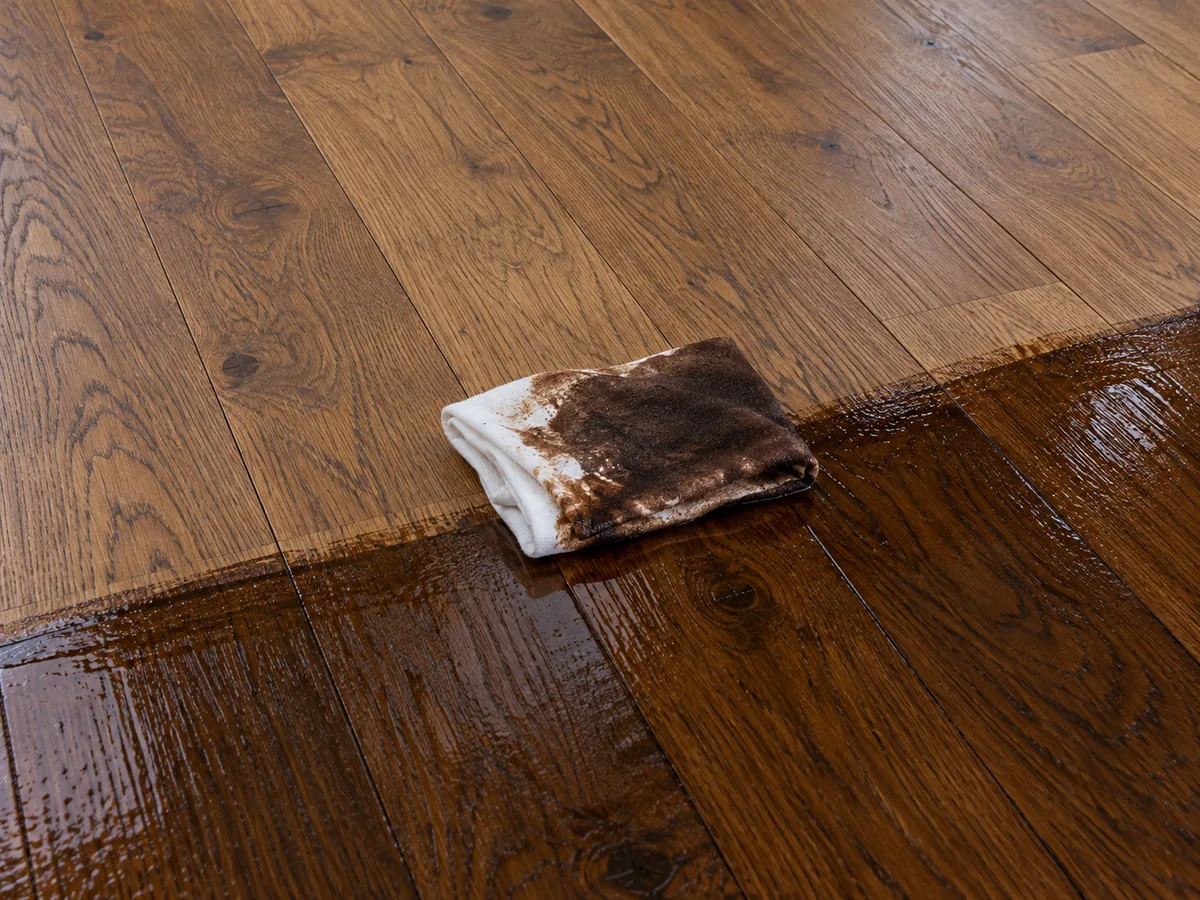
Stain application determines the result of hardwood floor staining: one consistent color from wall to wall, without lap marks where passes meet. We work in sections and wipe each one with lint-free cloths before the penetrating stain sets, leaving the amount of pigment in the wood that we intended. If a wipe stops partway across a board, it leaves a dark line that only sanding can remove. Dry heating-season air shortens the stain's working time, so we size each section to the room and the day.
Sanding and Surface Preparation
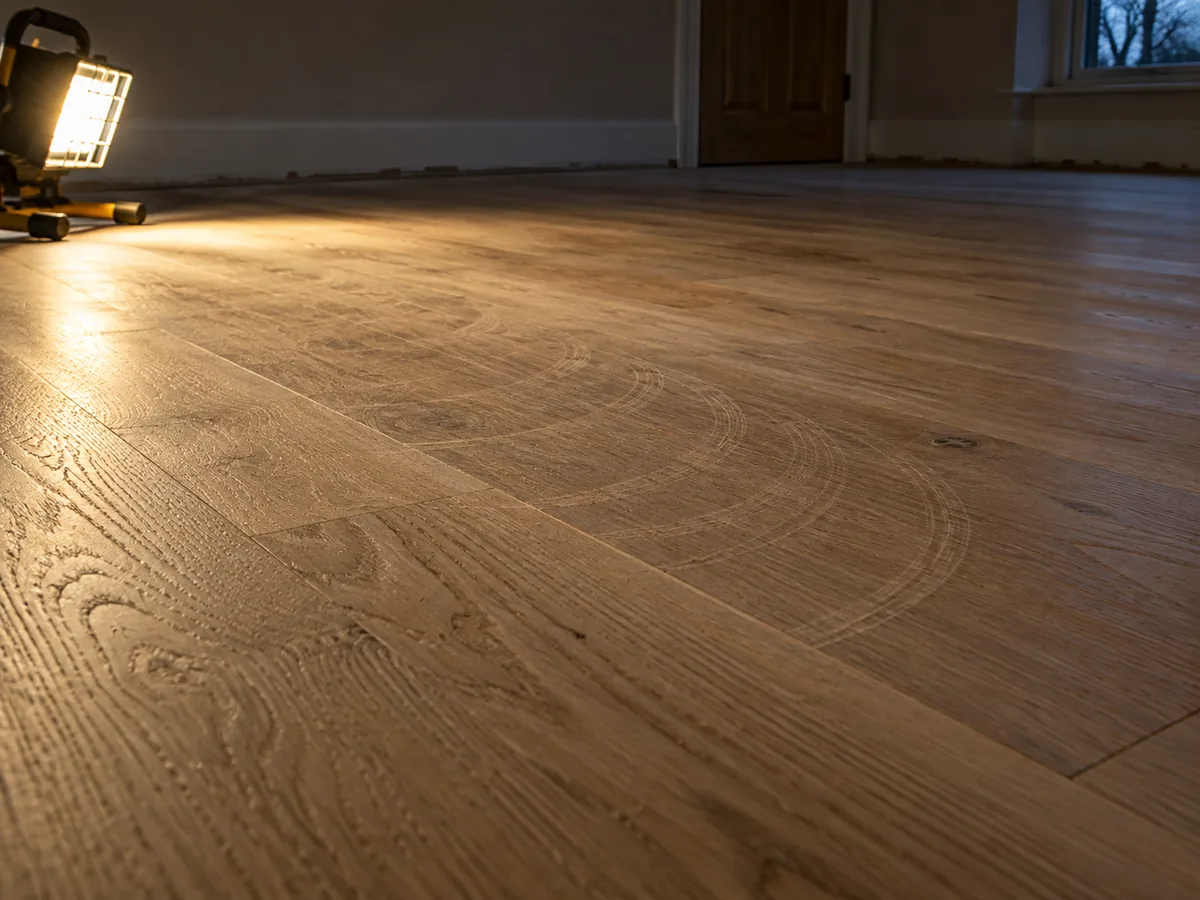
Uneven color has three sources, and the wood is only one of them: the species causes blotching, the machines leave swirl marks, and the wiping process creates lap lines. Penetrating stain settles into and darkens every mark it reaches, so it reveals sanding lines rather than causing them. A swirl from the edger, the small sander used where the large machine cannot reach, may be invisible on bare wood but show as a circle after staining. Beforehand, we inspect your floor under raking light, using a lamp held low to cast ridges into shadow. If we find uneven staining after applying the color, the fix is to sand back to bare wood, not apply more stain.
Wood Conditioner and Water Popping
Maple and birch do not drink at one rate across a single board, and the thirstiest fibers pull in more pigment than their neighbors, which shows up as dark clouding. A pre-stain wood conditioner is a thin liquid brushed on before any color, and it partly fills the thirstiest of those pores so the whole board absorbs at a closer rate. It also shallows the penetration and can lighten the finished shade, so the sample board is prepared exactly as your floor will be. Thinned shellac is used the same way and dries faster. Skipped on maple, the blotching is in the wood itself, and no amount of wiping or recoating takes it back out.
Sanding leaves the surface fibers cut and compressed, which limits how much stain the wood will take. Water popping raises those fibers again: we wet the floor with clean water so they swell and stand up, which changes how the stain absorbs. The stain then lands at a more even depth, which shows most on dark tones. The floor has to dry fully first, or the color goes patchy where moisture remains. Not every floor gets it. It deepens the color, so it suits a dark shade and can overshoot a light one.
Oil-Based, Water-Based and Hardwax-Oil Systems
We choose among three stain carriers based on how each performs during wiping. Oil-based stains such as DuraSeal or Minwax stay workable the longest, giving us time to wipe carefully across a large room. Water-based stain dries quickly and changes the wood's tone less, but it can set before a slow wipe is complete. Gel stain sits closer to the wood's surface instead of soaking in, which helps even out color on species prone to blotching. Hardwax oils, including Rubio Monocoat and Osmo Polyx, add color and seal the floor in one pass. We match the carrier to your wood species and room, not just to drying time.
Sealing and Protecting the Color
Stain adds pigment to the wood but does not protect it from shoes, grit, or a damp mop. Sealer and topcoats protect the color, so the floor remains unfinished until those coats are applied. They must wait until the stain releases its solvent. With the systems we specify, oil-based stain is expected to release its solvent within 24 to 48 hours, subject to the manufacturer's instructions and conditions in the house. Applying a topcoat sooner can cloud or lift the color. Sealant selection then determines the look: a two-component waterborne finish stays clear and preserves your approved color, while oil-modified polyurethane adds its own warm amber cast.
Choosing Your Hardwood Floor Stain Color
Your existing wood limits the color options more than any catalog does, so choosing a shade starts with the boards in your home, where we test two or three candidates rather than settling on one in advance. Sheen, or how glossy the finished floor looks, is chosen separately as part of the finish.
Sampling and Approving Your Color
Choosing a floor color begins with a free on-site estimate. Sioux Falls Hardwood Flooring examines your floor, identifies the wood species, and explains how it will take stain. The next steps follow a set order, with your approval of the stain color before work begins.
-
1.
We come out at no charge, measure the rooms and identify the wood.
-
2.
Each shade on the shortlist goes onto its own board, cut from the same species as your floor, because one stain behaves differently on different wood.
-
3.
We lay those boards against your floor and you read them in the room itself, in daylight and again under the lamps, then tell us which one you want.
-
4.
Your color approval is written into an itemized written proposal, alongside the price, before any can is opened.
-
5.
We apply wood conditioner where the species calls for it, then the stain, then leave it to release its solvent before anything goes over it.
-
6.
Sealer and topcoats go on, and we hand the floor back.
You won't be asked to choose a shade from a printed chip.
Pricing
Hardwood Floor Staining Costs in Sioux Falls
Our three published rates for color work differ in what each includes, not in the floor itself:
- Sanding, staining and the protective finish, quoted together: $5 to $7 per square foot
- Staining added to a refinish you have been quoted separately: an extra $1 to $3 per square foot
- A hardwax oil finish instead of separate protective coats: an extra $2 to $4 per square foot
The first two rates differ in what they include, not in the quality of the work. We apply the same stain either way. Each published hardwood floor staining cost is a per-square-foot rate, so the range shows the cost per square foot, not the total price for the room. Your wood species, chosen color depth, and the condition of the underlying wood determine where your stain price falls within that range.
Complete Sanding and Staining
When sanding and a color change are quoted together, the rate is $5 to $7 per square foot. It covers sanding, stain, and protective coats as one job, completed in one visit by one crew for one total price. This is the higher rate because it includes sanding as well as the color change. This is the staining cost that applies when your floor is being sanded back to bare wood anyway and you choose a color as part of the scheduled work, rather than adding a separate project.
Staining Added to Refinishing
If your refinish has already been priced at our standard rate, adding color costs another $1 to $3 per square foot. This is an add-on, never a standalone price, so treating it as the cost of the entire floor would leave out much of the job. The add-on covers conditioner when your wood species needs it, the stain, and the wipe-back that determines whether the color is even across the room. The published ranges stay the same; your quote reflects where the work falls within a range.
Hardwax-Oil Upgrade
A hardwax oil system adds $2 to $4 per square foot as an upgrade to the same scope covered by the other two rates: a stained floor with separate protective coats. It is not a standalone price. Hardwax oil adds color and protection in one material, with pigment in the wood rather than beneath a film. The upgrade also changes future repairs. We can clean and recoat a worn patch near a doorway on its own, while a filmed floor is usually recoated across the whole room to avoid a visible edge. Because its protective layer is thinner, a hardwax oil floor needs more frequent refreshes than a coated floor.
When Hardwood Floor Staining Is Not the Right Solution
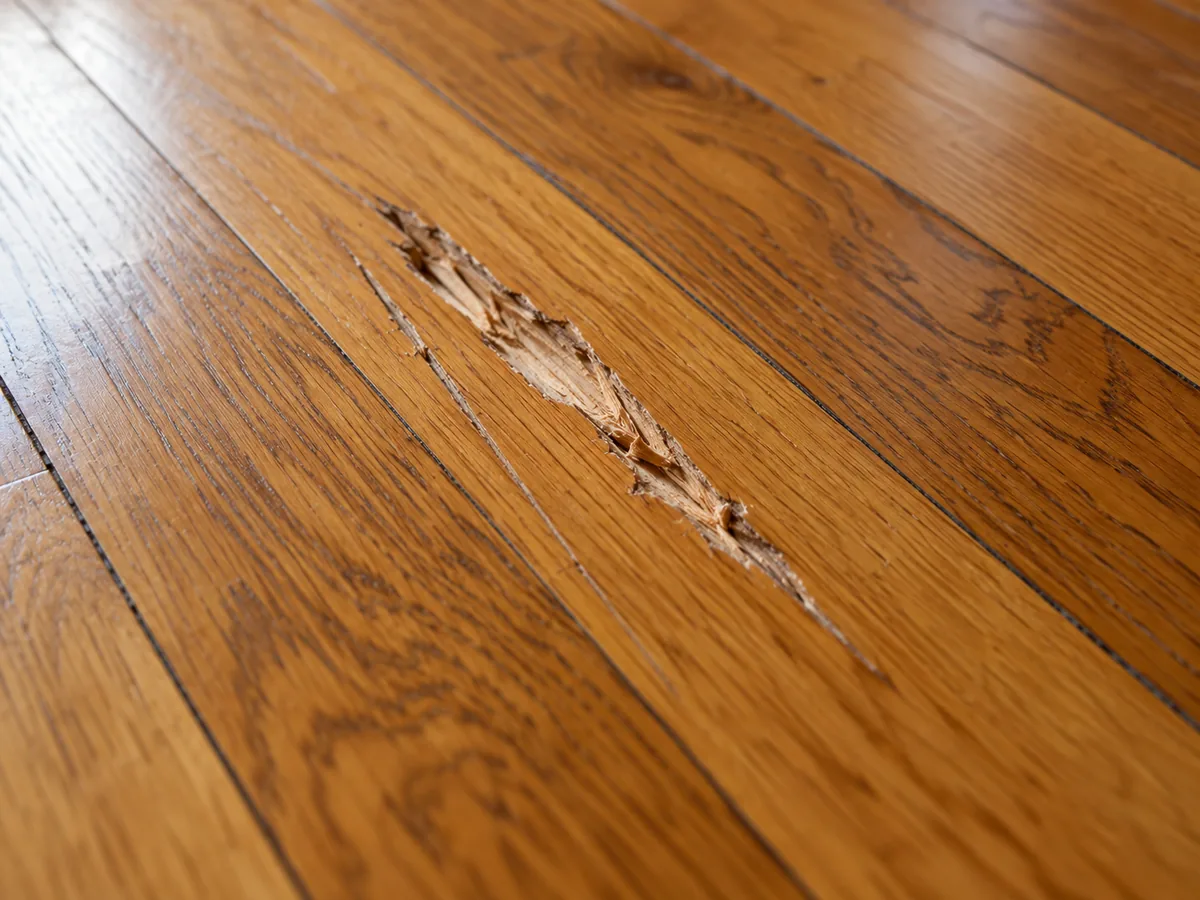
Staining limits are worth understanding before choosing a shade: color is cosmetic and does not change the condition of the boards beneath it. Penetrating stain enters only the top of each board, leaving everything below untouched. A gouge, split board, or soft spot remains after staining, covered by a finish that must be removed again before we can repair it. We address damage first. Otherwise, the new color seals it in place. Loose or broken boards, including replacement boards, and their related squeaks require board repair work. Water damage is a separate job.
Damage and Discoloration
We check for four kinds of mark before stain goes down because color can make them more visible. A gouge exposes torn, thirsty fiber that absorbs more pigment than the flat wood beside it, so the mark turns darker. Pet urine has usually stained the wood below the surface, where no shade can even out the color. Wood filler differs from the surrounding board, so it absorbs the same stain to a different depth and shows as uneven staining. A dark water mark that has reached the subfloor lies deeper than sanding can reach. If we find any of these during the sample stage, we price the work and plan it with you.
Floors That Cannot Be Sanded
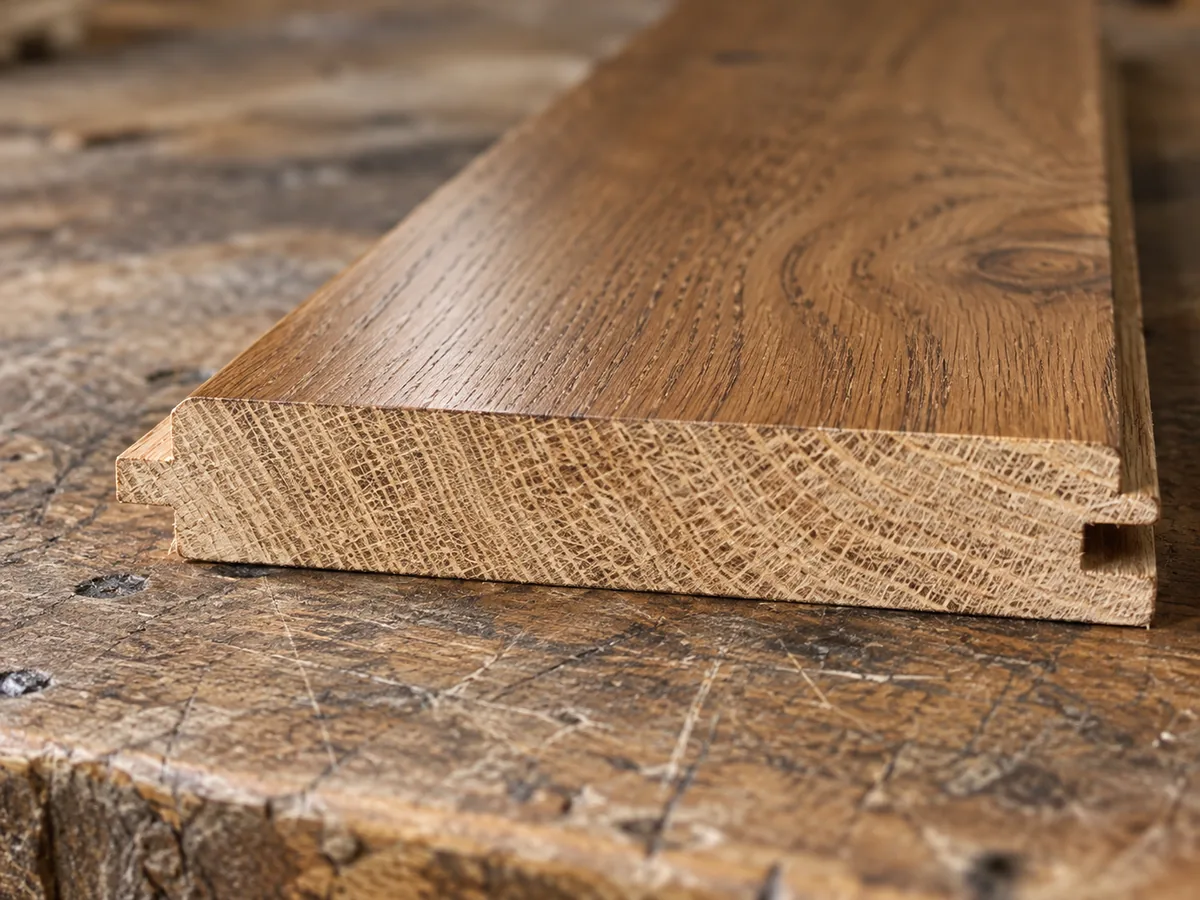
A color change requires sanding to bare wood, and some floors do not have enough wood left for safe sanding. Three conditions rule it out. First, a solid floor is sanded from its face toward the tongue, the machined lip along each board's edge that locks it to its neighbor. What matters is the wood remaining above the tongue, not how many times the floor has been sanded. A thick solid floor usually has enough wood for several sandings. Our restoration work measures what yours has left.
An engineered floor has a wear layer: a thin skin of real hardwood bonded over a plywood base. On some products, the layer is too shallow to sand. If urine or standing water has stained a board below the surface, sanding may not reach clean wood. A test patch shows us whether it will. More stain cannot remove that discoloration or replace missing wood. A tinted coating system is an option when the substrate is sound and the existing finish is compatible. Otherwise, repair or replacement is the right answer.
How Long Staining Takes and When You Can Use the Floor
A stain job takes more than one visit, with a required wait in the middle. The products on your floor determine how long that wait is, not our schedule. Knowing the sequence helps you plan around it.
The rooms being worked on are out of use once sanding begins. We apply the color next, then let the floor sit for the 24 to 48 hours an oil-based stain needs before coating. We apply the protective coats one at a time, allowing each coat to dry before the next. Hardwax oil shortens the process because it colors and seals the floor in one pass.
Dry Time, Cure Time and Getting the Floor Back
What you can do on the floor afterward is governed by the finish system we put on it, not by a figure we can publish in advance. Every finish has a dry time, when it is hard enough to walk on, and a longer cure time, when it has reached full hardness. Those two are different, and they are the ones that decide when furniture and rugs come back. We give you the manufacturer's schedule for the system on your floor in writing, and for a floor being refinished as well as colored, the refinishing timeline is the one that governs.
Weather affects the timing: damp conditions slow solvent release, while dry furnace air during a Sioux Falls winter speeds it up. That's why the schedule in your proposal applies to your floor. A timeline from a web page does not.
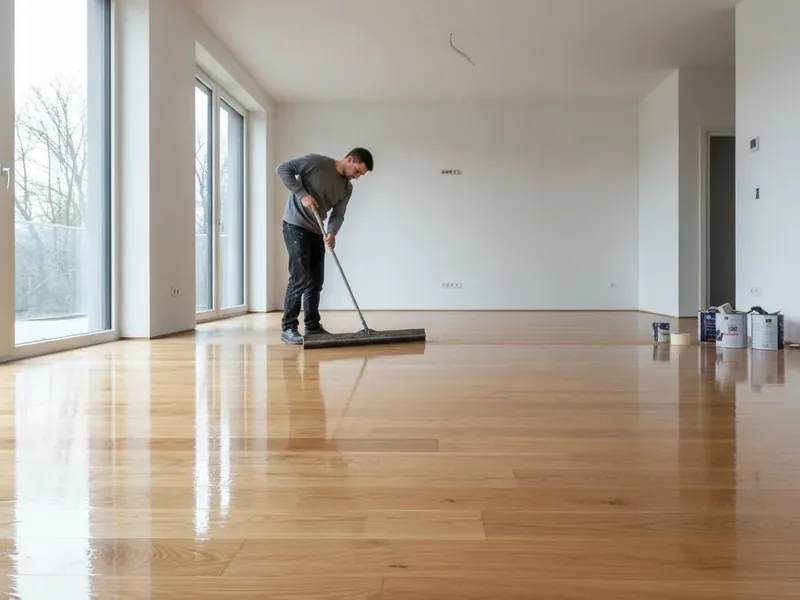
Caring for Stained Hardwood Floors
A stained floor gets the same maintenance as a natural floor because both have the same protective coats over the wood. The difference shows over time: changes in a natural floor blend with the surrounding grain, while a colored floor shows a visible border. The two sections below describe when that difference appears. Neither is repair work, and both are easier to plan for than to correct.
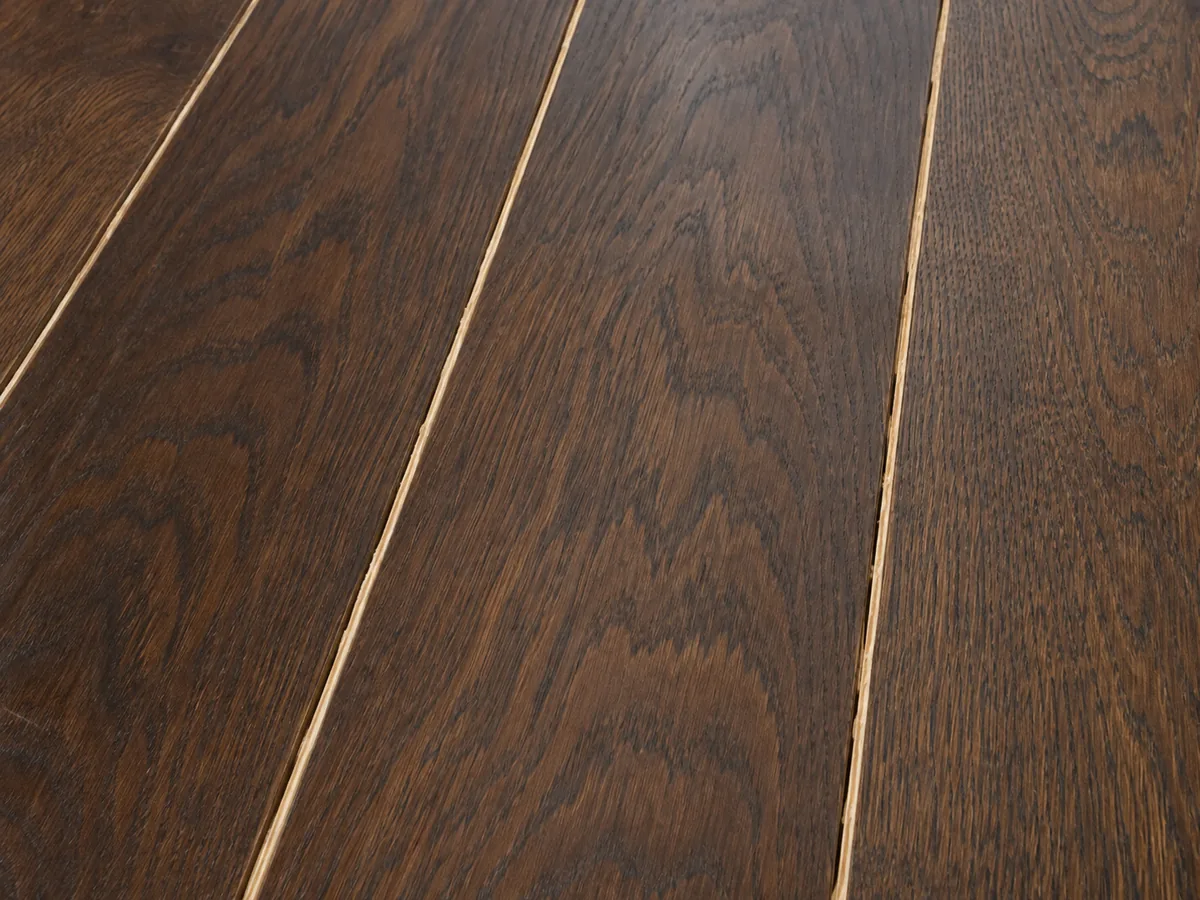
Winter Gaps and Unstained Edges
Stain colors only the face of each board; it cannot reach the edges hidden in the joints. Through a seven-month heating season, roughly October through April, furnace air is much drier than the humidity solid hardwood was milled for. The boards lose moisture and narrow slightly. The joints open, and seasonal movement exposes a sliver of unstained wood. Against dark stain, each sliver looks like a pale hairline. Summer air makes the boards swell and the winter gaps close. The depth of the stain determines how noticeable those lines are, so we discuss it while you're still reviewing samples.
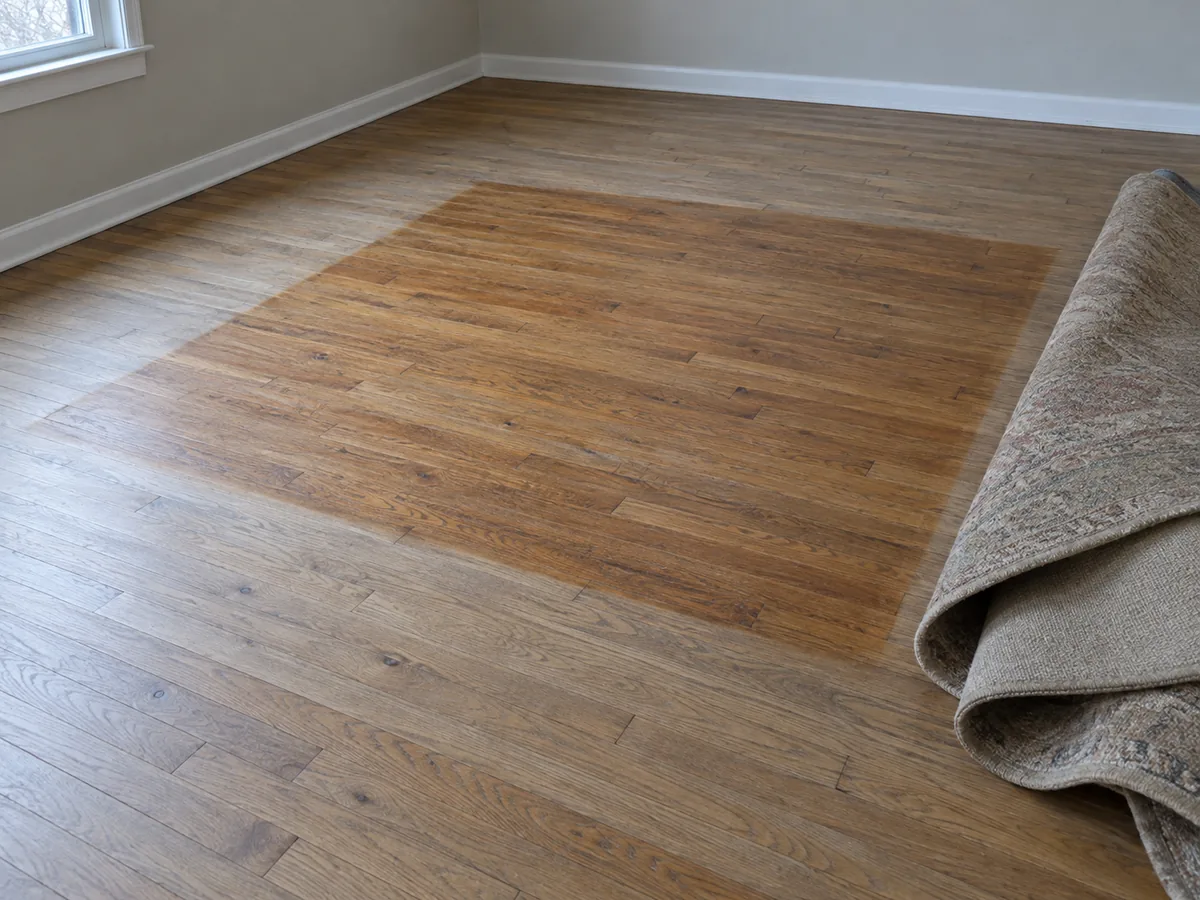
Sunlight, Fading and Rugs
Ultraviolet light alters the pigment and the wood underneath it at the same time, and both keep shifting for as long as the light falls on them. Cover one patch with an area rug and the boards beneath it stay where they started while everything around them moves on. Lift the rug a few years later and the outline you see is not dirt, so cleaning will not touch it. Shifting rugs and furniture to new positions every season or two keeps the fade even across the room. Once an outline has set, only a fresh sanding removes it. South-facing rooms reach that point first.
Why Choose Sioux Falls Hardwood Flooring
You approve the color before we apply anything to your floor. We stain a sample board made from your own wood and leave it with you to review. Work does not begin until you choose a shade. Every commitment below exists to keep that promise honest.
Your written quote breaks down each cost rather than giving you only one total:
- what the preparation on your floor actually involves
- which color system is going down, and why that one suits your wood
- how many protective coats follow, and which finish they are
Sanding creates the dust during a color change. Dust containment runs on every sander we use, on every job. Flooring and finish materials carry their manufacturer's warranty.
Sioux Falls Hardwood Flooring is a local company with 15 years in business. That is long enough to have seen how the oak in these neighborhoods takes color. We provide free estimates and offer financing for larger projects. We carry the insurance and bonding applicable to our work and can provide documentation on request.
Call (605) 799-9142 or send the quote form to schedule an on-site look at your wood and find out which shades it will hold.
Service Area
Hardwood Floor Staining Service Area
Your location does not change how we do the color work or what it costs. A quote in Minnehaha County and a quote in Lincoln County start from the same two published rates, and the heating season that makes color depth worth considering runs from roughly October through April across the area. We serve Brandon, Harrisburg, Tea, and other communities across Minnehaha and Lincoln Counties.
Where Sioux Falls Hardwood Flooring Stains Floors
Sioux Falls Hardwood Flooring stains floors in these sixteen towns around the city, and an address outside the city limits changes neither the color work nor the price:
Communities We Serve
- Brandon
- Harrisburg
- Tea
- Hartford
- Dell Rapids
- Lennox
- Canton
- Crooks
- Baltic
- Worthing
- Valley Springs
- Garretson
- Humboldt
- Colton
- Renner
- Chancellor
FAQ
Hardwood Floor Staining FAQs
How much does it cost to get hardwood floors stained?
A complete job, including sanding, stain, and protective coats, costs $5 to $7 per square foot. The $1 to $3 per square foot rate covers only the color step, added to a separately quoted refinish. Your wood species, chosen shade depth, and board condition determine where your quote falls within either range.
Is it cheaper to stain or replace hardwood floors?
Staining costs a fraction of replacing the floor: at $1 to $3 per square foot, you pay for pigment and labor on the boards you already own. Replacement requires new material to be purchased, delivered, fastened down, and finished before we can apply color.
Is it a good idea to stain hardwood floors?
Yes, when the boards are sound and the wood accepts stain evenly. Maple and birch need a wood conditioner first, so achieving your chosen shade takes that extra step. A sample confirms the result because the reliable test is your wood in your light.
Can I change the color of my hardwood floors when refinishing them?
Yes. Staining is usually part of a refinish because sanding removes the old finish and exposes the bare wood that takes in the pigment. Allow 24 to 48 hours for the oil-based stain systems we specify to dry before applying a protective topcoat. The manufacturer's instructions set the final timing.
Can hardwood floors be stained without sanding them first?
That is not a true stain. A cured finish is impermeable, so pigment cannot pass through it to reach the wood, where stain must penetrate. The alternative is to add color to the coating itself with tinted urethane. To leave your existing color alone and renew only the finish, ask about a screen and recoat instead.
Request a Free Hardwood Floor Staining Estimate
A stain sample is a board made from the same wood as your floor, stained and held against it so you can judge the shade in its intended setting. Sioux Falls Hardwood Flooring brings sample boards to homes throughout the Sioux Falls area, letting you choose in person instead of from a photo or printed chip. Call (605) 799-9142 for a free on-site estimate, or use the quote form to request a proposal.