
Hardwood Floor Refinishing in Sioux Falls, SD | Sioux Falls Hardwood Flooring
Sioux Falls Hardwood Flooring, a local hardwood flooring company, has spent 15 years doing hardwood floor refinishing for homeowners and property managers in Sioux Falls, South Dakota. Most people call us once a floor has gone dull, scratched through in the traffic lanes, or gray where the old coating wore off and the bare wood underneath began to darken. This page covers sanding a floor back to bare wood and coating it again: the machines and grades that cut the old finish away, the edges the big machines cannot reach, which gaps get filled, the three finish systems and their cure times, and what rules a floor out altogether.
We use drum and belt sanders for the main floor and an edger along the perimeter. For coatings we use two-component waterborne finish, oil-modified polyurethane and hardwax oil, including Bona Traffic HD and DuraSeal, and we work to NWFA guidance. HEPA-filtered dust containment is included on every job. A standard refinish costs $3 to $5 per square foot and takes 2 to 4 days on site.
We are a floor refinishing contractor doing wood floor sanding across Minnehaha, Lincoln and neighboring counties. You get a floor sanded flat, coated in a finish chosen for how the room is used, and a written number before anything starts. Call (605) 799-9142 with the rooms and the square footage, or send them through the quote form.
Get A Free Estimate
Does Your Hardwood Floor Need Refinishing?
Not every worn floor needs sanding, and choosing the wrong treatment costs more than it should. A worn finish and worn wood are two different problems, so we start by checking the condition of your floor to determine which treatment it needs.
A Screen and Recoat, or a Full Sand
Two of the three outcomes depend on the condition of the finish. If the coating is worn thin but has not worn through to the wood, a screen and recoat is enough. This involves lightly abrading the existing finish so a new coat bonds properly, without sanding the wood, and is priced separately. If the finish has worn through to bare wood, the floor needs the full hardwood floor refinishing described on this page. To determine which treatment is appropriate, we use a drop of water and a mineral spirits rub in an inconspicuous corner. We also check for paste wax and acrylic polish, since both interfere with adhesion, and confirm finish compatibility before applying a new coat.
When the Boards Need Repair First
Problems beneath the floorboards need a different approach. Movement underfoot, a soft spot or water damage means repair or restoration, and those are separate services covered on their own pages. Sanding and refinishing will not fix those problems, so we check for underlying damage before giving you a quote.
What Our Hardwood Floor Refinishing Service Includes
Hardwood floor refinishing involves sanding your existing boards to remove the old finish, then applying a new finish to the wood. The boards stay in place, with nothing removed or replaced, so their current condition determines the work needed and the price. We check the following details before starting any sanding.
What a Standard Refinish Includes
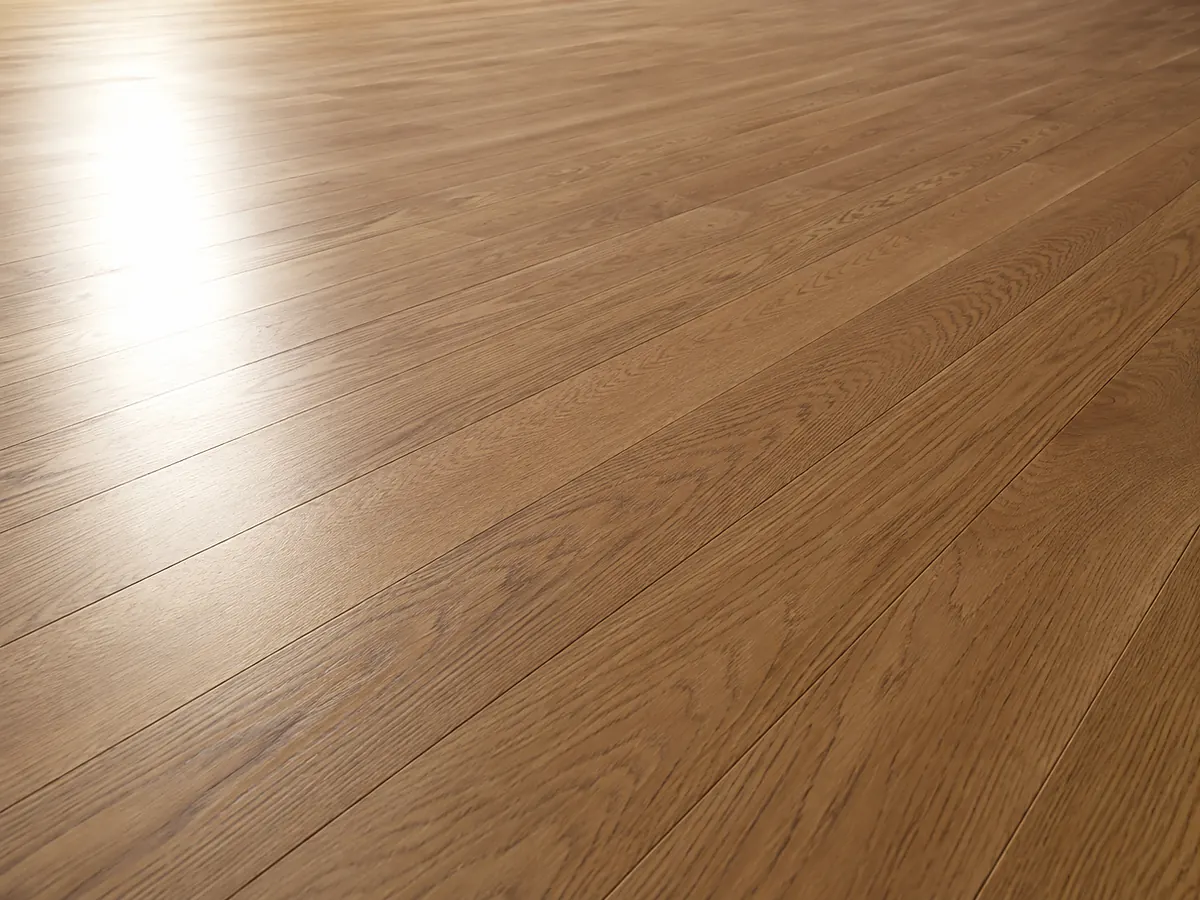
A standard refinish is the type of hardwood floor refinishing most homeowners ask for. We sand off the old finish to expose bare wood, then apply a new clear finish that preserves the wood's natural color. We follow the finish manufacturer's recommended application and drying schedule for the product you choose.
We check which gaps need filling and quote that work by the linear foot, separately from the square-foot refinishing rate. Surface scratches and gray wear are removed along with the old finish, exposing clean wood underneath. Deeper gouges, dents, and discoloration extend beyond what sanding removes, so we assess those before giving you a quote. If you want to change your floor's color, that requires additional staining work and is priced separately from a standard refinish.
Baseboards, Shoe Molding and the Trim Nobody Mentions
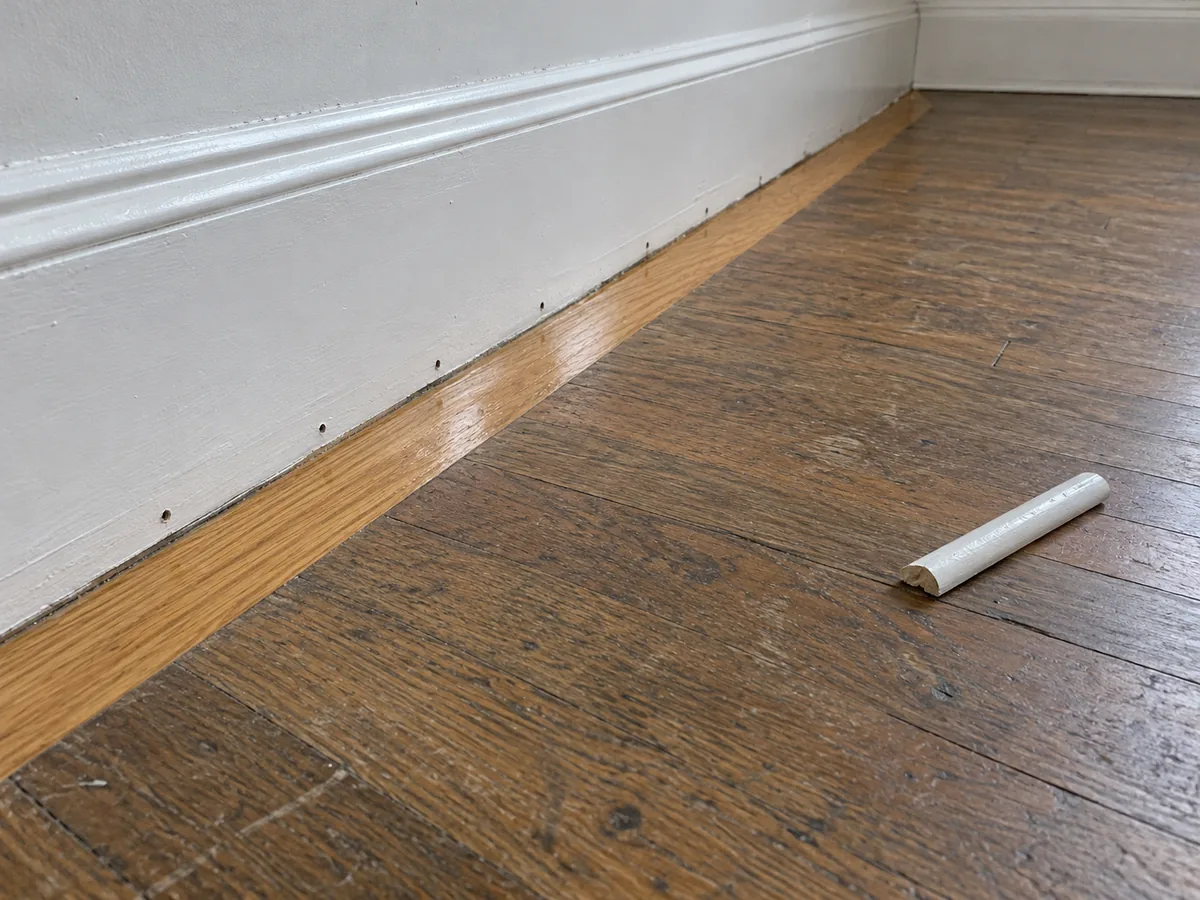
Your baseboards stay in place throughout the job. We remove only the shoe molding, the narrow strip along the bottom of the baseboard, which lets the edger cut right in to the wall. Removing and reinstalling it is included in the work. Older shoe molding becomes dry and brittle, and some pieces break during removal. We quote replacement pieces as a separate line item. If your floor has no shoe molding and the baseboards sit directly on the boards, there is nothing to remove. Floor sanding then happens hard against the painted trim, and touch-up of that trim becomes part of the job.
Pricing
Hardwood Floor Refinishing Cost in Sioux Falls
We publish our rate per square foot so you can hold a written proposal up against a number. A published rate is still only a starting point, because the price of your floor comes from someone standing on it, measuring the rooms and looking at the wood. That visit is what turns a rate into a figure you can plan around, and it is free. Call (605) 799-9142 or use the quote form to book one.
- Standard sanding and clear refinishing: $3 to $5 per square foot
- Sanding, custom staining and finishing: $5 to $7 per square foot
- Additional repairs, trim replacement and gap filling: itemized separately on your proposal
We provide free estimates and offer financing for larger projects.
The Standard Refinish Rate
The hardwood floor refinishing cost for a standard job is $3 to $5 per square foot. That price includes sanding, applying new finish coats in the wood's natural color, removing and reinstalling shoe molding, and dust containment. Apply the rate to your own square footage and you have the range a proposal for a standard refinish should land in, which is why we publish it. The final price depends on the floor's condition, layout, preparation requirements, and finish system. Any work outside the standard rate is listed separately in your written estimate.
What Changes the Price on a Refinish
The refinishing cost factors are mostly about the condition of the wood and the work each room demands. A finish worn through in several areas needs more sanding passes than one that has simply lost its shine. Hard maple is denser than oak and takes longer to sand. Replacing broken shoe molding, touching up painted trim where no shoe molding was installed, and filling gaps are all priced separately in your proposal, with gap filling measured by the linear foot. Adding an extra finish coat in a hallway or working one room at a time while you remain in the house also increases the time required. Stair refinishing and board replacement are separate services.
Where a Custom Stain Changes the Number
Sanding and custom staining costs $5 to $7 per square foot, including the finish. This price covers sanding the floor to bare wood, applying your chosen stain, and adding the finish coats, so we quote the complete job from the start. Additional repairs and preparation are priced separately. Standard refinishing and custom stain refinishing are the two complete service options we quote, each with its own square-foot rate. Choosing a stain color and understanding how it looks on different wood species are separate considerations from the price.
Choosing Your Hardwood Floor Finish
The finish you choose affects how well your floor holds up to wear, its final color, the odor during application and drying, and how soon you can use the room again. There are three main types of finish to consider.
- Two-component waterborne, a water-based polyurethane, Bona Traffic HD or Loba 2K Invisible: resists wear, carries little odor and barely yellows the wood.
- Oil-based polyurethane, also called oil-modified, DuraSeal on most jobs: lays a warm amber cast over the floor and smells stronger while hardening.
- Hardwax oil, Rubio Monocoat or Osmo Polyx: soaks into the wood instead of forming a film, so a worn patch can be spot-repaired rather than recoated wall to wall.
Sheen, and What Comes With the Choice
Hardwax oil has its own application process rather than a standard coat schedule, so your choice of finish affects how we plan the work. You also need to choose a sheen. Matte reflects less light and hides most signs of wear, satin provides a balance between matte and gloss, and semi-gloss gives a more formal appearance but shows wear more readily. Flooring and finish materials carry their manufacturer's warranty.
Odor, Ventilation and Who Should Be Elsewhere
The odor during hardwood floor refinishing comes mainly from the finish, not the sanding, so your choice of product matters if you are staying in the house. Oil-modified polyurethane and older Swedish finishes produce strong fumes that linger for days. Even with a low-odor waterborne finish, proper ventilation and the manufacturer's safety instructions are required. Anyone with asthma or another respiratory condition, along with small children and birds in particular, should stay elsewhere while the finish is applied and cures. We provide cross-ventilation through windows on opposite sides of the house and keep finished rooms closed off until curing is complete.
Our Hardwood Floor Sanding Process
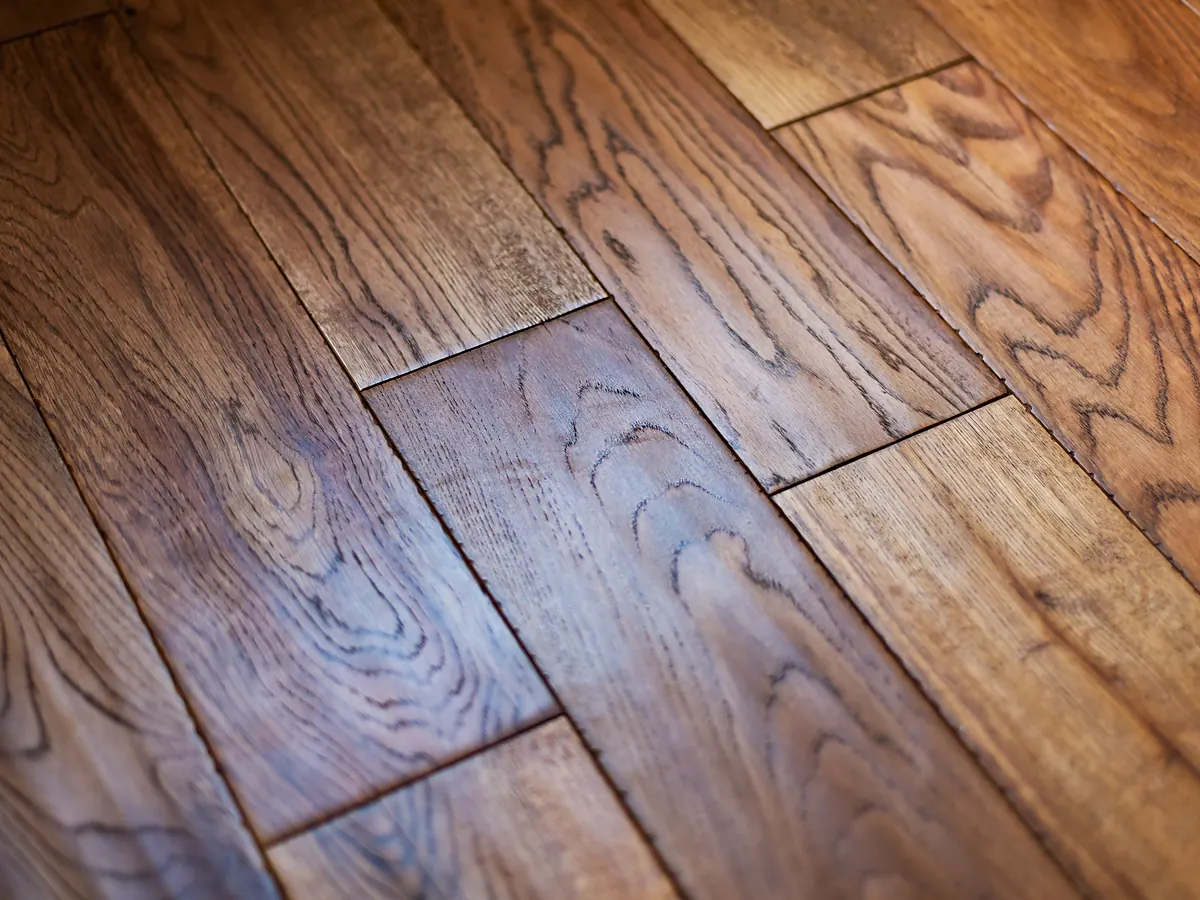
At this stage, hardwood floor refinishing is about sanding the entire floor down to clean, bare wood, in a single flat plane, with no scratch left anywhere in it. The new finish makes any remaining scratches more noticeable rather than covering them, so the sanding sequence decides what you will see in the finished floor. We use the proper sanding machines, handwork along edges and in tight areas, and follow published industry guidance to get a consistent result across the whole floor.
Drum and Belt Machines, Grade by Grade
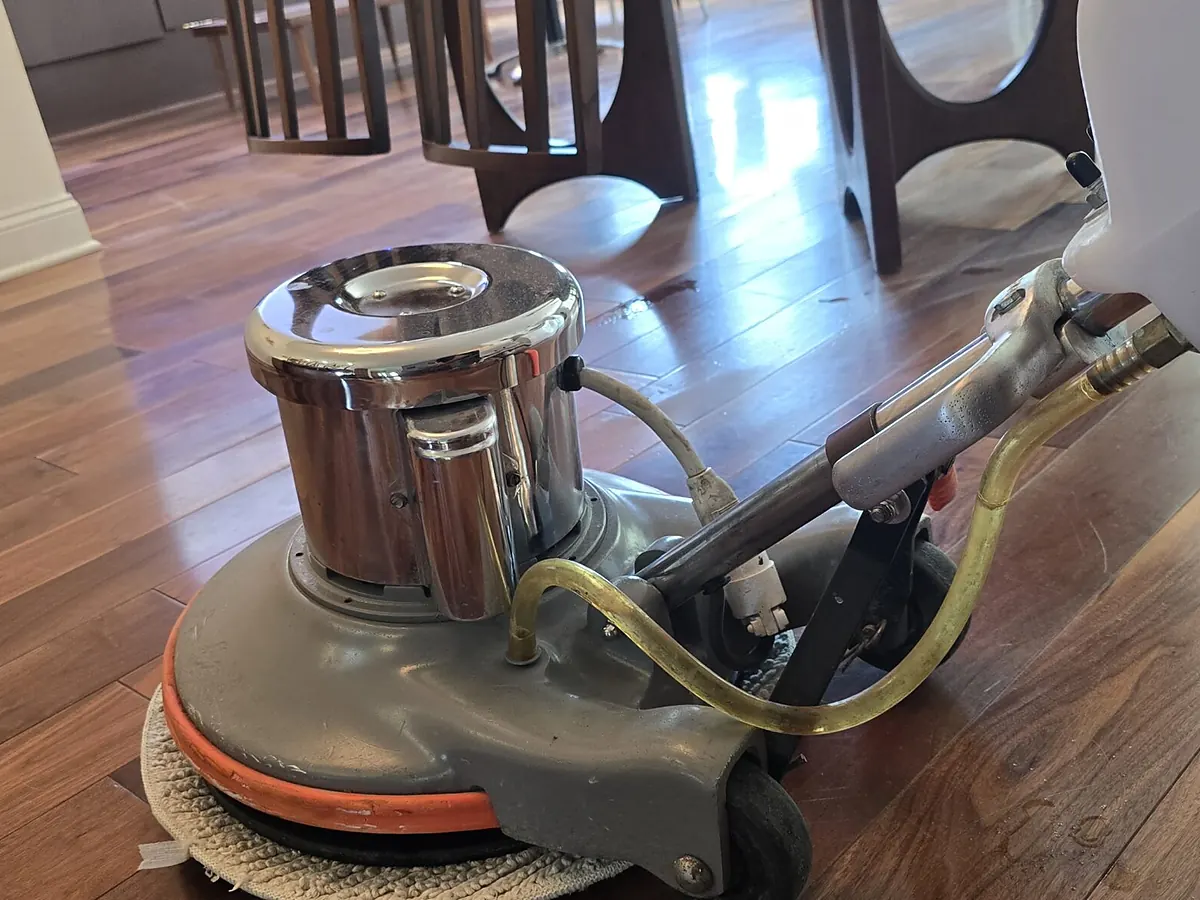
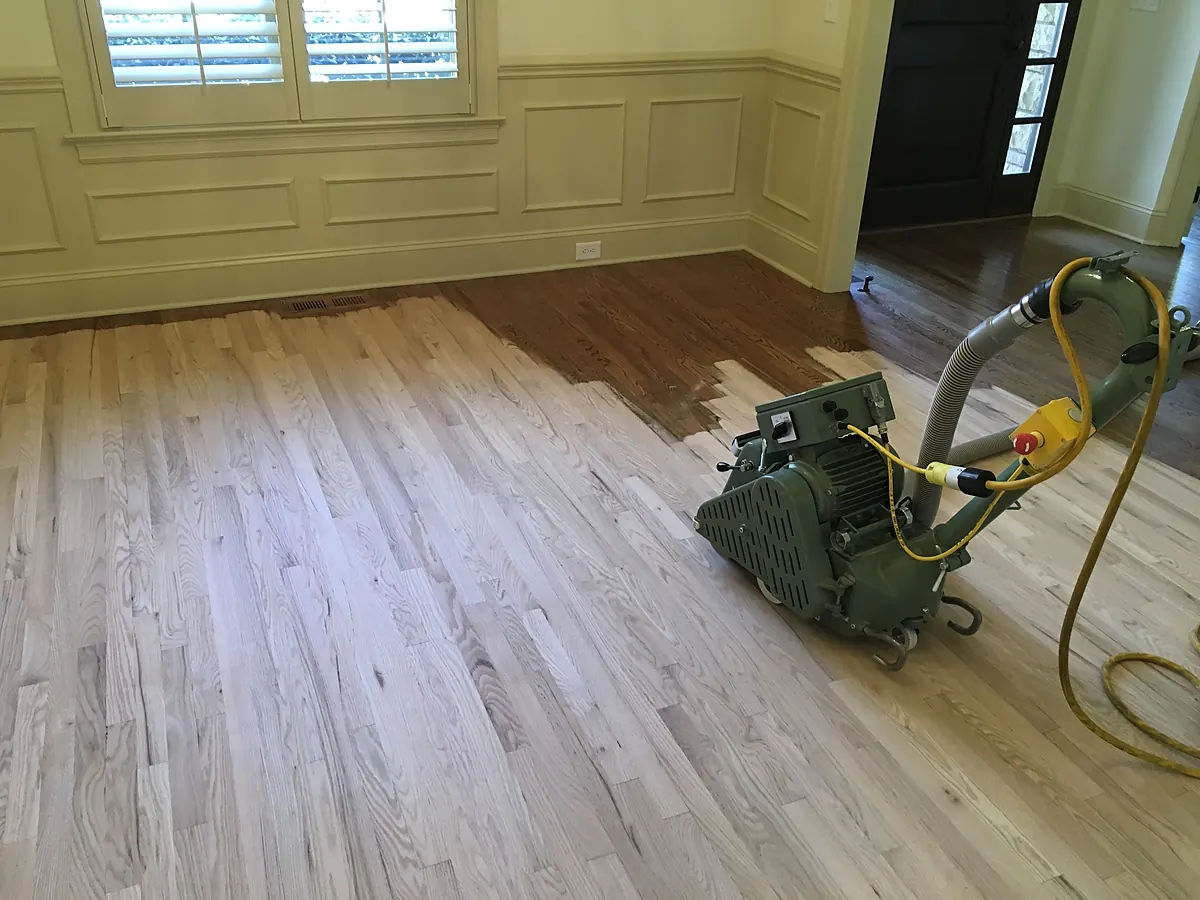
This step removes the old finish and levels the boards without sanding low spots into the wood. The floor's condition determines which machine we use first. We work with a drum sander, a rotating cylinder wrapped in abrasive, and a belt sander, a continuous abrasive loop. We then work through progressively finer abrasive grades, with each pass removing the scratches left by the previous one. Skipping a grade leaves scratches the next abrasive cannot remove. Keeping the machine moving matters as much, since letting it pause in one spot dishes the boards under it. That dip stays invisible on bare wood until the first coat goes on, which is the expensive moment to find it.
The Edger and the Perimeter Pass
The edges of your floor need to look the same as the middle, which means blending the sanding marks between them. The larger sanders stop short of the walls, so we use a hand-held edger with a rotating abrasive disc to sand the remaining strip close to the baseboard. Because the edger cuts in circles rather than along the boards, it leaves a different scratch pattern. We blend that area with a buffer, a weighted floor polisher, until it matches the rest of the floor, then a final flattening pass evens the whole surface as one plane. Left unblended, the band shows under the finish as a halo around the room.
Parquet, Herringbone and Detailed Hand Sanding
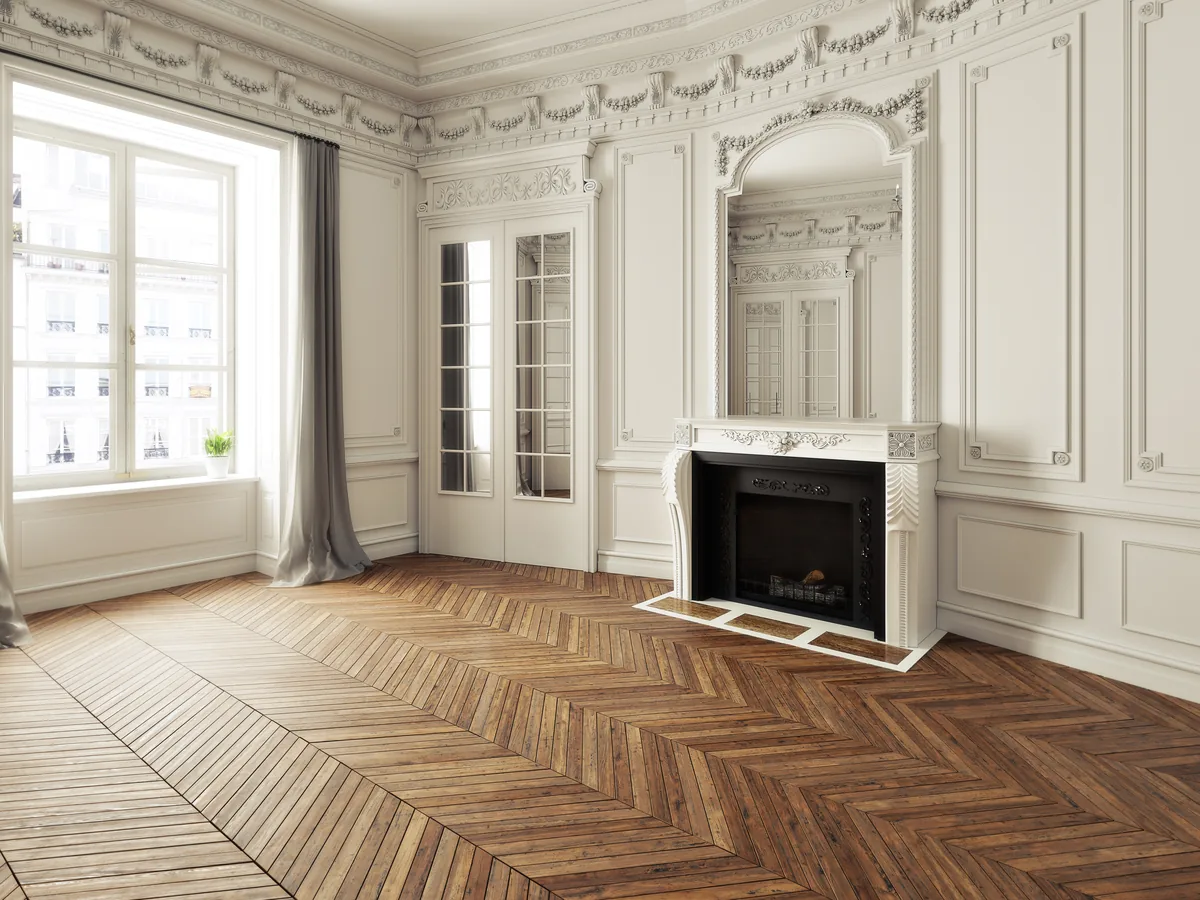
On straight hardwood boards, the grain runs in one direction, so we sand along it. Parquet sets small wood blocks in a pattern and a herringbone floor sets pieces at angles to one another, so the grain runs several ways and a drum sander working one way tears the grain in some blocks. For parquet refinishing, we use a hard-plate or multi-disc sander, working diagonally and then across the floor with progressively finer abrasives. This takes more passes and more time, so the price differs from refinishing a standard strip floor. Older parquet is also frequently thin or set in mastic, an adhesive beneath the blocks, so we check its construction and condition before quoting the work.
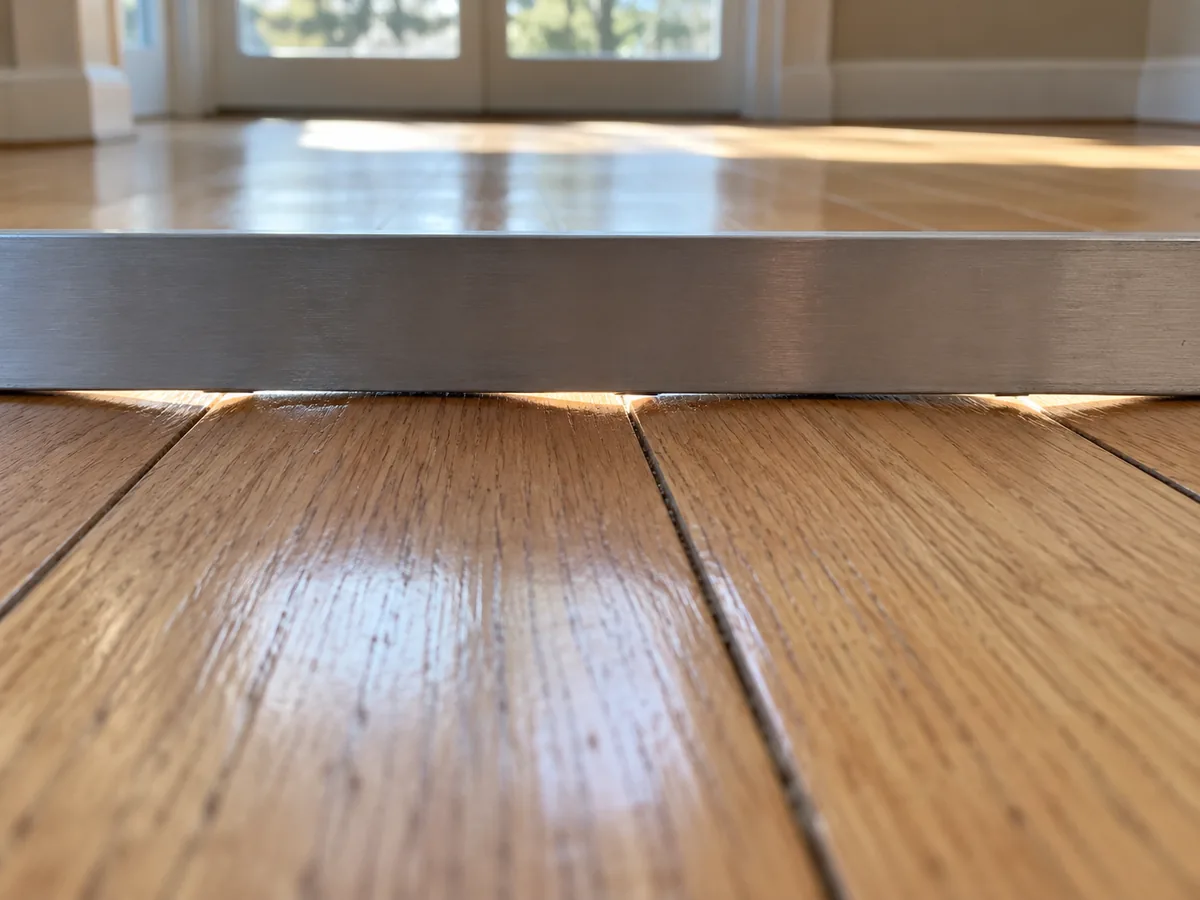
We also finish by hand the areas our sanding machines cannot reach. Closets are too narrow for the larger machines, thresholds need a clean stopping point where your hardwood meets another floor at a doorway, and floor vents leave openings with four cut edges that need attention. We hand-sand closets, thresholds, and floor-vent edges to match the surrounding floor. Where two floors meet at different heights, we also check whether the threshold needs a new transition piece.
Species, and How Each One Takes a Sanding
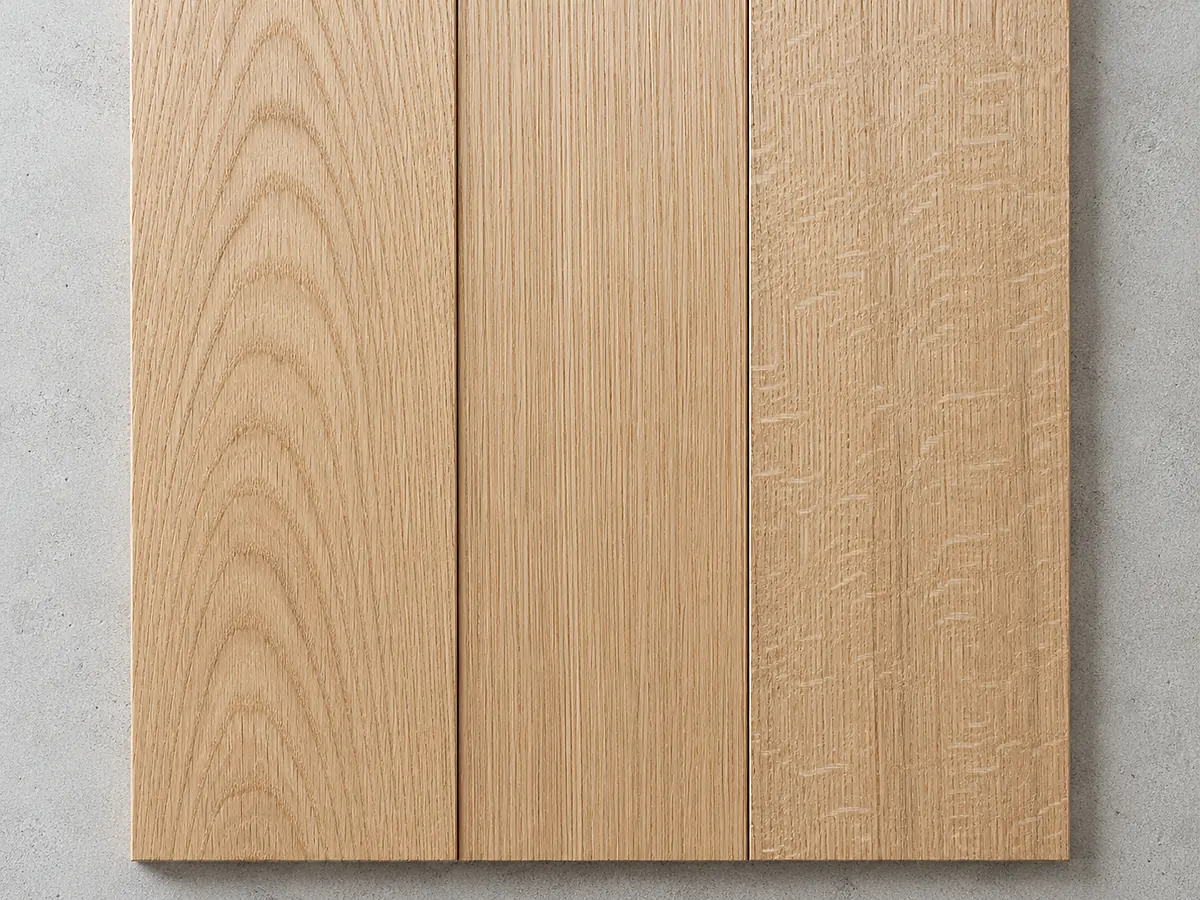
The type of hardwood you have affects how long sanding takes and how the finished floor looks. Red oak has an open grain that hides many sanding marks, while white oak has a tighter grain that makes them more noticeable. Hard maple ranks higher than both oaks on the Janka scale, which measures hardness. Its density means it develops a polished shine if the sander moves too slowly, and drum marks show clearly, so wood floor sanding on maple requires more passes and more time. Brazilian cherry comes back pale and keeps deepening for months in light. Black walnut is softer than its appearance suggests and sands more quickly. How a hardwood species takes stain belongs with our color work.
Filling Gaps, and the Gaps to Leave Alone
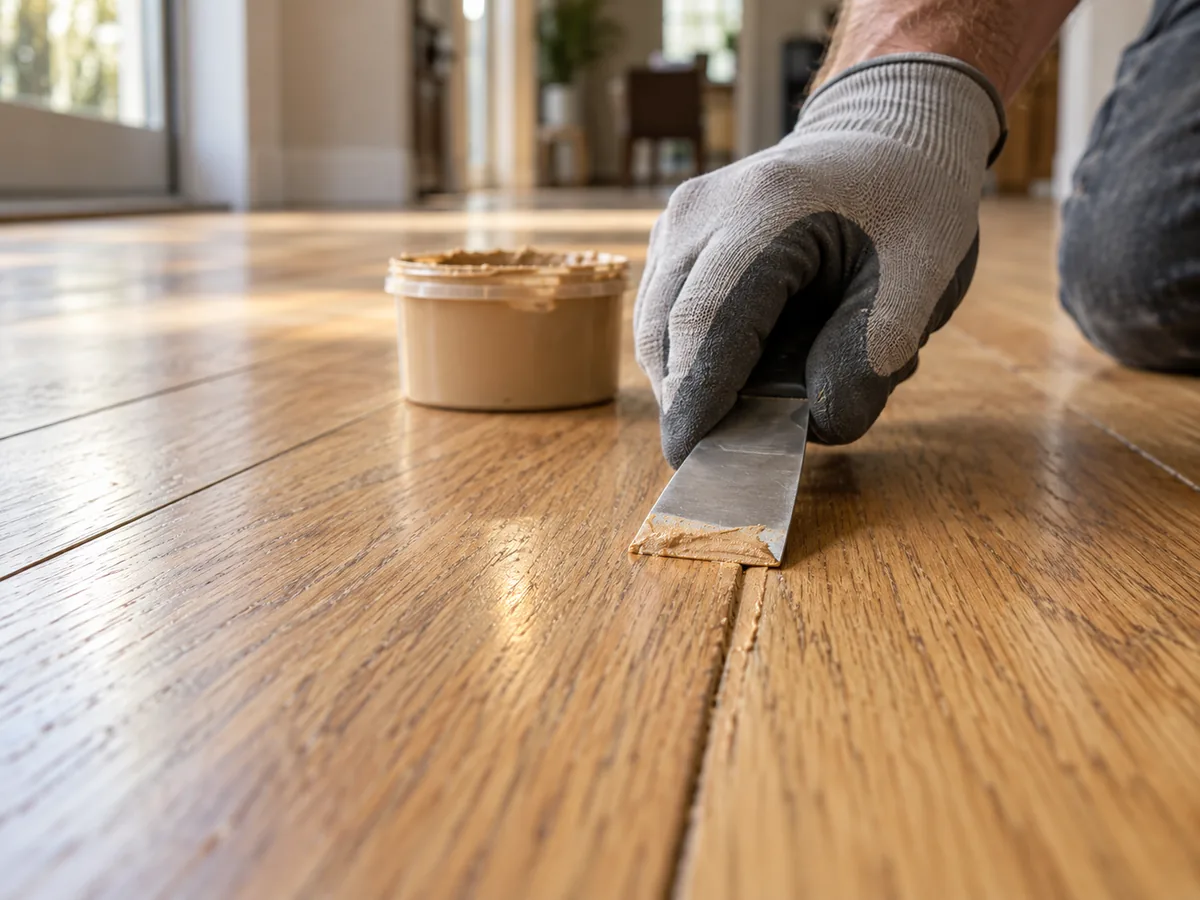
Part of wood floor refinishing is deciding which gaps need filling. The test is whether a gap closes by itself. We use filler made with sanding dust from your floor or a product matched to the wood species, and fill only permanent gaps, such as a seam that separated and never closed or a joint where a board was replaced. Gap filling a seasonal gap fails. Boards shrink during the heating season and widen again as humidity rises, pushing the filler out and leaving a crumbling line that looks worse than the gap. Since one visit cannot show how a floor changes throughout the year, we fill only gaps confirmed to stay open year-round and leave seasonal gaps alone.
What NWFA Guidance Covers on a Sand and Finish
The National Wood Flooring Association (NWFA) publishes industry guidance used to evaluate wood flooring work in the United States, and we work to it on a sand and finish. It covers the abrasive sequence, blending the edges with the main floor, and checking that the wood has a stable moisture reading before sanding begins. We also follow the finish manufacturer's specified recoat and cure times rather than relying on schedules from previous jobs. These are specific standards you can ask any hardwood floor refinishing contractor about before hiring them.
How Long Refinishing Takes
Your refinish starts with an on-site visit from Sioux Falls Hardwood Flooring. We inspect the floor, run the test that separates a recoat from a full sand, and provide an itemized written proposal showing the work and price. The hardwood floor refinishing process then takes 2 to 4 days on site. During that time, the rooms being refinished are out of use, but you can continue using the rest of your house.
Clearing the Rooms and Sealing the Openings
The day before sanding begins, the rooms need to be cleared of furniture and belongings, and we move anything you cannot handle. We then install containment sheeting across doorways and other paths where dust could spread, seal every heating register and return vent in the work area, and remove the shoe molding along the baseboards. All of this preparation is completed before we start sanding.
Sanding, Edging and Filling
We remove the old finish, sand the main floor and edges, and fill any gaps you have approved as separately priced work. The rooms being refinished remain out of use while we work, and we clean up at the end of each day. You can continue using the rest of your house, including the kitchen if it is outside the work area.
The Coats, and the Hours Between Them
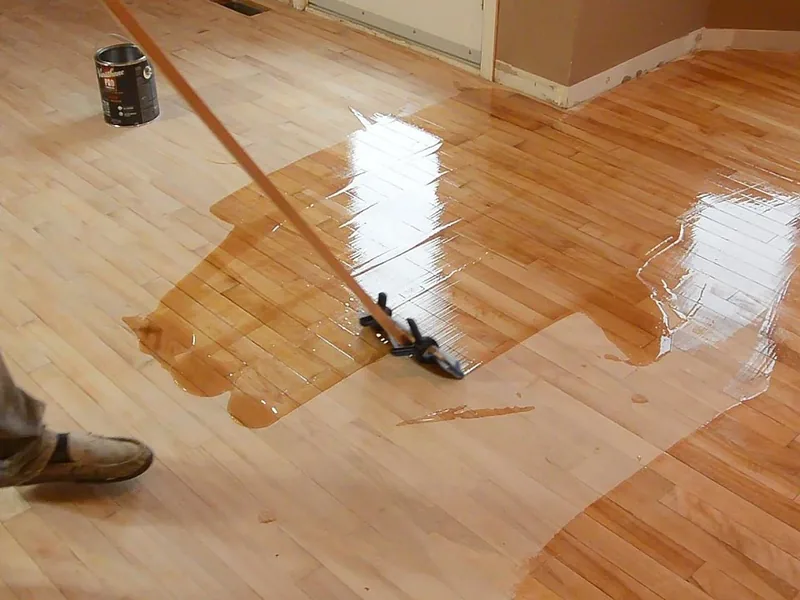
The coats go on after the sanding, clear, so the color you see is the wood's own. The number of coats and whether a sealer is needed depend on the finish manufacturer's instructions for the product you choose, and we include that schedule in your proposal. We follow the specified recoat window, which is the time allowed between coats, and keep everyone off the floor throughout the process. A two-component waterborne finish is ready for the next coat sooner than an oil-modified polyurethane and produces much less odor, which is what you notice on a day when people are home.
Cure, and When the Furniture Comes Back
A refinished floor is dry to the touch before the finish has fully cured. Dry means the surface has become firm, while cure time is the days the finish still needs to harden all the way through. The schedule below is our conservative guidance for when you can start using a floor finished with a two-component waterborne system. It is not the manufacturer's cure specification. Every finish publishes its own cure time, they differ from each other, and the one for your product governs.
-
1.
Sock traffic at about 24 hours.
-
2.
Shoes at 48 hours.
-
3.
Furniture back at 72 hours.
-
4.
Area rugs off until the 7-day cure, because a finish still hardening under a mat marks.
Oil-modified polyurethane runs slower, nearer 48 hours before sock traffic. Penetrating hardwax oil follows a different application and curing process. We read the cure data for the product going on your floor and give you the dates in writing at handover.
When Hardwood Floors Cannot Be Refinished
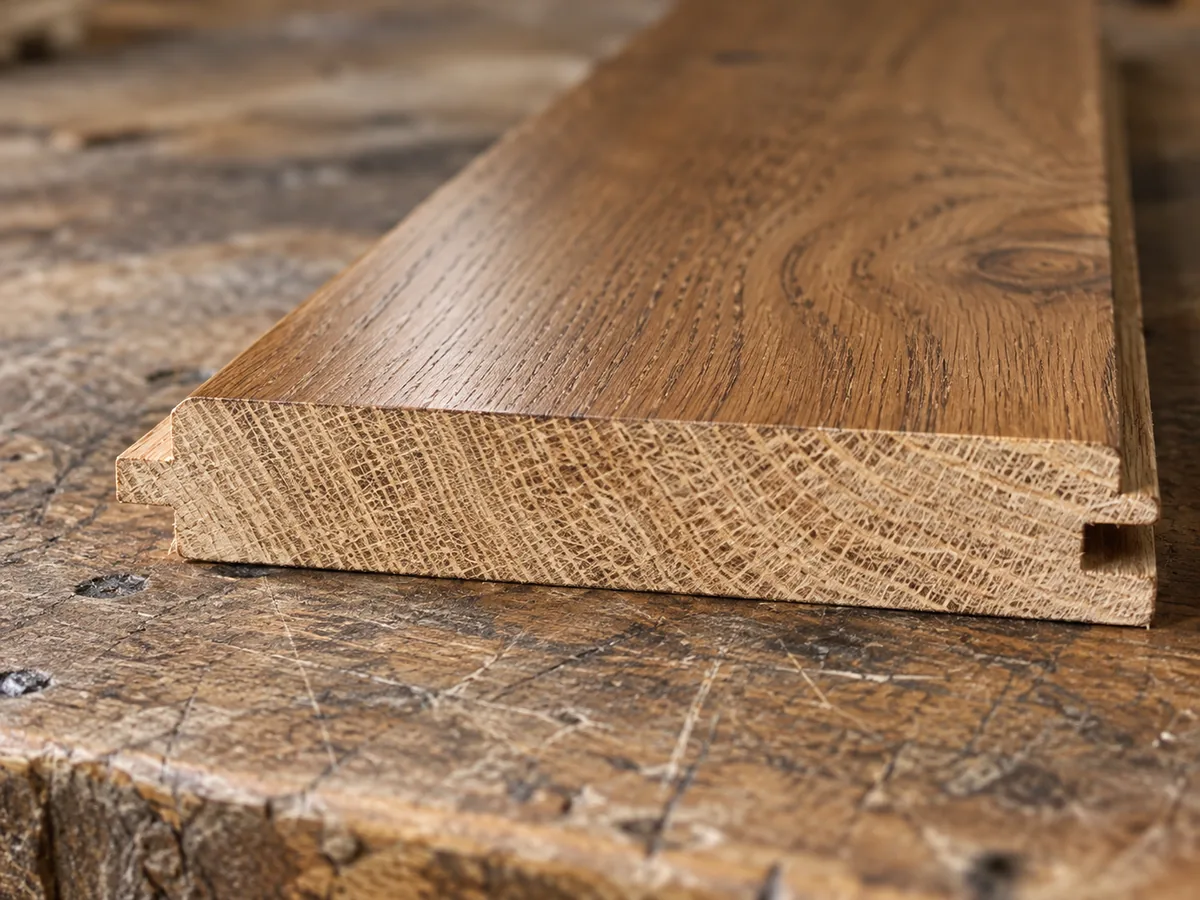
Most of the floors we inspect are suitable for hardwood floor refinishing. The deciding factor is how much usable wood remains above the tongue. A solid hardwood floor typically allows 4 to 6 sandings over its lifetime, but the original board thickness and any previous sanding determine how many are still possible. Some floors do not have enough wood left to be sanded safely. We check the remaining wood thickness and moisture condition before recommending a full refinish.
A Wear Layer With No Sanding Left
A solid hardwood board can be sanded as long as enough wood remains above the tongue, the interlocking edge along the side of each board. Once sanding would reach the tongue, the floor cannot be sanded again.
Engineered hardwood has a top layer of real wood called the wear layer, and its thickness determines whether the floor can be sanded. A wear layer of 2 to 6 mm generally allows sanding, with roughly one or two sandings at 2 mm and several at 4 mm or thicker. Before recommending refinishing, we check the remaining wear layer, previous sanding, board construction, and manufacturer's limits. Engineered floors with thinner veneers cannot be sanded and are limited to cleaning and recoating. On solid hardwood floors, nail heads beginning to show at the surface are a sign that the boards are reaching their sanding limit.
Cupping, Crowning and Stains a Sand Cannot Reach
Boards that absorb water cup, and that cupping means the edges sit higher than the center. Wood floor sanding flattens a cupped floor, but as the boards dry and shrink they crown the other way, so you pay twice. Before sanding, we use a moisture meter to confirm the wood has returned to a stable moisture reading. That process takes weeks or even a full heating season rather than a few days. Dark pet urine stains are a separate issue. Urine reacts with the wood deep into the board, so even a full sanding will not remove the discoloration. Those areas require board repair or replacement and odor sealing underneath, which we quote separately.
Why Choose Sioux Falls Hardwood Flooring
Sanding hardwood floors produces fine wood dust that spreads into other rooms unless it is contained. Dust containment runs on every sander we use, on every job. Each machine connects to HEPA-filtered dust extraction equipment that collects dust in a sealed filter rather than allowing it to settle on your furniture. We also seal off the work area with zip-wall containment, a temporary plastic barrier with a zippered doorway. Dust-controlled sanding is in the price we give you, not a tier you select or a line added to your quote. Even good dust extraction cannot capture every airborne particle, so sealing off the work area is just as important as collecting dust at the machine.
Three further commitments shape what you get from us as your hardwood refinishing contractor:
- We use the abrasive sequence appropriate for your floor and blend the perimeter into the main surface before coating.
- We quote your dates on cure time rather than on the hour the floor stops feeling wet.
- You get an itemized written proposal, so scope, preparation and the finish system are each priced on their own line.
Sioux Falls Hardwood Flooring is a local company with 15 years in business. We carry the insurance and bonding applicable to our work and can provide documentation on request.

Service Area
Sioux Falls and Surrounding Service Areas
Roughly 45 inches of snow a year and about 25 days a year at or below zero put months of boots, entry grit and ice melt across the boards nearest your doors. Grit underfoot abrades a coating the way sandpaper does. As a result, hardwood floor refinishing in Sioux Falls frequently starts at entryways, where the finish has worn through even though the middle of the room is still in good condition. We serve Brandon, Harrisburg, Tea, and other communities across Minnehaha and Lincoln Counties.
Sioux Falls Hardwood Flooring Refinishes Floors in These Communities
Sioux Falls Hardwood Flooring sands and refinishes floors across South Dakota only, within roughly 30 miles of the city, so every town we reach sits inside Minnehaha, Lincoln or a neighboring county. We do not cross into Minnesota or Iowa, close as those borders are. Sixteen communities fall inside that radius, and if your house stands in one of them, we can quote the work.
Communities We Serve
- Brandon
- Harrisburg
- Tea
- Hartford
- Dell Rapids
- Lennox
- Canton
- Crooks
- Baltic
- Worthing
- Valley Springs
- Garretson
- Humboldt
- Colton
- Renner
- Chancellor
FAQ
Frequently Asked Questions
How much does it typically cost to refinish hardwood floors?
A standard refinish of your floors runs $3 to $5 per square foot, and $5 to $7 per square foot when sanding and a custom stain are quoted together. Gap filling is quoted separately, by the linear foot.
Can I refinish my hardwood floors myself?
You can, and the machines rent by the day. Two mistakes are common: a drum sander left running in one spot cuts a dip into the boards, and an unblended border leaves a visible band around the room. Both appear only once the finish goes on.
Is it worth it to refinish hardwood floors?
While your boards still have wood left above the tongue, yes. Sanding restores the surface for a fraction of what replacing the floor costs. How frequently refinishing is needed depends on foot traffic, maintenance, how quickly the coating wears, and the overall condition of the finish.
Is it cheaper to refinish or replace hardwood floors?
Refinishing, as long as your floor still has wood to sand: $3 to $5 per square foot against $8 to $16 per square foot installed for a new solid floor. Once another sanding would cut down to the tongue, replacement becomes the answer.
Can I stay in my house while floors are refinished?
Usually you can. We seal off the work area and move room by room, so part of the house stays usable, and we keep finished rooms closed while the coating hardens. Kitchens and homes with one bathroom get scheduled around that.
Get a Free Hardwood Refinishing Estimate
Hardwood floor refinishing starts with somebody from Sioux Falls Hardwood Flooring standing on your boards, telling you whether they need sanding at all, and putting an itemized rate in writing before you decide anything. Call (605) 799-9142 for a free on-site estimate, or use the quote form to request a proposal.